BOTTLEPRO
  • Home
  • Learn
    • Best Bottle Calculator
    • Comparisons and Insulation Tests
    • Health and Hydration
    • Sip or Skip (Individual Bottles) >
      • Bottles >
        • Camelbak
        • EcoVessel
        • Fjbottle
        • Healthy Human
        • Hydro Flask >
          • Hydro Flask Standard
          • Hydro Flask Trail
          • Hydro Flask Wide
        • Iron Flask
        • Klean Kanteen TKWide
        • Nalgene
        • Owala FreeSip
        • Ozark Trail
        • RevoMax
        • S'well Original
        • Takeya
        • ThermoFlask
        • YETI Rambler
      • Tumblers >
        • Brumate Era
        • Hydro Flask
        • Owala FreeSip Sway
        • Simple Modern
        • Stanley >
          • Stanley Quencher
          • Stanley IceFlow
          • Stanley ProTour
      • Specialty Bottles (Filters, Infusing) >
        • Brita (Filter)
        • Cirkul (Infusing)
        • GRAYL (Filter)
        • LARQ (UV)
        • Stanley Thermos (Insulation)
        • Steepware (Infusing)
        • Vesmoon (Infusing)
        • Vitaloop (Filter)
        • Zulu Ace (Removable Base)
  • Shop
    • Cup Holder Adapter
    • Infusers >
      • FlavorFuze Pod
      • FlavorFuze Straw
      • FlavorFuze Steel
    • Splash Guard
  • Demos
  • Hydration Blog
  • About Us
  • Contact Us
  • Find a Store

What is the Best Type of Water Bottle For Kids?

10/13/2023

0 Comments

 
Picture

Top 3 Questions to Ask before Buying a Water Bottle for your Child

As a parent, you have a lot to think about when it comes to your child.  In this post, we we'll talk through three important questions to consider before buying a bottle for your little one.

​And we’re glad you’re here.  BottlePro is all about health through hydration, and teaching your child to use a reusable water bottle will have many benefits in the long run.  Proper hydration habits are tied to better health, and avoiding single-use bottles will help your child’s future wallet as well as the environment that he or she is inheriting.

​So without further ado, let's get started!

Question #1 - Is Your Water Bottle Safe?

Moving on to question number one, is it safe?  As with anything with your child, the first question you should ask is, will this be safe for my child to use every day.  Normally the concern with bottles is about leaching, or whether chemicals or toxins seep from your bottle into your drink.  Aside from that, there are physical hazards, which is particularly true with glass because it can break into sharp pieces.
I recently posted an entire other video where I did a deep dive into this topic to find out what are the safest water bottle materials.  That video is over 20 minutes long, so I’ll give you the cliff-notes version here.

​Here's a link to the post if you'd like to learn more.
Link to Post
Picture

The Safest Water Bottle Materials for Children

The safest bottle materials that we recommend using for children are:
  • stainless steel
  • silicone
  • glass

STAINLESS STEEL

Are Stainless Steel Bottles Safe for Kids?
In many ways, stainless steel bottles are the best option for children.  They’re widely shown to be safe, are easy to clean, and don’t have an inner liner like aluminum bottles.  There are plenty of reputable brands with many different style to choose from, so you have plenty of options to pick what’s right for you and your child.  And unlike glass, they won’t shatter and potentially create a physical hazard if your child drops the bottle.  Stainless steel bottles typically come in one of four alloys or grades: 304, 316, 18/8 and 18/10.  Any of these grades should be fine with normal use, but if you’re really looking for the best grade, consider buying a bottle made with 316 steel because it’s more corrosion resistant.
Should You Avoid Stainless Steel Bottles for Kids?
For the most part stainless steel bottles are a pretty proven and safe option, but there's one thing to keep in mind with many of them.  Make sure you look at the lid construction.  Many bottles that are made with stainless steel bodies still have exposed plastic under the lid that can come in contact with the water, so if your goal is to completely avoid plastic contact, keep this in mind.  I’ll give some links in the description to bottles that I’m aware of that completely prevent plastic from contacting your water, and if anyone else knows of other options, please leave a comment below to let us and other viewers know.
The Best Stainless Steel Bottles for Kids
There is a lot of competition in the stainless steel water bottle market, so there are plenty of options to choose from.  These are some of our favorites!
Picture
FJbottle, 14oz
Why it's good:
  • Carrying handle
  • Graphics  themes for bottles
  • No-slip base
  • Comes with a brush
See on fjbottle.com
Picture
Pura, 18oz
Why it's good:
  • 100% plastic-free, including the lid.
  • Silicone grip sleeve
See on Amazon
Picture
Hydro Flask Kids, 12oz
Why it's good:
  • Big-name brand
  • Many color options
  • Straw lid can be easier to drink from
  • Bottle boot prevents slipping
See on Amazon
Picture
YETI Rambler Jr, 12oz
Why it's good:
  • Big-name brand
  • Many color options
  • Wide handle
  • Straw lid can be easier to drink from
See on Amazon

SILICONE

Are Silicone Bottles Safe for Kids?
For silicone, most research shows that it is very safe and a great alternative to plastic.  It is BPA-free, extremely durable, lightweight, and flexible.  Just make sure it says food-safe or food-grade. Pretty much every bottle with silicone will list this on the packaging, but it doesn’t hurt to check.  And if you’re buying from a lesser-known brand, you could also reach out to the manufacturer for more testing info if you’d like to learn more.  Pura is a brand we haven’t tested yet, but looking at their website, they are leaning heavily into silicone-based options and are a good one to check out.
Should You Avoid Silicone Bottles for Kids?
​In my opinion, the biggest potential downside to silicone is what we don’t know.  While research has mostly shown it to be safe, compared to some other materials like glass, silicone is still relatively new and it’s always possible that new research could bring up potential concerns.  I wouldn’t blame you if you want to avoid silicone bottles for this reason, but keep in mind that most water bottles use some silicone, either in the seals, straw, or spout.  It’s very hard to completely avoid silicone in water bottles nowadays.
The Best Silicone Bottles for Kids
The 100% silicone bottle market is relatively new, so there aren't nearly as many options to choose from compared to stainless steel.  Many do not have great reviews, so we're waiting for this sub-genre to develop more.  Still, here are a few worth considering for children of varying ages.
Picture
Pura, my-my bottles
Why it's good:
  • 100% food-grade silicone
  • Straw for small children
​*Some buyers comment that they leak a lot.
See on Amazon
Picture
Makersland
Why it's good:
  • Collapsible and lightweight
  • Colorful design
​*Please note that this bottle is not 100% plastic-free (in the lid)
See on Amazon
Picture
Cascade Kids, 6oz
Why it's good:
  • 100% food-grade silicone
  • 2-pack
  • Straw
See on Amazon

GLASS

Are Glass Bottles Safe for Kids?
Glass gives the cleanest drinking experience, and many people feel safest using glass because it’s a material that’s been in use for a long time and has a more natural feel to it.  Many people prefer glass because they find that it doesn’t have an aftertaste that you might have with plastic, silicone, or stainless steel.  And even though materials like BPA-free plastic and silicone are tested to be safe, glass is made with fewer additives and chemicals so many people feel safer that it helps avoid leaching of potentially harmful chemicals. 
Should You Avoid Glass Bottles for Kids?
​Now all that sounds great, but there is a big drawback.  Glass is usually the heaviest bottle and can be extra bulky, so it may be more difficult for your child to manage than alternatives like plastic or stainless steel.  And obviously, glass can also break and create a physical hazard with sharp edges.  If you want to get a glass bottle for your child, make sure it has a protective sleeve and is made of borosilicate glass because it’ll less likely to shatter and is more temperature and shock resistant.  You may want to avoid mason jars because most of them are not made of borosilicate glass.
The Best Glass Bottles for Kids
These are some of our favorite glass bottle options for kids within a few age ranges.
Picture
Lifefactory with Nipple, 9oz
Why it's good:
  • Silicone protective sleeve
  • Many colors
​*Contains plastic in the lid
See on Amazon
Picture
Lifefactory with Spout, 12oz
Why it's good:
  • Silicone protective sleeve
  • Many colors
  • Wide handle
*Contains plastic in the lid
See on Amazon
Picture
Takeya with Straw, 22oz
Why it's good:
  • Good for older kids (larger)
  • 2-finger handle
  • Straw lid for easier sipping
*Contains plastic in the lid
See on Amazon

SPONSOR

FJbottle
Real quick, I’d like to take a few moments to thank FJbottle for sponsoring this video.  One thing they do well is clearly label what type of stainless steel is used in their bottles, and they have a mix of 304 and 316.  With other brands, sometimes it can take more digging around online to know which grade it is, and higher-grade 316 stainless steel bottles can sometimes be hard to find.
They sent us these bottles to help us have some content for this video, and we appreciate the different designs they’ve come up with.  There are spout lids, straw lids with silicone tips, and quite a few different designs for whatever your kid is interested in.  Each bottle comes with a cleaning brush and a straw cleaner if it’s a straw lid, so it’s easier to keep your bottle clean right from the start without having to buy a cleaning kit, though you eventually may want a more robust bottle cleaning brush.  This one is a kid-size of the 34-ounce bottle that I used a lot over the last few months and honestly became one of my favorite bottles.  It has a magnetic lid, a carrying strap on the side that I ended up using a lot more than I thought I would, and an anti-slip base that helps prevent a few dents and spills.  Please note that they do have plastic under the lids, but the fact that they have 316 stainless steel options and silicone straw options tells me that they are very aware of material safety.  We’re very thankful for their support, so we hope you’ll visit www.fjbottle.com to learn more!
Visit FJbottle.com

Question #2 - Which Bottles are Easiest for Children to Use?

​The next question you’ll want to ask yourself is whether the bottle will be easy for your child to use.
What Size Water Bottle is Best for Children
Pick a size that’s a good fit for your child depending on his or her age and ability.  I’d recommend sticking to 16-ounces at most for younger kids because larger bottles like 20-ounce and especially 32 and 40-ounce would be too much to handle. 

Bottles can be pretty big and bulky, so look for features that make a bottle easier to carry like a carrying strap, pouch, or large handle.
Are Straw or Spout Bottles Better for Children?
To make it less likely to have spills, there are a few things to keep an eye out for.  Straw lids are easier for many children to drink from, but they're also more prone to leaking, especially if you store a bottle on its side like in a backpack.  So depending on your child's age, you may one one more than the other.  Double-check the reviews since there’s almost always someone who will mention if it leaks easily.

Question #3 - Will Your Child Like It?

The third question you should ask is, will my child even want to use this bottle?  Now for sure, buying a bottle that’s easy to use important to encourage regular use, but kids are all about style and sporting something that’s fits their interests. 

​This is where having different styles really comes in handy.  Is your kid into trains?  Unicorns?  Pink?  Blue?  Brands like FJbottle and Klean Kanteen have designs with different graphics and themes, while brands like Hydro Flask and YETI only have color variations.  You know your kid better than anyone else, so get them a bottle that strikes a chord with what they’re interested in.  That will help encourage them to keep their bottle with them and build on healthy hydration habits.
Picture
FJbottle, 13oz
Many themes to choose from
See on fjbottle.com
Picture
Klean Kanteen Kids, 12oz
Many themes to choose from
See on Amazon
Picture
Hydro Flask Kids, 12oz
Many colors to choose from
See on Amazon
Picture
YETI Rambler Jr, 12oz
​Many colors to choose from
See on Amazon

Buying a water bottle?  Keep us in mind!

See our Amazon store for helpful accessories, like fruit infusers, cup holder adapters, and carrying slings.
See our Store
Picture
0 Comments

What is the Safest Water Bottle Material? (7 Materials Ranked)

10/5/2023

8 Comments

 
Picture
Update March 9, 2024: For more info about lead and Stanley bottles, see our more recent post here.

What is the Safest Water Bottle Material?

A common question that many people ask when buying a reusable water bottle is, will this bottle be safe to drink from every day?  It's important to know that your bottles are safe for you and your family to use, so in this video, we are going to take a closer look at seven types of water bottle materials:
  • plastic
  • stainless steel
  • glass
  • aluminum
  • copper
  • silicone
  • titanium

Our goal is to give you a better understanding of the available options on the market today so you can make the best decision for your situation.  We'll review which ones are generally considered to be the safest, and which ones you may want to avoid.

(Rankings are at the end)

Don't Forget to Clean your Bottle Regularly

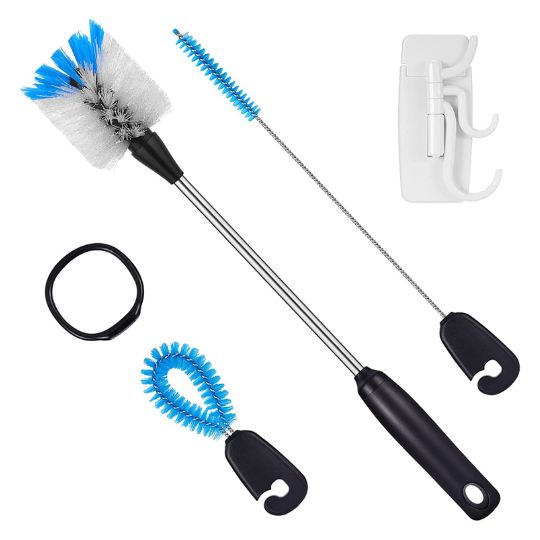
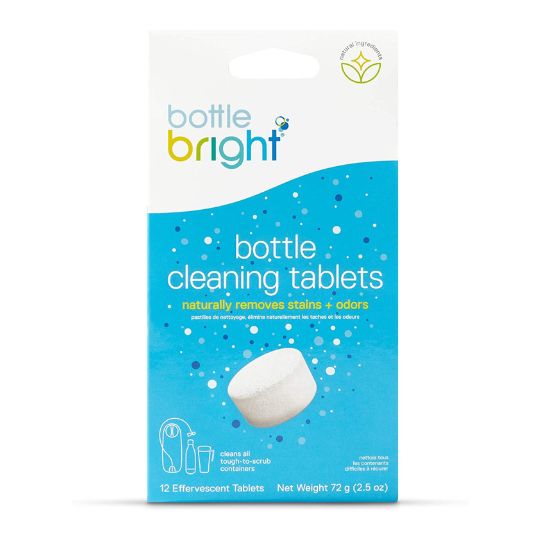
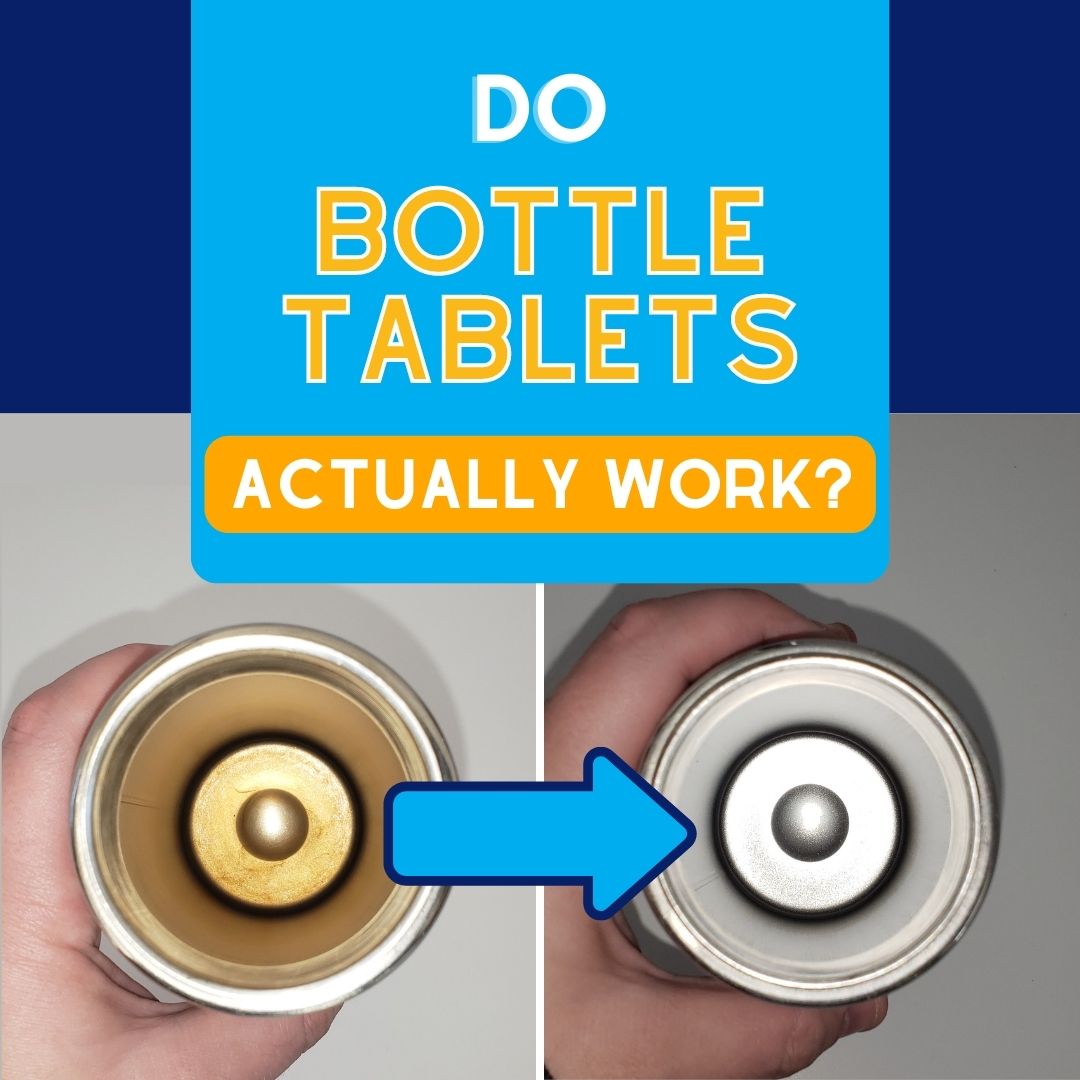
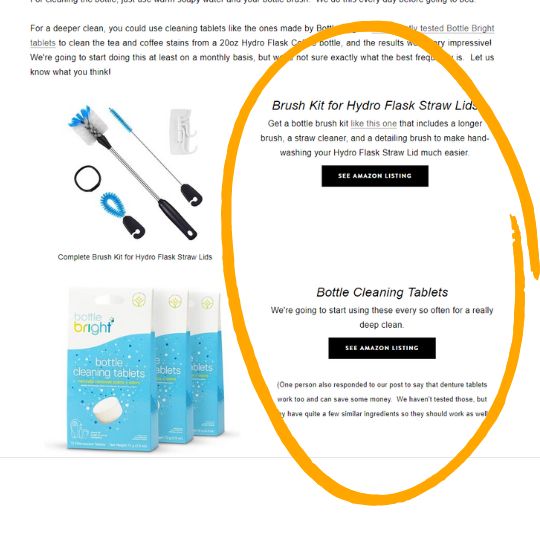
Before we even talk about any water bottle materials, we need to talk about cleaning.  Any bottle that isn’t cleaned regularly will eventually become unsafe to drink from due to bacteria buildup.  In an ideal world, you should wash your bottle after every single use, but that’s not practical for a lot of people and situations.  At the very least though, you should try wash your bottle thoroughly at least every 2-3 days if you use it each day .  Using a brush kit like this one is really helpful to clean larger water bottles, especially narrow mouths.  It’s also a good idea to give your bottle a deep clean every few weeks with a cleaning tablet, and I found that Bottle Bright’s tablets worked great to get stains out of my coffee bottle.

We also recommend that you do not use bleach with your bottle.  With some bottles, like 304 stainless steel, bleach can corrode the metal and cause damage.  Just clean your bottle regularly with warm, soapy water and use a bottle cleaning tablet every week or two for a deeper clean and you’ll be good.
Bottle Cleaning Products We Use Regularly
Picture
Bottle Brush Kit
See on Amazon
Bottle Bright Tablets
See on Amazon

Leaching

​The main concern that usually comes up when talking about water bottle materials and health is leaching, which is when chemicals or toxins from the bottle seep into the drink.  It’s the same process that created a widespread fear tomatoes in the 1700s when many people thought they were poisonous, as explained in more detail in this article by Reader's Digest.

Of course the tomatoes themselves weren’t toxic, but the acid from the fruit would leach lead from the pewter plates and utensils, causing lead poisoning.  More recently, BPAs have received most of the headlines, which leads us into our first material, plastic.

Are Plastic Bottles Safe?

Are Plastic Bottles Safe to Drink From?
Plastic is the most commonly used material today for water bottles for several reasons, including how it’s inexpensive, easily manufactured, and extremely durable.  When it comes to concerns with reusable plastic bottles, you’ve no doubt heard about bisphenol A compounds, more commonly known as BPAs.  These are widely used in industrial and consumer goods, but they have also been associated with adverse health effects in many studies.  One of the primary concerns is that BPA can mimic the effects of estrogen on your body, which can lead to hormone imbalance, but there are other potential health concerns as well.

To be clear, the risk is not completely known.  Researching any kind of low-dose, long term exposure like with BPAs is difficult, and there is some uncertainty on how of a risk BPAs actually pose for most people.  With over 17,000 scientific papers on PubMed as of 2023, there is understandably a mix of results.  And in fact, many studies indicate that most BPA exposure is so small that it is not a significant risk for the majority of people.  However, there is enough evidence and uncertainty that’s led to most public health agencies taking steps to reduce BPA use, especially in products intended to be used with infants.  For example, in 2012, the EPA officially amended its regulations to no longer allow BPA use in baby bottles and sippy cups.
Nalgene's History with BPAs
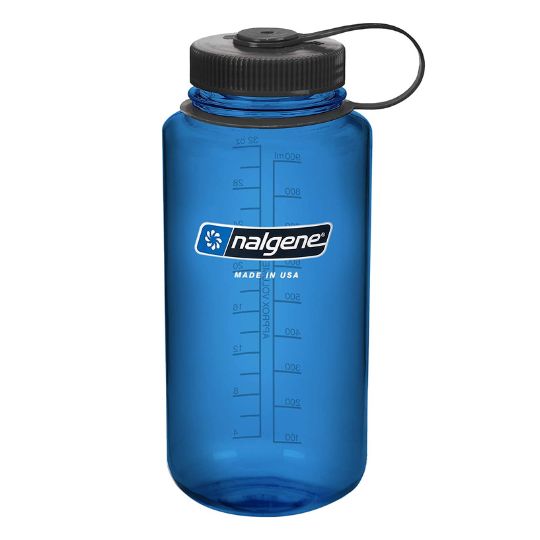
Nalgene 32oz
Nalgene 32oz
​When talking about BPAs in water bottles, the most well-known example is Nalgene.  After pressure continued to build from Nalgene’s customers and retailers, they changed their formulation in 2008 to phase BPA out of all of their plastics.

Since then, all plastic bottle brands that I’m aware of have followed suit, with most popular brands switching to safer plastics like Tritan.  
Are Plastic Water Bottles Safe Today?
Given all these changes and public knowledge about BPAs today, you’d be hard-pressed to find a reusable plastic bottle on the market that isn’t BPA-free, but it doesn’t hurt to check.  Just look on the product listing or on the packaging for the phrase “BPA-free.”  And if you have an older plastic bottle that you’re not sure about, you might want to consider buying a replacement.

In general, it’s a good idea to stick to Tritan bottles if you’re going with plastic.  This type of material is really light, so it’s for hiking when you want to minimize how much weight you’re carrying. Nalgene and CamelBak have some tried-and-true bottles to choose from, and YETI recently released their Yonder series plastic bottle.
Tritan Plastic Water Bottles We Use
Nalgene
Nalgene
See on Amazon
Camelbak Eddy
CamelBak Eddy
See on Amazon
YETI Yonder
YETI Yonder
See on Amazon

Are Stainless Steel Bottles Safe?

Are Stainless Steel Bottles Safe to Drink From?
The most popular alternative on the market today is stainless steel.  This is easily the best option if you’re looking for an insulated bottle to keep your drink hot or cold since there are so many dual-wall vacuum insulated options available.
Steel vs Stainless Steel
Steel and stainless steel are not the same thing.  Stainless steel has additives like chromium and nickel that help the alloy resist corrosion and rust better than regular carbon steel.  But don’t be concerned if you see something online or talk to someone who references "steel" bottles because that’s just shorthand for stainless steel.  If anyone reading this knows of a bottle that is made from non-stainless steel, also known as carbon steel, let me know because that’d be news to me and I’m guessing it’d involve some kind of wacky health claim that you probably shouldn’t trust.
Grades of Stainless Steel in Water Bottles (304 vs 316 vs 18-8 vs 18-10)
To go a step further down the steel rabbit hole, not all stainless steels are the same.  The most common types you’ll see associated with water bottles are 304, 316, 18-8, and 18-10.  I won’t get into the details here about these different grades, and honestly it can get a little confusing because there is some overlap between the classifications.

You’ll most commonly see 304 or 18-8 listed in the product descriptions for stainless steel water bottles.  Technically, 316 is better than 304 and 18-10 is better than 18-8 and, so if you’re really looking for the best-of-the-best, go with one of the higher grades.  For example, 316 steel is more resistant to corrosion in salty environments, making it a better steel for marine construction projects that will be in and around salt water.

​But when it comes to water bottles for average consumers, it doesn’t make a practical difference which grade you go with.  Any of these four stainless steel alloys are recognized as food-safe.
Stainless Steel Bottles We Use
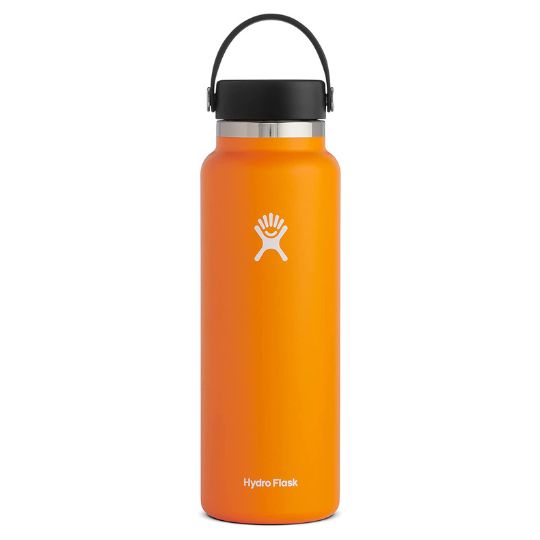
Hydro Flask
Hydro Flask
See on Amazon
YETI Rambler
YETI Rambler
See on Amazon
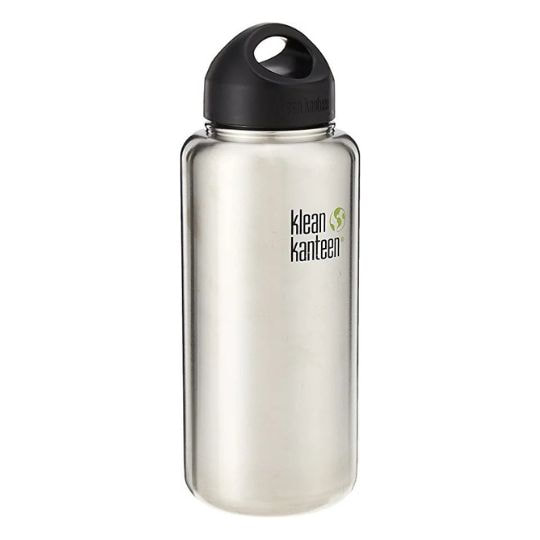
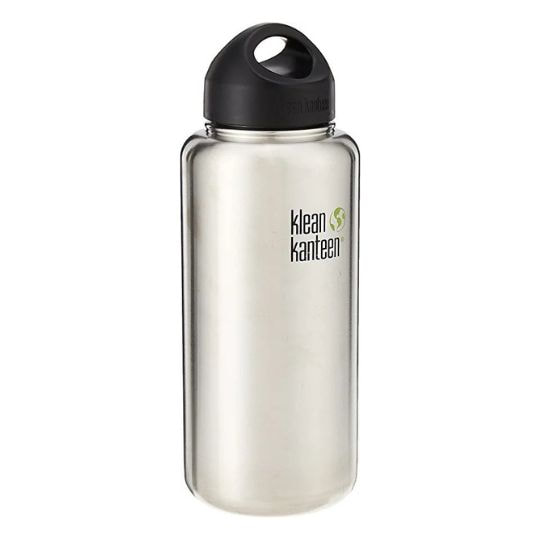
Klean Kanteen TKWide
See on Amazon
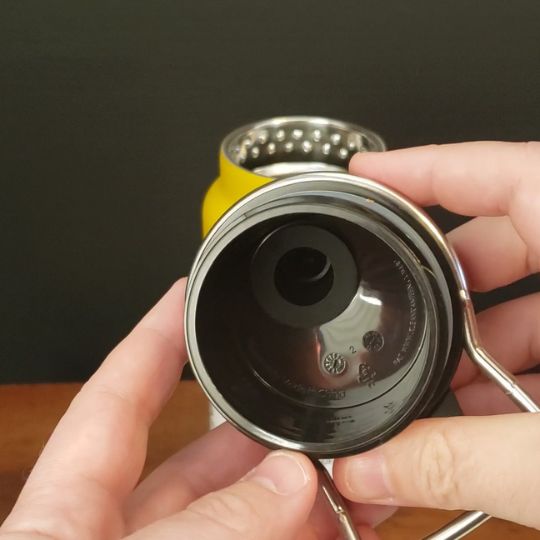
Which Stainless Steel Bottles Avoid Plastic Under the Lid?
Many people who want to avoid plastic contacting their water buy a stainless steel bottle and assume they are good, but the reality is that most water bottles still have exposed plastic under the lid that can come in contact with your drink.  Don’t forget to check under the lid if you’re looking to have completely free plastic drinking.

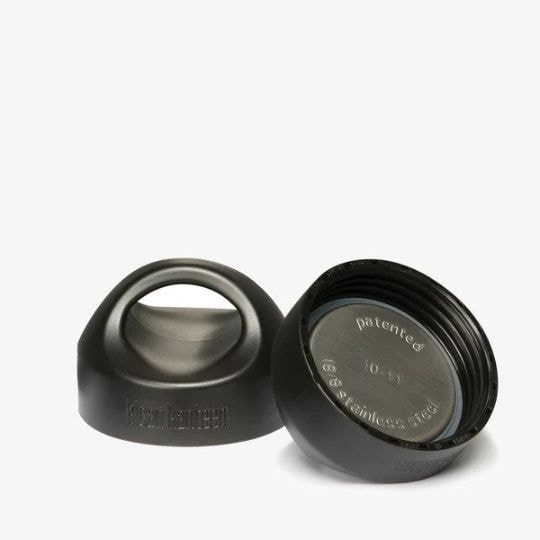
To my knowledge, all of YETI’s lids have plastic on the bottom.  Hydro Flask’s standard lids have plastic on the bottom, but they sell a replacement lid with stainless steel.  Klean Kanteen’s TKWide insulated bottles have plastic on the bottom of the lids, but I’ve included a link in the description to two of their bottle options that have stainless steel under the lid.
Stainless Steel Bottles that Do Not Have Plastic Under the Lid
Hydro Flask's Add-On SS Lid
See on Amazon
Klean Kanteen Non-Insulated Loop Cap
See on Amazon
Klean Kanteen Reflect

Are Glass Bottles Safe?

Are Glass Bottles Safe to Drink From?
​Glass is another good option to avoid plastic.  It’s certainly been around longer than plastic or stainless steel, and it has more of a natural feel to it.  Many people find that it doesn’t leave any kind of residual taste with some beverages that they experience with stainless steel or plastic.  When it comes to a clean, natural material to drink from, it doesn’t get much better than using glass.
Why You May Not Want to Use a Glass Bottle
​Safety with water bottles isn’t just related to what you ingest, and with glass, there is always a concern that it could break and create sharp edges.  This is especially a concern for children.  Glass is already pretty heavy and bulky, and it’s not hard to imagine a scenario where a child is running with a water bottle in his or her hand and trips.  The natural reaction is to put your hands out in front to break your fall, and it could lead to some nasty cuts if the bottle breaks in your kid’s hands.

It's worth noting that most glass bottles on the market are made with a specific type of glass called borosilicate.  You may not have heard of this specific term before, but odds are that you’ve used this type of glass at some point.  Pyrex is one of the most well-known borosilicate glass brands.  This type of glass is more resistant to temperature changes and shock, so it’s less likely to crack or chip.  In addition, many glass bottle brands manufacturers also sell their glass bottles with a protective silicone sleeve.  So yes, this type of bottle is still more susceptible to breaking in a way that could be dangerous compared to plastic or stainless steel, but the combination of borosilicate glass and the silicone sleeve helps prevent this from happening in most situations.

Popular Glass Water Bottles
Lifefactory (plastic on bottom of lid)
See on Amazon
​When it comes to glass bottles, Lifefactory is a big brand to know, but all the lids we’ve seen are made of plastic.  To be clear they’re made with polypropylene, which is generally regarded as a very safe, FDA-approved food-safe plastic.
Glass Bottles that Do Not Have Plastic Under the Lid
If your main goal is to avoid plastic contact completely, then any plastic lid is still obviously a problem.  Thankfully there are some other brands like Sunkey, Mayu, and Anotion that have stainless steel or silicone under their lids.
Sunkey (Stainless Under Lid)
See on Amazon
Mayu (Stainless Under Lid)
See on Amazon
Anotion (Silicone Under Lid)
See on Amazon

Are Aluminum Bottles Safe?

Are Aluminum Bottles Safe to Drink From?
​Aluminum is another common bottle material.  It’s lighter and less expensive than stainless steel, but it’s not as durable and won’t insulate your drink as well as a dual-wall stainless-steel bottle would.  You'll find aluminum is used in most single-use cans, like for soda and beer.
The Liner Inside in Aluminum Cans
One thing to be aware of is that aluminum reacts more with acidic liquids compared to other materials like stainless steel.  For this reason, aluminum soda cans are made with a plastic liner, and that plastic liner often contains BPAs.  Check out the short (51 second) video by Chemteacherphil that we've linked below because it does a really good job of showing this liner.
Popular Aluminum Bottles
Sigg
Sigg
See on Amazon
One of the most well-known brands that makes reusable aluminum bottles is Sigg.  According to their website, their bottles are OK to use with carbonated drinks like sodas.  This must be OK because they have a liner to protect the aluminum from acidic drinks, similar to disposable cans.

“The inner coating used in our production is widely used in various food containers and complies with strict EU/USA regulations.”

It’s worth noting that Sigg uses a liner that’s BPA-free, though we don’t know for sure what it’s composition is.  Also, I am not certain, but I wonder if the aluminum could be compromised if the liner is scratched on the inside somehow.  I just don’t know enough about the composition and durability of the liner to be certain, but it’s something I’m hoping to dive into with a future video.

So in general, aluminum bottles from respected companies like Sigg are certainly safe options to drink from, but it's not as clear-cut as some other options like stainless-steel or glass in my opinion.

Are Copper Bottles Safe?

Are Copper Bottles Safe to Drink From?
​Copper is a newer option that you can find on the market today, like this one from the brand Milton that was released in 2020.  From what we’ve read, copper is a double-edged sword.

On the good side, they look really cool, and there is some evidence that the copper can kill bacteria and microbes in water.

Some brands list additional health claims, including how copper is “known for its anti-oxidant, brain-stimulator and immunity booster properties.”  However, as far as I can tell, this is dubious at best and is not backed up by trusted sources.  In fact, too much copper intake can lead to symptoms like nausea, dizziness, and abdominal pain.
Why You Shouldn't Buy a Copper Water Bottle
​Take this paper Q&A sheet from the Washington State Department of Health.  It discusses the negative effects of ingesting water that’s been in contact with copper for too long, mostly involving old copper pipes.  They recommend running water in copper pipes for a minute before using it, and whenever possible, use cold water only because hot water dissolves more copper.

To be fair, this paper is referring primarily to old copper pipes that are used in construction, and I wouldn't be surprised if the high-grade copper that is allegedly used in many water bottles today is safer, especially because it's easier for you to clean and maintain it.

However, there are other similar options like stainless steel that are generally accepted to be safer, so in my opinion, why take the risk?
When Is a Copper Bottle a Good Option?
If you do not have access to clean drinking water, then a copper bottle may be a good option for you.  This is only because the antibacterial properties may provide enough of a benefit to overcome the negative effects of ingesting copper.  But if you have access to clean drinking water, then we generally recommend against using a copper bottle.
Copper Bottles on Amazon
If you're set on buying a copper bottle, here are a couple popular options on Amazon.
Milton Copper Bottle
See on Amazon
Otiem Copper Bottle
Otiem Copper Bottle
See on Amazon

Are Silicone Bottles Safe?

Are Silicone Bottles Safe to Drink From?
Silicone is a material that’s become more and more popular with food-safe products.  It’s been used for a long time as a component, like with o-rings and gaskets to keep bottles water-tight, and now we’re even seeing some all-silicone options come out.  They have some unique benefits given that they’re typically collapsible and lightweight, making them fantastic options for traveling and hiking.  Yes, there are some plastic options like Platypus like this, but for those who want something that’s collapsible without the plastic, silicone is really the only good alternative.
Does the Silicone Pinch Test Work?
​Quick note about silicone.  There are silicone types that are not food-safe, and it’s typically when fillers used do not have the same food-safe properties.

You might also read about a “pinch test” to verify if the silicone is safe.  The thought is that if you pinch silicone and it turns white, this indicates it has fillers that can be unsafe.  However, this is not necessarily true, and the pinch test is more of a myth from what I have read.

There are food-safe silicone products that turn white when pinched but that are still perfectly safe.  When buying a silicone product, make sure it says it’s FDA-approved, food-grade, or food-safe silicone, and if you have any questions, reach out to the manufacturer.
Does Silicone Contain BPAs, and is Silicone Safer than Plastic?
No, silicone does not contain BPAs.  This article does a great job at explaining more of the details and information about silicone and how it's different and generally considered to be safer than plastic.  And the Canadian government writes that there are no known health hazards. In the most basic terms, silicone uses silica, aka sand, which is the same primary component as glass.  This avoids some of the more problematic polymers and compounds found in plastics.

Having said that, silicone is obviously very synthetic and is relatively new-to-market compared to an alternative like glass.  For that reason, I wouldn't fault you if you chose to avoid an all-silicone bottle for now until more research is completed.
Silicone Bottles on Amazon
​There aren’t too many all-silicone bottles on the market yet, but two of the more popular ones now that are worth taking a look at are E-Senior and Special Made.
E-Senior
E-Senior
See on Amazon
Special Made
Special Made
See on Amazon

Are Titanium Bottles Safe?

Are Titanium Bottles Safe to Drink From?
​The last bottle material we’ll cover in this video is titanium.  At first glance, this looks like one of the best options available.  It’s extremely durable, more lightweight than stainless steel, and is corrosion-resistant.  Because it is better than stainless steel in nearly every way including being almost 50% lighter, titanium is a fantastic option for hiking.
Why Shouldn't you Buy a Titanium Bottle?
But for all of that functionality, you can expect to pay a much higher price.  The cheapest titanium bottle option we found is $80, and other options easily get up over triple digits.  In short, titanium bottles appear to be one of, if not the, best material options available for water bottles, but they have a price point that reflects the premium nature of this material.

​One other downside worth mentioning is that there does not appear to be a dual-wall vacuum insulated option like you’ll find with so many stainless steel bottles.  Some brands like Boundless try to spin this as a positive because you can put your bottle directly on a stove to boil water for cooking or to purify it, and for sure this is a benefit when camping or hiking long distances.  But for most people, they just want a bottle that can hold ice for 4-8 hours, and I’m not sure a titanium bottle is a good option for that unless you get a thermal sleeve.
Titanium Bottles On Amazon that We'd Love to Test
Silverant
Silverant
See on Amazon
Boundless
Boundless
See on Amazon
Vargo
Vargo
See on Amazon

Which Water Bottle Materials are the Safest?

Which Water Bottle Materials are the Safest?
Yo sum things up, I like to think of safety with different water bottle materials in three tiers.
Tier 3 - Avoid
Copper
At the bottom of the list is copper.  It’s probably not a good idea to drink regularly from a container like this.  You’ll pay quite a bit of money, and it doesn’t look like science backs up the health claims.
Tier 2 - Probably OK, but there are some concerns
Plastics (Tritan and Polypropylene)
​Aluminum
​Each of these materials are safe according to many studies and the manufacturers, but there are a few details that caused me to rank them a little lower, mainly because there are still some concerns about plastics in general and because aluminum bottles all seem to have an interior lining.
Tier 1 - Safest
Stainless Steel
Silicone*
Titanium
Glass**
And finally, the safest materials to use are stainless steel, silicone, titanium, and glass.  From what I’ve read, these bottles all have consistent safety testing results, and you should feel safe and confident using any of them.

*Silicone is newer and more closely related to plastic, so I wouldn't fault you if you wanted to avoid this type of bottle until more research is done.  I almost ranked it in Tier 2 for that reason.

**Glass would be at an even higher level if it weren’t for concerns with breakage and cutting yourself.  But if you’re really looking for the cleanest, most natural drinking option, glass is probably the best material to go with.

Buying a Large Bottle?  Keep Us in Mind

Check out our Amazon store for fun and helpful accessories, like fruit infusers, cup holder adapters, and carrying slings.
Picture
BottlePro's Amazon Store
8 Comments

How Triple-Wall Bottles Work, and are They Worth the Hype? (Insulation Test vs Dual-Walls)

8/24/2023

1 Comment

 
Are triple-wall bottles better than dual-wall bottles?

Do Triple-Wall Bottles Really Have Better Insulation than Dual-Wall Bottles?

You’ve probably heard about dual-wall insulated bottles, but what about triple-wall?  If two walls are good, then three are better, right?  Let’s find out.

Dual-wall stainless-steel bottles have been around for a long time, and brands like Hydro Flask and YETI really launched them into mainstream use within the last decade.  Each bottle has two walls of stainless steel with a vacuum in between, and the lack of air reduces how much heat can transfer in or out.  We tested quite a few of these bottles for a video earlier this year, and that turned into one of our best-performing posts.
​
Triple wall bottles are not as widespread, but there are a few brands out there marketing this type of design, including S’well, RevoMax, EcoVessel, and Owala.  We didn’t discuss this type of bottle as we would have liked in our previous insulation test video, so we thought now would be a good time to revisit it, this time with a focus on seeing if the triple-wall design is worth the marketing hype.

Content Overview:

Here's what we'll cover in case you'd like to skip ahead to a certain point.
  • Link to our video review (covers the same info as this article)
  • How triple-wall and triple-layer bottles work
  • Insulation Test A (Using a uniform styrofoam cap)
  • Insulation Test B (Using the manufacturer's lid)
  • Comparing Test A and B
  • Conclusions​

Our Video Review

Our YouTube video covers the same information in this post, so click the link if you'd rather see the video.  Otherwise, keep reading the full post below!

Before we get started, there are a few details to point out.
  1. Hot vs Cold: In our previous video, we weighed ice before and after to determine how much of it had melted.  This time, we’re doing a hot-water test and using a thermometer to measure temperature.  We changed this up to try to make the test more reliable, and because insulation is the resistance to temperature change in either direction, it doesn’t matter if we’re testing hot or cold.  We should still get the same relative results and rankings for each bottle.
  2. Bottle and Mouth Size: Most of the bottles we tested hold 32 ounces, but we have a few other bottles that we wanted to test too.  We also had a couple of bottles that are narrow mouth instead of wide mouth.  For an ideal test, all of the bottles would have the same volume and the same mouth opening diameter. We’re a small channel that can only afford to buy so many bottles, so we’re working with what we have.  That being said, our results will still give you a pretty good idea of what to expect, especially if you’re looking for a 32-ounce size.
  3. Lid Design: Different lids have different insulating properties.  Because our primary goal is to test the insulation differences between dual and triple walls, we wanted to remove the variable of the lid design from our test.  More on this later.
  4. Triple-Wall vs Triple-Layer: finally, the term “triple-wall” is a bit misleading.  We’re going to spend a couple minutes geeking out about thermodynamics to explain how it works, so skip ahead if you’re like to move straight to the test.

How Triple-Wall Bottles Work

"Triple-Wall" vs "Triple-Layer"

Many people assume triple-wall means three walls of stainless-steel, but that’s not correct.  If you look closely at the marketing and listings, you’ll notice that it probably says “triple-layer” instead of “triple-wall.”  It’s a small but significant distinction because they don’t really have three walls.  They have the same dual wall construction with a vacuum in between, and the third layer refers to a copper coating on one of the stainless-steel walls.

From S'well's website:
“Thanks to our Therma-S'well® Technology and triple-layered insulation, which includes a copper layer, S'well products are able to keep any liquid hot or cold for long stretches, while maintaining a condensation-free exterior.”
Picture
You might be wondering how this would help.  Copper is known for being a good electrical conductor, but it also has a high thermal conductivity.  This means that heat is transferred very easily through it, so why would a copper layer help bottle insulation?

How Triple-Wall Bottles Limit Radiation Heat Transfer

​The answer comes down to the three basic types of heat transfer: conduction, convection, and radiation.
  • Conduction is the transfer of energy from one molecule to another through direct contact.  Matter is needed since you need the molecules to touch each other, so this is the type of heat transfer that the vacuum seal really helps with.
  • Convection is heat transfer related to the movement of a fluid such as water.  This does not apply as much to our situation since we’re focusing on sealed bottles.
  • The third method is radiation, and this is where the copper layer is designed to help.  Radiation is the transfer of heat by electromagnetic waves.  Examples include sunlight, light bulbs, irons, and toasters.
Type of Heat Transfer
The key difference with radiation compared to either conduction or convection is that radiation does not need matter to transfer heat, which allows for radiation heat loss through the vacuum in dual wall bottles.

Emissivity: How Different Materials Allow Radiation Heat Transfer at Different Rates

Emissivity is a material property that indicates how efficiently heat is transferred by radiation.  A material with a lower emissivity value will transfer less radiant heat compared to a material with a higher value.  Copper has an emissivity of 0.05, so while the copper coating won’t do much to prevent heat conduction, it will help prevent heat radiation.  For reference, stainless-steel has a higher emissivity of 0.59, so the steel won’t prevent radiation heat loss as efficiently by itself.
Emissivity Table
Emissivity Table
So that’s the science behind the triple-layer and how it theoretically is better, but how does this translate into actual results and is it significant enough of a difference for you to consider when buying a bottle?  Let’s find out!

Insulation Test A - Uniform Styrofoam Cap

Insulation Test A (Using a Uniform Styrofoam Cap)

We looked at 14 total bottles.  11 bottles are dual-wall, and 3 have triple-layer insulation with the copper coating.
Dual-Wall:
  • Klean Kanteen 32-ounce TKWide Insulated
  • Hydro Flask 32-ounce Flex Straw
  • Hydro Flask 32-ounce Trail Series (lighter)
  • Takeya Actives 32-ounce (includes Matching Bottle Boot)
  • Camelbak Chute Mag 32-ounce
  • Ozark Trail 32-ounce
  • Steepware 22-ounce Tea Tumbler
  • FJbottle 34oz
  • YETI 36-oounce Chug Cap
  • Iron Flask 40-ounce
  • Stanley Quencher 40-ounce
Triple-Layer:
  • RevoMax 32oz
  • EcoVessel Boulder Series 32-ounce
  • S’well 25oz (the narrow mouth from this video)
We were originally going to boil water to recreate steeping tea or brewing coffee, but it would have taken quite a few batches and taken a lot longer.  So instead, we filled up each bottle with the hottest water from our sink.

As mentioned before, different lids have different insulating properties.  
Because our main goal was to compare the triple-layer vs dual-wall insulation, we wanted to keep the different lid styles from impacting the results as much as possible.  We purchased a sheet of Styrofoam insulation, cut it into a bunch of smaller pieces, and pressed them onto the rim of the bottles.  This created an impression in the Styrofoam pieces that helped limit the potential for gaps and temperature loss.​
Impression in the Styrofoam caps to limit heat loss
We poked a hole through each piece of foam with our thermometer, and we used a few other smaller pieces of insulation to cover up the holes when we weren’t taking measurements. ​
Poking a hole through the cap
Taking a measurement
Covering the hole when not taking a measurement
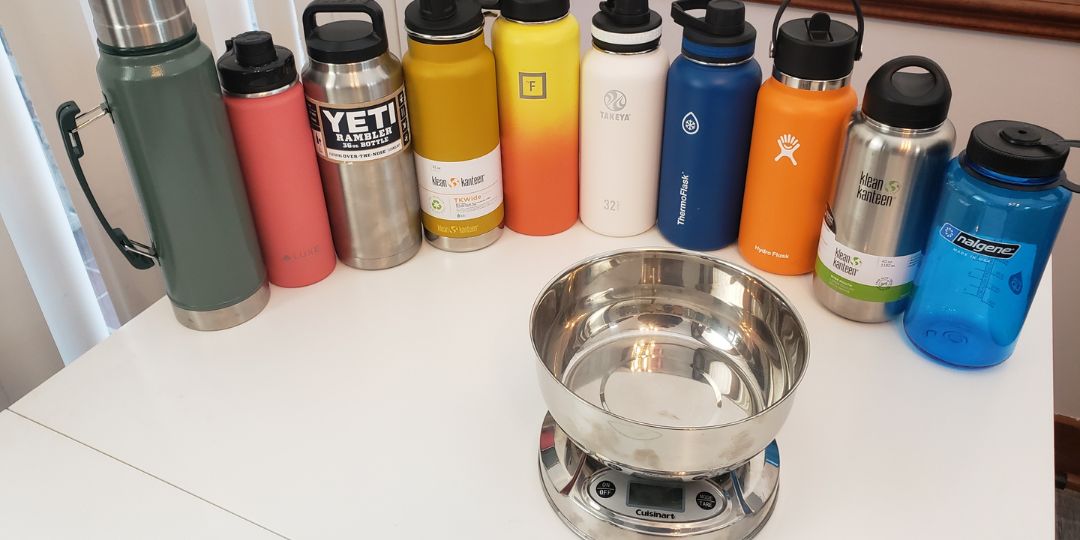
Bottle lineup
Bottle lineup

Test A Results

We measured the temperature every hour for the next four hours, again around hour 8, and one more time around hour 20.  With each measurement, we inserted the thermometer through the hole in the Styrofoam cap until the temperature equalized.
​
This chart and graph show the percentage temperature change at different times during our test, which lasted 19 hours and 31 minutes.  Temperature drops ranged between 17.2% on the low end to 27.0% on the high end.  Looking closer at the data, there are a few interesting results to note.
Test A Results: Table
Test A Results: Graph
Two of the triple-layer bottles, RevoMax and S’well, had the best results.  The third triple-layer bottle, EcoVessel, didn’t fare as well, but it was still in the top five.

The best dual-wall bottle really surprised us.  Ozark Trail, the Walmart brand bottle that we bought for $11, had an 18.5% temperature loss.  Compare that to 20.9% for a $50 YETI Rambler and 24.2% for a $45 Hydro Flask.
​
The worst bottle by a wide margin is Steepware, which is a bit ironic given that it’s primarily made for brewing tea.  That being said, it’s probably not a major concern because most people will drink the tea within a few hours before it goes stale.

So based on the results, it does appear that the copper layer may have an impact and helps insulation.  However, depending on which brands you’re comparing, the difference between triple layer and dual wall insulation might not be as great as you would have thought.  When you average the percent temperature loss for dual wall vs triple layer bottles, you get 22.7% and 18.3% respectively.  A 5% difference over 20 hours is significant, but it’s not really game-changing in our opinion.

However, there’s another big variable that makes this conclusion a bit uncertain.  We can’t afford to buy every type of bottle, and it just so happens with our bottle collection that the two best performing bottles were also our only two narrow mouth bottles.  Because most heat is lost through the lid and mouth opening, narrow mouth bottles should have an advantage over wide mouth ones.  We’d like to do another test in the future that focuses on wide-mouth vs narrow-mouth insulation once we have more narrow mouth bottles to compare.

Insulation Test B: Manufacturer's Lid

Insulation Test B (Using the Manufacturer's Lid)

But let’s face it, you’re not going to be walking around with one of these bottles with a Styrofoam cap.  We did the test first because we wanted to isolate the effect that the copper layer has on the insulation, but the more practical test that you can use compares the bottles when using the lids that they come with.  So we ran a 2nd version of the test using the bottle lids.

For each measurement, we swapped the bottle lid with the Styrofoam piece from the previous test.  Then we pushed the thermometer through the Styrofoam, and this prevented excessive temperature loss for the 15-20 seconds that we needed for each measurement.  Once we had the reading, we put the normal cap back on.
Test B using the manufacturer's lids
Swapping the manufacturer's lid for the Styrofoam cap for each measurement
Taking a measurement through the Styrofoam cap

Test B Results

​This test lasted for 19 hours and 17 minutes, and we made the same type of chart and table to show the results.  Right away, there are some interesting data points and details to unpack.
Test B Results: Table
Test B Results: Graph
The relative rankings were mostly the same as with Test A, but there was a much wider range of results with a 13.5% temperature drop on the low end to 30.1% on the high end.  That’s an increase in the range of results from 9.8% with Test A to 16.6% with Test B.

The same two brands performed the best (RevoMax and S'well), but they widened their lead significantly.  However, keep in mind that these are the only two narrow-mouth bottles in our test.

Ozark Trail had a great showing again, and this was the best dual-wall bottle in both tests.
​
Unfortunately for Steepware, this bottle was even more of an outlier on the wrong side of the average compared to Test A.

Test A vs Test B: Did the Manufacturer's Lid Help?

Does the Bottle Manufacturer's Lid Help Insulation?

​While the relative rankings were similar for both tests, you may have noticed the rankings did change in some cases.  For example, Hydro Flask’s Trail Series jumped from the 2nd worst with Test A to the middle of the pack with Test B.  Since the only change between the two tests was that we switched from the standardized foam pieces to each brand’s lid, any changes in the rankings means that some brands have designed lids with better insulation than others.
Standardizing the Results
Tests A and B had slightly different total durations, so to better illustrate how the results for each bottle changed between the tests, we needed to standardize the results.  We calculated the temperature drop per minute over the duration of both tests, then we multiplied that by 1200 to simulate a 20-hour test.  Then we compared Test A vs Test B for each brand, and this graph shows how each brand changed.
Test A vs Test B Comparison
​Bottles that fall on the left side had better results with their brand’s lids instead of the Styrofoam cap, and bottles on the right did better with the Styrofoam.  
Bottles whose Manufacturer's Lid Helped Insulation Compared to the Styrofoam Cap
​S’well, RevoMax, and both Hydro Flasks were the only bottles that improved with Test B.  When you look at the lids with each of these bottles, you can see that they seem to have more built-in insulation, like with S'well and RevoMax.
S'well lid insulation
RevoMax lid insulation
Most of the other bottle lids like Steepware and Takeya don’t have built-in insulation and just have single layer plastic construction in the cap, so it’s understandable that they didn’t fare as well. ​
Steepware lid insulation
Takeya lid insulation

Conclusions: Are Triple-Wall Bottles Worth the Hype?

​So when we take a step back and look at the results as a whole, we have a few main takeaways.
  1. Triple-Layer vs Dual-Wall: Triple-layer construction does seem to help compared to dual-wall insulation, but it may not be as big of a difference-maker on its own as the marketing might make you think.
  2. Lid Design and Narrow vs Wide Mouth: The more significant factor appears to be narrow vs wide mouth and the insulating properties of each brand’s lid design.
  3. Price: Price doesn’t guarantee results, as Ozark’s $11 bottle did better than all the other dual-wall bottles, including YETI and Hydro Flask.
​Based on these results, we have a few more video ideas that we may work on in the near future.  Once we have more narrow-mouth bottles in our collection, we want to compare those against wide-mouth bottles.  We also think it would be interesting to focus on premium brands vs budget brands, because let’s face it, we’re probably not the only ones that were surprised that Ozark Trail outperformed YETI.  And finally, we only ran one instance of each test, and for more reliable comparisons and data, we ideally would repeat the test more times and average the results.

Buying a Large Bottle?  Keep Us in Mind!

Check out our Amazon store for fun and helpful accessories, like fruit infusers, cup holder adapters, and carrying slings.
Picture
BottlePro's Amazon Store
1 Comment

What is the Best Water Bottle, and Which One Should You Get? (The Ultimate Guide)

7/7/2023

0 Comments

 
What is the Best Water Bottle, and Which One Should You Get?

What is the Best Water Bottle?

It’s 2023, and there are literally hundreds if not thousands of water bottle brands to choose from that initially can appear very similar.  With such a saturated market you might be wondering, what is the best water bottle today?  But really, that’s an impossible question to answer since different bottles are better for different situations.

The better question to ask is, which water bottle is best for you based on how you plan to use it?

Content Overview:

Heads up, this is a pretty long post with a lot of information.  Here's what we'll cover in case you'd like to skip ahead to a certain point.
  • Link to our video review (covers the same info as this article)
  • Part 1: Questions you should ask yourself before your start searching for a bottle
  • Part 2: Review of popular and notable water bottles and brands
  • Part 3: Our recommendations for best water bottles by category (hiking, commutes, tea, value...)

Our Video Review

Our YouTube video covers the same information in this post, so click the link if you'd rather see the video.  Otherwise, keep reading the full post below!

First, a few things to note.
  1. We’re reviewing a fairly arbitrary selection of 13 brands and 15 bottles.  It’s a decent number of options, but there are way more out there that could be compared.  We can only do so much in one video, and this is meant to be a good starting point.
  2. We’re primarily focusing more on the more established brands.  And we are exploring a few non-mainstream brands, but for the most part, we’ll stick to the big dogs.
  3. We also mostly stick to insulated stainless steel bottles with wide mouth openings, with a few notable exceptions.  Dual-wall vacuum insulated bottles are very popular in today’s market, and we generally like wide mouth bottles more than narrow mouth ones.  See our other video for more about why.
  4. Two of the bottles we’ll talk about have triple-layer insulation.  Many people think this means three layers of stainless-steel, but it actually refers to a layer of copper.  We won’t go into much detail about that distinction in this video, but we have another video in the works that focuses entirely on insulation where we’ll test them to see if these triple-layer bottles really hold up.
  5. And lastly, our recommendations are mostly based on our own opinions.  Let us know in the comments if you agree or disagree, and especially if you have any other thoughts or considerations that could help other buyers hone in the best bottle for them.

Part 1: What Questions to Ask Yourself before Looking at Bottles

What Type of Water Bottle Do You Need?

Before you even look at any bottles, ask yourself these questions.
  1. WHERE: Where will you primarily use it?  Around the house or at work?  On your commute so you need something that’s easy to use in the car?  On hikes?  There will always be some crossover use, but think about how you’ll use your bottle most of the time.
  2. WHAT: What will you be drinking?  Water bottles don’t need to just be used for plain water.  Many people use them for tea, coffee, fruit infusing, or adding ice, and some bottles are better for these than others.
  3. BRANDING: How important is branding to you?  This is directly related to cost, since most of the prominent brands like Hydro Flask and YETI come with higher price points than brands like Nalgene and Iron Flask.
  4. LID: What type of lid do you prefer?  Most lids fall into four basic categories: standard, straw, spout, and sip.  Standard lids that you screw on and off completely are a good starting option that comes with most bottles, but they don’t offer many additional advantages.  Straw lids are the easiest to drink from but are typically harder to clean.  Spout lids are pretty good all-around options and are generally an improvement over standard lids.  And sip lids are best when used for coffee, tea, or other hot drinks.
  5. VOLUME: And finally, think about how much volume you will need.  According to the University of Missouri, a good rule of thumb is to take your weight in pounds, divide it in half, and the result is how many ounces of water you should drink per day.  Use this to calculate how many ounces you should drink per hour, and then consider how easily you can refill your bottle.  When taking all of these factors into account, you should be able to get a good idea of which volume water bottle makes sense for you.
And if your main use will be hiking or some other physical activity, there are some other factors to consider, like heat and elevation gain.  Check out our video where we do a deeper dive into this topic.

Part 2: Reviewing Popular and Notable Bottles and Brands

Popular and Notable Water Bottles and Brands

​Now let’s look at some of the more popular bottles and brands.  We'll cover:
  • Nalgene
  • Klean Kanteen Classic
  • Klean Kanteen TKWide
  • Hydro Flask
  • Hydro Flask Trail Series
  • YETI Rambler
  • Takeya
  • Iron Flask
  • ThermoFlask
  • Stanley
  • Camelbak
  • S'well
  • FJbottle
  • Steepware
  • EcoVessel

Nalgene

Nalgene Water Bottle Review
Nalgenes are lightweight, inexpensive, dishwasher safe, and they come in many color options.  And while all of the bottles in this review are pretty durable overall since most are made of stainless-steel, Nalgenes are also much more dent resistant because of the plastic construction compared to stainless-steel bottles which can dent more easily.  Nalgene is also the only bottle brand we looked at that is made in the USA.

​​Some drawbacks are that they only come in plastic, they don’t have a built-in handle if you don’t count the tether for the lid, they don’t have an insulated version, and there aren’t many options to choose from for lids.  It doesn’t feel like the brand has innovated like others have, which has left Nalgene struggling behind other bottles in many aspects. But they still make a great, dependable bottle at an affordable price point, which makes it a good option for many people.
See Nalgene Listing

Klean Kanteen Classic (Non-Insulated)

Klean Kanteen Classic Review
Klean Kanteen has a mix of insulated and non-insulated bottles.  Non-insulated Klean Kanteens are lighter than dual-wall bottles, and they have a simple design that is very easy to clean. They’re also notable for how the standard cap has steel on the bottom, so your water never touches plastic. Most other stainless-steel bottles on the market, including Klean Kanteen’s own TKWide Series, have plastic under the lid.

​Some drawbacks are that we don’t like the standard loop caps very much, and they aren’t insulated.
See Klean Kanteen Classic Listing

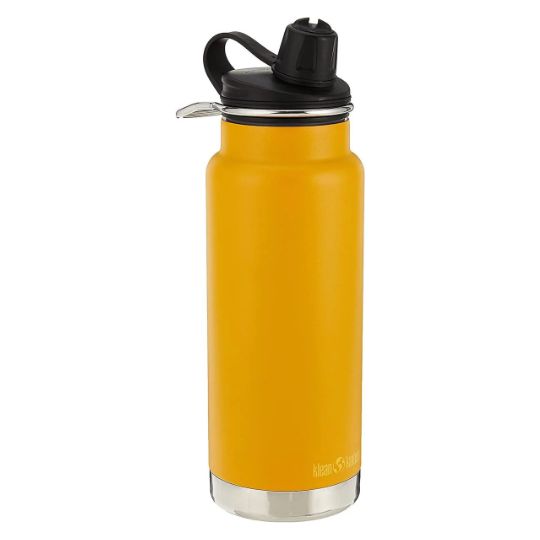
Klean Kanteen TKWide Insulated

Klean Kanteen TKWide Review
Klean Kanteen recently came out with their TKWide insulated bottles.  They have a range of well-engineered lid options that feel unique compared to other brands.  The rigid handle feels very sturdy, and one unique benefit is the Impact Base Cap on the bottom.  This is a hollow cap that absorbs an impact if you drop your bottle, which lessens the chance that a dent could affect the vacuum insulation.  This is one of the easier bottles to clean because the threads on the bottle are made of small bumps in the stainless-steel instead of traditional thread grooves.

​Some downsides are the overall bulk, both in terms of weight and size for a 32-ounce bottle.  We also wish the spout cap was a little easier to keep out of the way.  You have to snap it onto the metal handle, which isn’t as easy as some other bottles like Takeya, Camelbak, and FJbottle.  There aren’t too many color options for Klean Kanteens, so keep that in mind if you’re looking for your own style.
See Klean Kanteen TKWide Listing

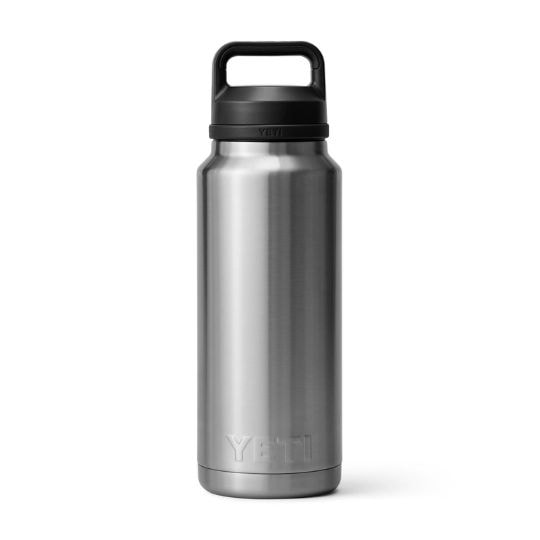
YETI Rambler

YETI Rambler Review
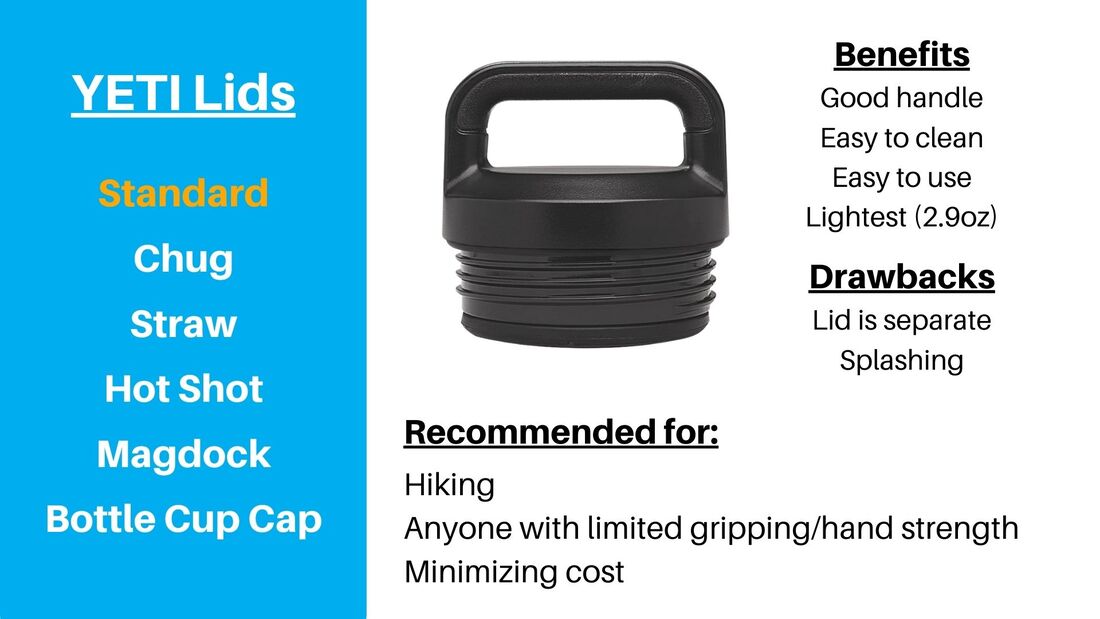
​YETI is in the top-tier for brand prestige, and therefore cost.  They are notoriously expensive, but their products are generally very high-quality, which has led to a devoted following of fans and supporters.  There are six lid options for their Rambler series wide mouth bottles, so you can pick what’s best for you.
​
​
Downsides are definitely the cost, but also that these bottles are heavier than some comparable ones on the market.
See YETI Rambler Listing

Hydro Flask

Hydro Flask Review
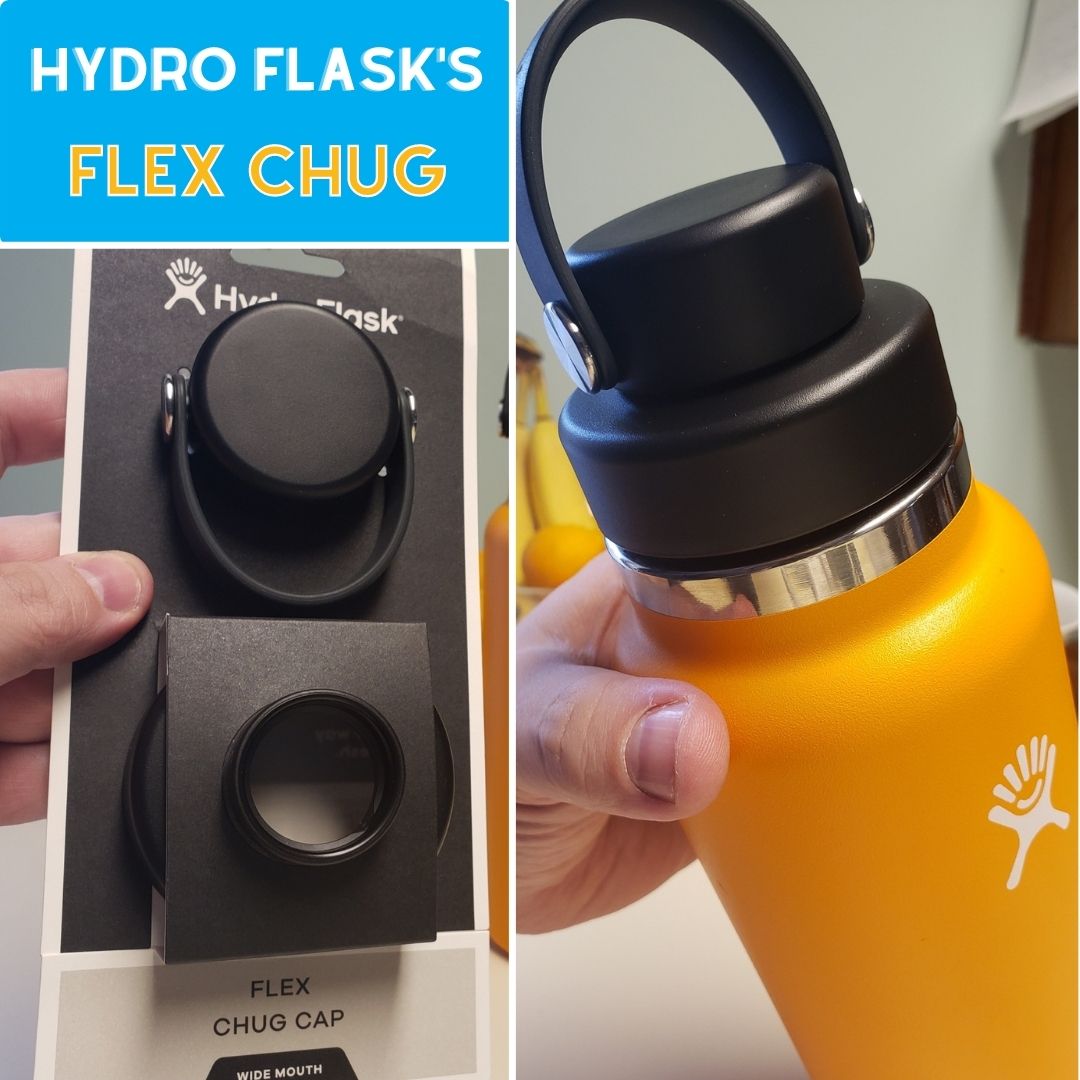
Hydro Flask is the brand that really catapulted dual-wall insulation into the mainstream, and they’re also a top-tier brand on par with YETI.  Their bottles come in a wide range of colors, and they have a good range of well-engineered caps and accessories to choose from, though some are better than others.  We love the Flex Straw, but we’re not huge fans of the Flex Chug.

​You can expect to pay a premium for any Hydro Flask, but the customer service is very good and the company stands behind their products.
See Hydro Flask Listing

Hydro Flask Trail Series

Hydro Flask Trail Series Review
​Another Hydro Flask bottle that’s good to know about is their Trail Series lineup.  These bottles have the same great insulation, branding, and look, but Hydro Flask really focused on reducing the weight of the bottle so it’s easier to hike and get around with.  This makes it one of the best insulated bottles for hiking compared to really heavy options like Klean Kanteen’s TKWide and YETI’s Rambler.
See Trail Series Listing

Takeya

Takeya Review
Takeya is a good mid-range alternative to Hydro Flask, and their Takeya Actives bottles in particular are a great all-around option.  The spout lid is a really good design with a wide handle, a spout cap that locks out of the way for when you need to take a drink, and a nice textured grip.  It also comes with a matching bottle boot to protect your bottle from dents and scratches.

​There aren’t many downsides and this is a jack-of-all-trades kind of bottle, but some people do prefer rigid handles instead of the hinged Takeya design.
See Takeya Listing

Iron Flask

Iron Flask Review
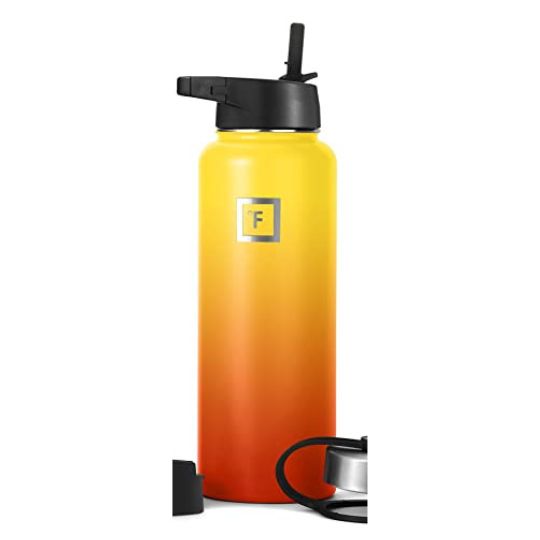
​Iron Flask is an Amazon-focused knock-off of Hydro Flask, but they’re notable for a few reasons.  They come with three cap options, so that helps you figure out which style you like without having to buy more lids.  Iron Flask is definitely a good brand to consider if you’re looking for unique color options, including gradients.

One downside is that the caps are good, basic options, but they do feel more standard and less engineered than Hydro Flask’s lids.  
See Iron Flask Listing

ThermoFlask

ThermoFlask Review
ThermoFlask is a bottle brand that we’ve always thought was a ripoff of Takeya, but while editing this video we found out that’s because ThermoFlask is a brand registered by Takeya.  So if you notice a lot of similarities between the two, that’s why.  But one difference we’ve noticed is that ThermoFlask seems to have more 2-pack options available on Amazon, which means you can get an even better value.

One downside is that there don’t seem to be as many color options.
See ThermoFlask Listing

Stanley Quencher

Stanley Quencher Review
Stanley has been around a long time, but in recent years it has had a major resurgence thanks to their Quencher Series insulated tumblers.  The main difference between this bottle and every other bottle on this list is the built-in handle on the side.  Most of the other bottles have handles on the lid, but Stanley’s side-mounted handle, while not our personal favorite, is a big hit with many people.  It’s also more tapered at the bottom like a classic tumbler-style, so it fits in more cup holders without needing an adapter.

​The biggest downside is the overall bulky design.  Yes, this is easier to manage because of the handle and the tapered base, but it’s still a very bulky bottle. 
See Stanley Listing

Camelbak Chute Mag

Camelbak Chute Mag Review
Camelbak is a well-known brand that really made a name for themselves with hydration bladder packs for biking and on longer hikes, but they have also released some solid bottle options as well.  They are more reasonably priced than the other well-known brands like Hydro Flask and YETI, and the Chute Mag bottles in particular are very popular because of the magnets that lock the spout cap back when you go to take a sip.

​We’re not huge fans of the hinge design though, as it doesn’t flip open as smoothly as other spout caps like Takeya and FJbottle.
See Camelbak Listing

S'well

S'well Review
Many bottles on this list can be difficult to distinguish at first glance, like Hydro Flasks, Iron Flasks, Takeyas, and ThermoFlasks.  On the other end of the spectrum, you have S'well, which is another high-end brand on par with Hydro Flask and YETI.  The aesthetic design and sleek look are the main selling points, and they’ve also come out with many narrow mouth lids, including a filter cap that’s unique to this list.  They are also the first brand we’ve talked about that has triple-wall insulation.

​However, they are pretty expensive, and there aren’t many lid options for their wide-mouth Traveler series bottles.
See S'well Listing

FJbottle

FJbottle Review
The next brand is FJbottle.  Quick disclosure, they reached out to us and sent us a bottle to test.  We told them we would only cover the bottle if we liked it, but after using it for a few weeks, we can honestly say that we like this bottle way more than we thought we would.  It’s right up there with Takeya for our favorite spout-style lid.

Like Camelbak’s Chute Mag, it uses magnets to keep the spout cap out of the way when you’re taking a drink, but the hinge design is much better and is easier to open, especially if you’re just using one hand like when you’re driving.  The spout cap also takes the least amount of turning to unlock compared to any of the other spout lids, which is also helpful when driving.  There’s a silicone grip pad on the bottom that keeps your bottle from sliding around and protects against some scratches, though not on the outside edges.  There’s also a strap on the side, and we’ve ended up using this strap all the time.  They also include a brush with each bottle to help with cleaning right out of the gate.

​One downside is that the spout cap doesn’t flip out of the way as much as Takeya’s version, but you can either tilt your head more or angle the bottle to get around this issue.  Also, the rigid handle on top is a little small, but in our opinion the strap on the side more than makes up for this.

​Overall, we honestly do like this design, and it might become our go-to bottle for a while.
See FJbottle Listing

Steepware Everest

Steepware Review
​Steepware’s Everest tumbler was made primarily for one thing, and that’s brewing tea.  And they really do have a good product for this purpose.  There’s a built-in tea strainer that you can use for loose-leaf tea, or you can use it as an ice strainer if you’re looking for a cooler drink.  The strainer is pretty big too, so there’s quite a bit of surface area for your loose-leaf tea to steep.  You could always take out the strainer and use it like a regular bottle, but the larger strainer is really the feature that sets this bottle apart.
See Steepware Listing

EcoVessel Boulder

EcoVessel Review
The last brand we’re discussing is EcoVessel.  Their Boulder series bottles might have the most features and accessories packed into one bottle that we’ve seen yet.  It has a strainer for ice and fruit, comes with a silicone bottle boot to protect the base of the bottle, and has triple-layer insulation.

​Some drawbacks are that the strainer is smaller compared to Steepware’s version, so it’s not as good for loose leaf tea, especially in larger 32-ounce bottles.  We’re also not a huge fans of lid tethers that double as handles in general, but that’s more of our personal preference and at least EcoVessel has a wider tether compared to Nalgene.  It’s hard to put our finger on it, but the construction feels cheaper in a way compared to some other bottles we’ve reviewed.  But with so many extra features and a reasonable price, this bottle has a lot going for it.
See EcoVessel Listing

Part 3: Our Recommendations and Favorite Bottles

Our Recommendations for Best Water Bottles

Now let’s move on to our recommendations by category.  We’ll give you a few of our favorites, and we encourage you to check out each one to decide which is the best fit for you.

Best Water Bottle for Hiking

Best Bottle for Hiking
​For hiking, we like Nalgenes because they are lightweight, but we highly recommend getting a carrying pouch like this one because the lid tether isn’t much of a handle.  For insulated bottles, FJbottle is a great choice because it has both a rigid handle and a strap, and the lid is the spout style that we prefer when hiking.  Hydro Flask's Trail Series bottles are also worth a look because they are the lightest insulated design.
Nalgene
Lightweight and durable
See Nalgene Listing
Nalgene Carrying Pouch
Recommend a pouch for bottles without good handles
See Nalgene Pouch Listing
Hydro Flask Trail Series
Lightweight and insulated
See Trail Series Listing
FJbottle
Carrying strap and good lid
See FJbottle Listing

Best Water Bottle for Sporting Events

Best Bottle for Sports
​When it comes to sporting events, there are some different considerations compared to hiking.  You don’t have to worry as much about the weight of the bottle, and you don’t have to carry it around for long distances.  Because of these reasons, it really opens the door on the number of bottles that we recommend, and we really think you should just get a bottle with a spout cap.  This cap style lets you get a good amount of water quickly without it all splashing in your face.  Our favorite spout cap bottles are Takeya and FJbottle, and keep in mind that ThermoFlask has a 2-pack option with a lid that’s nearly identical to Takeya’s.


Hydro Flask and YETI have pretty good spout cap design options that many people love, but they’re not our favorites for varying reasons.  Honorable mention in this category goes to EcoVessel’s Boulder series bottles because they have spout caps and you can use the strainer for ice.
Takeya Actives
Good spout lid
See Takeya Listing
ThermoFlask
Good spout lid
See ThermoFlask Listing
FJbottle
Good spout lid
See FJbottle Listing

Best Water Bottle for Road Trips

Best Bottle for Road Trips
​For road trips and driving in general, we like straw lids because you don’t need to tilt your head back and potentially take your eyes off the road.  Stanley’s Quencher is a good choice because it has a large volume but still has a better chance of fitting in your car’s cup holder.  We also like Hydro Flask’s Flex Straw more than most other straw lids because it’s easier to clean thoroughly without popping off the spout.  We don’t recommend using standard lids when driving because it’s so easy to splash water all over your face.

Spout or sip caps are OK if you’re not into straw lids, but we recommend getting one that’s easier to use one-handed.  For example, FJbottle and Takeya’s spout lids are a lot easier to open one-handed than Camelbak’s design, and the spout caps are attached so you can’t accidentally drop it like you could with YETI or Hydro Flask.
Hydro Flask Flex Straw
See Hydro Flask Listing
Stanley Quencher
See Stanley Listing
Bottle doesn't fit in your cup holder?
Picture
If you want a bottle that doesn’t fit in your car’s cup holder, like a large Hydro Flask in most cases, consider buying our BottlePro Max cup holder adapter, which fits any of the bottles on this list.  ​
See BottlePro Max Listing

Best Water Bottle for Commutes

Best Bottle for Commutes
​For shorter commutes to and from work, we’d wager you’re probably drinking coffee or tea.  Any sip-style lid is pretty good for this, but we really like Hydro Flask’s Flex Sip Lid in particular because, like with their straw lid, their sip lid is easy to disassemble for cleaning.  YETI’s Hot Shot Lid is another good option too because you can take a sip from any angle.  And you’re probably OK with a smaller bottle like a 16 or 20 ounce, which means you’re less likely to need a cup holder adapter.
Hydro Flask 20oz with Sip Lid
Easy to disassemble for cleaning
See Hydro Flask Sip Lid Listing
YETI 18oz Hot Shot Lid
Can sip from any side
See YETI Hot Shot Listing

Best Bottle for the House or Office

Best Bottle for Around the House or Office
​For general use around the house or office, it’s really up to you.  Any of these bottles can be a good option since you probably can refill it easily, and the lid style doesn’t need to factor as much in your decision compared to other situations like driving.  The Stanley Quencher is a good one to consider though because of the big handle.
Stanley Quencher
See Stanley Listing

Best Water Bottle for Tea

Best Bottle for Tea
​The best bottle for loose-leaf tea or coffee infusing is without a doubt Steepware’s design, with EcoVessel coming in second because the strainer is much smaller and is really better for blocking ice or fruit instead of brewing tea or coffee.  For wide mouth Hydro Flasks and similar bottles like Iron Flasks and ThermoFlasks, you can also look at our FlavorFuze Steel infusers.  They come with a small and large size infuser, and they are specifically designed to fit wide mouth Hydro Flasks.
Steepware Everest
Biggest built-in strainer
See Steepware Listing
Picture
Has strainer, but smaller size
See EcoVessel Listing
FlavorFuze Steel
Sized for wide mouth Hydro Flasks
See FlavorFuze Steel Listing

Best Water Bottle for Ice

Best Bottle for Ice
​For ice, EcoVessel is a good option because of the built-in strainer.  Other spout lids can have ice cubes sneak out once they melt down some.  Straw lids are also a good option, and as mentioned before, we really like Hydro Flask’s Flex Straw.  If you have a Hydro Flask with a standard Flex Lid, you can also use our SplashPro splash guard.  We designed it specifically for Hydro Flask lids so it fits around the insulation.
Picture
Built-in strainer
See EcoVessel Listing
Hydro Flask Flex Straw
Straw lids are good for ice
See Hydro Flask Listing
SplashPro Splash Guard
Sized for wide mouth Hydro Flasks
See SplashPro Listing

Best Water Bottle for Fruit Infusing

Best Bottle for Fruit Infusing
​For fruit infusing, you can also go with Steepware or EcoVessel and add the fruit so it’s loose behind the strainer.  Alternatively, try our FlavorFuze Pod fruit infuser.  Just add your fruit into it, pop on the lid, then drop it into any wide mouth bottle.  Our FlavorFuze Straw infuser is a really good option too for Hydro Flask straw lids.  Just slide and snap it onto the straw.
Steepware Everest
Built-in strainer
See Steepware Listing
Picture
Built-in strainer
See EcoVessel Listing
FlavorFuze Pod Fruit Infuser
Drop-in lid fits in any wide mouth
See FlavorFuze Pod Listing
FlavorFuze Straw Infuser
Snaps on Hydro Flask straw lids
See FlavorFuze Straw Listing

Best Water Bottle for Limiting Plastic Contacting Water

Best Bottle for Limiting Water Contacting Plastic
We also wanted to highlight which bottles do the best job limiting how much plastic touches your water.  Nalgenes are the only all-plastic bottles in our video, but most of the other bottles also have exposed plastic under the lid that can touch your water.  The only bottles that have all-stainless-steel interiors, including under the lid, are Klean Kanteen’s non-insulated classic bottle and EcoVessel’s Boulder series.
Klean Kanteen Classic
Stainless-steel under the lid (classic, non-insulated only)
See Klean Kanteen Classic Listing
Picture
Stainless-steel under the lid
See EcoVessel Listing

Best Spout (Chug) Lid

Best Spout Lid
​For spout lids, we love Takeya and FJbottle.  They’re a little different from each other, but they both do several things well.  The spout cap is easy to open, stays attached so you can’t drop it, and locks into the open position easier than some other designs.  They are also easier to carry around because of Takeya’s good handle and FJbottle’s strap. 

ThermoFlask has a spout cap that is essentially the same as Takeya, and you can get them in 2-packs for a better deal.

Klean Kanteen's TKWide has a few novel features as well.  The threads on the bottle are rounded metal bumps that are much easier to clean thoroughly than traditional threads, and impact base cap can absorb dents that may otherwise have affected the dual wall insulation.
Takeya Actives
Wide handle, connected spout cap
See Takeya Listing
FJbottle
Handle and strap, connected spout cap
See FJbottle Listing
ThermoFlask
2-packs for better value
See ThermoFlask Listing
Klean Kanteen TKWide Chug Cap
Easy-to-clean threads and impact base cap
See TKWide Listing

Best Straw Lid

Best Straw Lid
​For straw lids, we really like Hydro Flask’s Flex Straw because it’s the easiest straw lid to clean more thoroughly without having to pop off the spout.
Hydro Flask Flex Straw
Easier to clean thoroughly than other straw lids
See Hydro Flask Listing

Best Sip (Cafe/Commuter) Lid

Best Sip Lid
​For sip lids, we also like Hydro Flask’s version, the Flex Sip, because it’s easy to disassemble for cleaning.  YETI’s Hot Shot is a good one to consider too because you can sip from any angle.
Hydro Flask 20oz with Sip Lid
Easy to disassemble for cleaning
See Hydro Flask Sip Lid Listing
YETI 18oz Hot Shot Lid
Can sip from any side
See YETI Hot Shot Listing

Best Value Water Bottle

Best Value Bottle
​The best value bottles in our opinion are Nalgene, Iron Flask, ThermoFlask, and FJbottle because they’re more affordable but they are still great at what they do.
Nalgene
Lowest cost bottle in this article, and most durable
See Nalgene Listing
Iron Flask
Includes three lid styles
See Iron Flask Listing
ThermoFlask
2-packs available
See ThermoFlask Listing
FJbottle
Inexpensive, and many features other bottles don't have (carrying strap, good spout cap, no-slip base)
See FJbottle Listing

Best Looking Water Bottle

Best Looking Bottle
​The best aesthetic design goes to S’well, and brands like Iron Flask and Hydro Flask are great options too with so many color choices.
S'well Bottle
Sleek design and prints
See S'well Listing
Iron Flask
Many colors, including gradients
See Iron Flask Listing
Hydro Flask Flex Straw
Many colors
See Hydro Flask Listing

Best Water Bottle Brand

Best Bottle Brand
​The best brands in terms of brand power in today’s market are YETI and Hydro Flask, with an honorable mention to Stanley and S’well because of their unique designs really being core to their brand.
YETI Rambler Bottle
See YETI Listing
Hydro Flask Flex Straw
See Hydro Flask Listing

Best All-Around Bottle

Best All-Around Bottle
​We thought about giving our recommendation for best all-around bottle, but we decided against it because of the countless variations for each person, like budget, preferences, lifestyle, and plenty of other factors.  For us, we will probably use the FJbottle because it impressed us so much, but we encourage you to make your own decision.  If you’ve made it to this point in the video, you’ve already heard more than you ever thought you ever needed to know about water bottles so hopefully you have a better idea of which bottle will work best for you.

​And that’s it!  Hopefully this helps you figure out which bottle works best for you.  Again, we'd love it if you could use our links to purchase since we get a small referral fee, but either way we hope this information helps you on your path towards better hydration habits.  Thanks again!

Buying a Large Bottle?  Keep Us in Mind!

Check out our Amazon store for fun and helpful accessories, like fruit infusers, cup holder adapters, and carrying slings.
BottlePro's Amazon Store
0 Comments

Mason Jars and Cup Holders - Which Jars Fit, and When Do You Need an Adapter?

6/14/2023

1 Comment

 
Mason Jars and Cup Holders - Which Jars Fit, and When do you Need an Adapter?

​Why do People Love Mason Jars?

​Many people love drinking tea, iced coffee, or fruit infused water out of glass mason jars, and there are a few reasons why these types of jars may be a good option for you.
  1. Cost - One reason is that they’re not expensive, especially compared to the bottles we normally talk about on our channel, like YETIs or Hydro Flasks.
  2. No Plastic - They’re made of glass, so you don’t have to worry about your drink touching plastic, at least as long as you get a mason jar with a non-plastic lid and straw.
  3. Colorful - Many people really like how you can see what’s inside, so if you drink something like infused water or a fruit tea, it can have a really colorful and fun look.

​The main drawbacks are that they are bulky and breakable.  Many of them are too large to fit in most cup holders.  These factors can make glass mason jars difficult to use on the go, and it can be particularly difficult to safely use a mason jar when driving.  But the good news is that you have options, and in this video, we’re going to talk about a few things to consider when traveling with your mason jar.

Products mentioned in this post:
  • 16-ounce mason jar, no handle
  • 16-ounce with handle
  • 24-ounce no handle
  • 24-ounce with handle
  • 32-ounce no-handle Piper and Leaf
  • 32-ounce with handle
  • BottlePro Max Cup Holder Adapter

If you make a purchase after clicking the link, we get a small referral fee.  It doesn’t cost you anything extra, and every little bit helps our small business.  Thanks for your support!

Our Video Review

Our YouTube video covers the same information in this post, so click the link if you'd rather see the video.  Otherwise, keep reading the full post below!

Which Mason Jar Should you Get?

​First-things-first, figure out what size mason jar you really need.  There are many different size options for mason jars, and the most common sizes that people use for drinks are 16, 24, and 32-ounce jars.

Do you just need it for iced coffee in the morning for your commute, so a smaller jar makes more sense?  Or are you taking it on a long road trip with minimal refill options where having more volume could be a good idea?

Don’t over-buy if you don’t need to.  You’ll save a few bucks on the jar compared to a larger one, and then you may not even need an adapter.

​Also think about whether you’ll want a handle on your mason jar because that will impact how it will fit in a cup holder.
Common Mason Jar Sizes

What is your Cup Holder Situation?

Most Common Cup Holder Dimensions
Once you’ve figured out what mason jar you want, then take a closer look at your cup holder.  Mason jars typically start at 3” diameter for 16-ounce jars and go up to 4” diameter for 32-ounce jars.  Most cup holders can hold cups up to around 3” diameter, but this varies greatly so the best thing to do is to measure your cup holder and see what you’re working with.

16-ounce mason jars like this one can fit in quite a few cup holders, so if you just need a drink for a commute, then this can be a really good, simple option.

But once you get up to 24-ounce, and especially 32-ounce jars, odds are that your cup holder won’t be large enough to fit your mason jar.
Typical Mason Jar Dimensions
Mason Jar Options and Diameter (measurements do not factor in the handle)
  • 16-ounce mason jar, no handle (3")
  • 16-ounce with handle (3")
  • 24-ounce no handle (3.4")
  • 24-ounce with handle (Listed as 2.6”, but we think that’s the mouth diameter. The container diameter is likely ~3.0”)
  • 32-ounce no-handle Piper and Leaf (3.9")
  • 32-ounce with handle (3.9")

Which Cup Holders Fit Mason Jars?

There are a few examples of cars with standard cup holders that work.  One that we’re aware of is 2nd generation Nissan Frontiers from 2005 to 2020.  These have inserts that you can remove to clear up enough space for a 32-ounce mason jar.  But this is an outlier, not the standard.
Very Few Cup Holders Fit Larger Mason Jars

Will Mason Jars with Handles Fit in Cup Holders?

​And if you want a mason jar with a handle, we’d be very surprised if you can use it with your cup holder since most do not accommodate handles at all.
Mason Jars with Handles Normally Need Adapters

What Cup Adapters Works with Mason Jars?

Long-story-short, if you’re using 24 or 32-ounce jars or any size jar with a handle, odds are that you’ll need an adapter.  There are a lot of options on the market today, and one great option is our BottlePro Max cup holder adapter.
BottlePro Max Cup Holder Adapter with a 32oz Mason Jar
BottlePro Max is adjustable to fit nearly all mason jars 32oz and below.
  • Expandable base that lets it fit securely in most cup holders.
  • Slot on the side for handles.
  • The top opening is 4.25 inches across, which is roomy enough for any of the mason jars we’ve been talking about.
  • There are three centralizing tabs that really help with the smaller diameter jars, like the 16 and 24-ounce options.  It fits a little tight with the 32-ounce jars.  Some people like that tight of a fit, but personally I prefer taking out the centralizing tabs and storing them under the no-slip mat.  Not having the tabs makes it much easier to take the 32-ounce mason jar in and out when on the road, and it’s still really secure.
Picture
See our Amazon Listing for BottlePro Max

Piper and Leaf

Recently we had a few wholesale orders for our adapter from a company called Piper and Leaf.  We historically have focused on selling our adapter for Hydro Flasks, YETIs, and other large bottles, so I reached out to them to connect.  I learned that they are a tea company based in Northern Alabama that sells mason jars too, and you can stop by their stores for refills.  We really like that concept since it cuts down on waste.  But they always had customers asking about cup adapters for their large 32-ounce mason jars.
​
Luckily they found us, and our BottlePro Max adapters seem to be selling well and work great with their mason jars.  It’s really fortunate timing too, because we just released our newer BottlePro Max adapters earlier this year, which is our 3rd generation adapter.  Our previous version was just barely too small to fit 32-ounce mason jars.  Piper and Leaf sent us a mason jar with some teas to sample.  it was really helpful for this video, and I can confirm that the teas taste great and that their jars fit great in our adapter.

​Check them out if you’re around Huntsville!
Piper and Leaf Mason Jar and Tea

And that’s it!  Hopefully this video helped you figure out which mason jar you should get and whether you need a cup holder adapter.  Follow our Hydration Blog or subscribe if you’re interested in learning more about hydration and the ever-expanding world of water bottles and containers.  Thanks!

Buying a Mason Jar or Large Bottle?  Keep Us in Mind!

Check out our Amazon store for fun and helpful accessories, like fruit infusers, cup holder adapters, and carrying slings.
BottlePro's Amazon Store
1 Comment

Before you Buy a Hydro Flask Straw Lid (Important Detail to Know about Cleaning It)

5/4/2023

0 Comments

 
Before You Buy a Hydro Flask Straw Lid - Important Detail to Know about Cleaning It

Content Overview:
  1. Intro - Update to our Previous Cleaning Videos
  2. Link to our Video Review
  3. Some Backstory - Removing the Flex Straw Spout
  4. Comments Received - Issues with the Spouts Wearing Out
  5. What this Means, and What You Should Know about Cleaning your Straw Lid
  6. So What Can You Do?
  7. Summary and Link to our Store (Thank You!)

Products Mentioned in this Post:
  • Hydro Flask Straw Lid (Original)
  • Hydro Flask Straw Lid (Flex)
  • Bottle Brush Kit with Detailing Brush
  • Bottle Bright Cleaning Tablets
  • BottlePro's Amazon Store​


Update to our Previous Videos about Cleaning Hydro Flask Flex Straw and Original Straw Lids

There’s something you should be aware of before you buy a Hydro Flask straw lid, and it’s related to how you clean it.  Back in February and March, we made two videos (links in the pictures below) showing how you can remove the spout from both of Hydro Flask’s straw lids, and this video reviews an important consideration that we’ve learned from comments received in those previous posts.
Previous Video - How to Remove the Spout from a Flex Straw Lid
Previous Video - How to Deep Clean your Hydro Flask Flex and Original Straw Lids

Our Video Review

Our YouTube video covers the same information in this post, so click the link if you'd rather see the video.  Otherwise, keep reading the full post below!

Some Backstory - Removing the Flex Straw Spout

There are quite a few videos out there about the original straw lid that show how to remove the spout, and in many of those videos, you can see a horrible amount of mold and residue built up because most people don’t clean under the spout regularly.  We didn’t see any videos yet about how to remove spout from the newer Flex Straw lid, and we thought it would be important to know how to do it to make sure those lids can be deep cleaned too.  The problem we ran into at first is that we found it much more difficult to remove the spout from the Flex Straw lid.  We couldn’t figure it out initially, and we were afraid of breaking our lid.

​We reached out to Hydro Flask to make sure it was intended to be popped off like with the original lid.
Our Question to Hydro Flask
Our Email to Hydro Flask
Part of Hydro Flask's Response
​After reading Hydro Flask’s response, we tried harder to pop off the spout, including pushing it at different angles compared to the original straw lid.  Eventually we got the spout off, and we noticed why we had such a hard time.  The way the spout attaches to the lid, including how the grooves and the pivot points line up, is different compared to the original straw lid.
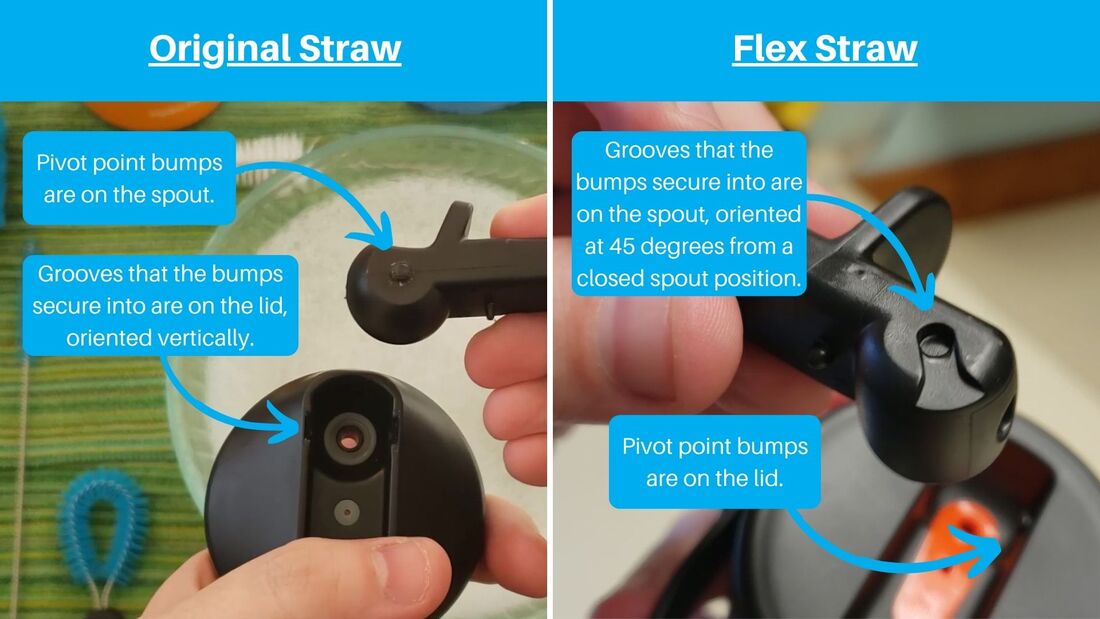
Differences in Flex and Original Straw Lid Spout Connections
In order to pop off the spout, it helps to push against it at a different angle (45 degrees from closed) which isn’t very intuitive at first.  Once we realized this difference, we made two videos to help share what we had learned with other Hydro Flask users so they can get a truly deep clean with their straw lids.

Comments Received - Issues with the Spouts Wearing Out

Over the couple of months since we posted those videos, several users left comments saying that popping the spout off wore down the plastic connections, and that caused their spouts to be looser than they were originally.
Comment Received
Comment Received
Comment Received
Comment Received
After reading these comments, we wanted to post a followup video to our one about cleaning Hydro Flask straws lids and give our thoughts.

What this Means, and What You Should Know about Cleaning your Straw Lid

​First of all, we want to acknowledge that it is possible to have the plastic wear out where the spout connects to the lid.  The way the spout attaches with either lid means that the small bumps that act as pivot points for the spout have the potential to flatten out some when the spout is detached then reattached.  This can then cause the spout to have a looser fit.
​But even when considering the potential wear-and-tear, we still think it’s a good idea to pop off the spout with either straw lid to get a truly deep clean.  There can be a lot of mold buildup under the spout if you don’t stay on top of it.  But the main point we want to drive home is that this type of deep cleaning comes with some risk of additional wear-and-tear.
In some ways you might mean that you need to think of your straw lid as an accessory that needs to be replaced periodically, which is unfortunate because it costs extra money and is inconvenient.  But we’re not really sure of another way to give these lids a deep clean since there are always spaces under the spout that aren’t possible to reach unless you take the spout off.

So What Can You Do?

There are a few things that can help.
#1: Get a Flex Straw instead of the Original Straw
Hydro Flask Flex vs Original Straw Lid
​One is knowing that the Flex Straw is easier to clean more thoroughly without popping off the spout.  You can take out the red silicone insert, which lets you clean a lot more of the surface area under the spout without popping it off.

The Original Straw doesn’t have this silicone insert, so the only way to clean the areas under the spout is by popping it off.​
Bottle Brush Kit with Detailing Brush
Use a brush kit with a smaller detailing brush like this one or use a toothbrush to clean what you can reach under the spout as much as possible.​
So if you’re trying to decide between the two straw lid options and deep cleaning everywhere including under the spout is a priority for you, go with the Flex Straw.  ​

#2: Use Cleaning Tablets
Bottle Bright Cleaning Tablets
​Second, you can also try using cleaning tablets like Bottle Bright instead of popping off the spout.  This was actually part of what Hydro Flask recommended in the 2nd part of their response to us.

It probably won’t get quite as deep of a clean compared to popping off the spout, but it certainly won’t hurt.
Do Bottle Cleaning Tablets Actually Work?
We also highly recommend using tablets like these every once and awhile anyways based on how well they worked for us when we tested them on coffee and tea stains.

​Click here to see our previous post where we tested these tablets out.

#3: Use a Different Lid
One other obvious solution is to avoid the straw lids altogether.  Hydro Flask has several other good lid options, and there are 3rd party ones as well.  See our previous posts where we compare Hydro Flask's lid options!
Which Hydro Flask Lid is the Best?
In this post, we explore the four lids that were available in the summer of 2022.
Our Review of Hydro Flask's Flex Chug
In this post, reviewed the newer Flex Chug lid that came out in late 2022!

Summary

​So in summary, we acknowledge that popping off the spout with either Hydro Flask straw lid can lead to the spout fitting more loosely, but we still highly recommend doing it every once and awhile to fully clean your lid and prevent mold buildup.  Just pop off the spout once every few months or whatever you’re comfortable with based on how often you use your straw lid, but not every time you clean your lid.   This will help extend the life of your lid and prevent the plastic connections between the spout and the lid from wearing out prematurely.
​And that’s it!  Hopefully this information helps you decide what cleaning schedule you’re comfortable with and which lid you want.  If you find a better way to deep clean your straw lids, please let us know in the comments below so we can share it with other users.  Keep BottlePro in mind for accessories for your large bottles, and happy hydrating!

Buying a bottle?  Keep us in mind

Check out our Amazon store for fun and helpful accessories, like fruit infusers, cup holder adapters, and carrying slings.
BottlePro's Amazon Store
0 Comments

3 Reasons why you SHOULDN'T Buy a Hydro Flask, YETI, or Stanley

3/18/2023

0 Comments

 
3 Reasons why you Shouldn't Buy a Hydro Flask, YETI, or Stanley Bottle

Content Overview:
  1. Intro - Hype Articles
  2. Link to our Video Review
  3. Reason #1 - Affiliate Marketing
  4. Reason #2 - Cost
  5. Reason #3 - Environmental Cost
  6. ​Summary and Link to our Store (Thank You!)

Products Mentioned in this Post:
  • Hydro Flask 40oz
  • Iron Flask 40oz
  • YETI 36oz
  • Stanley 40oz
  • BottlePro's Amazon Store

Counterpoint - Why you should Think Twice before Buying a Hydro Flask, YETI, or Stanley Water Bottle

​YETI recently released a new bottle with a straw lid, and it’s their answer to Stanley’s Adventure Quencher bottles that took the internet by storm.  You may have noticed articles like these predicting that the new YETI straw tumbler will go viral.  These kinds of articles come up seemingly every week describing the next big Hydro Flask, YETI, or Stanley product that you should buy. 
YETI Hype Article NY Post
YETI Hype Article Yahoo
YETI Hype Article SF Gate
​But we’re here to give the counterpoint with three reasons why you shouldn’t buy a Hydro Flask, YETI, or Stanley.

Our Video Review

Our YouTube video covers the same information in this post, so click the link if you'd rather see the video.  Otherwise, keep reading the full post below!

Reason #1 Why You Shouldn't Buy a Hydro Flask, YETI, or Stanley - Affiliate Marketers

​Here’s the deal.  The people and companies writing these articles are affiliate marketers.  They get paid if you click a link and make a purchase, so it’s in their best interest to promote the most popular and expensive items.
Example of Affiliate Marketing (bottlepro.net)
​And look, we’re fine with people giving reviews and recommendations, and in fact that’s mostly what we do on this channel.  These reviews and summaries by experts and knowledgeable consumers can save you a lot of time so you don’t have to sift through all the junk on Amazon’s bloated marketplace.

The problem is that many of these affiliate marketers don’t really have your best interests in mind.  They’re just trying to ride the hype train with the most popular, expensive products that they can post links to and earn their cut.  Many don’t care about giving you a true all-around representation of the product they’re promoting.
​Always remember that there is no such thing as a perfect product for every person and situation.  Every single product has a drawback or something that can be critiqued.  If the article you’re reading doesn’t list at least one negative to be aware of, then you might want to get a second opinion elsewhere.

Reason #2 Why You Shouldn't Buy a Hydro Flask, YETI, or Stanley - You're Mostly Paying for the Logo

​We run a business selling products on Amazon and ordering items from China.  Our manufacturing and shipping volumes are obviously not nearly as high as Hydro Flask, YETI, or Stanley, but we can take what we’ve learned and use that to take our best guess at what kinds of costs they have.
Our Estimates for Hydro Flask's Costs
Our Estimates for Hydro Flask's Costs (click to see Amazon listing)
For this analysis, we’re going to look specifically at a 40-ounce Hydro Flask. The standard retail price is $49.95, so that’s what we’ll base this analysis on.  Manufacturing costs are probably around $4 per unit.  This includes the bottle, printed inserts, and the label wrap.  Freight costs have been more difficult to predict within the last few years since COVID, but bulk sea freight from China to the west coast of America probably comes out to around $1 per bottle.  Amazon usually has a 12% referral fee for sales on their platform so that’s what we’ll use here, though we wouldn’t be surprised if Hydro Flask has negotiated that down or partnered with Amazon somehow.  The Amazon fulfillment charge, which is separate from the referral fee, is probably around $7.

​Together, these costs total $17.99, which gives a gross profit per unit of $31.96.  That’s a 64% profit margin, which is pretty high.
​Now obviously there are many other costs that will bring down Hydro Flask’s true net profit, including customer service, marketing, facilities costs, and employee wages.  We’re not going to try to guess what Hydro Flask’s costs are in these categories, but it’s clear to see that a minority of what you pay for with a Hydro Flask bottle is in the bottle itself.  If you think of customer service, marketing, the facilities, and the employees as essentially being the brand, then this little logo basically costs you around $30 per bottle.

Most of the price you pay is for the brand, not the bottle.

And though there are surely some differences between brands, we wouldn't be surprised if YETI and Stanley bottles are in this same ballpark.

Let’s compare these costs with Iron Flask, which is a well-established knockoff brand on Amazon.  They were close on our insulation test, and they’re almost exactly the same size and shape.
Our Estimates for Iron Flask's Costs
Our Estimates for Iron Flask's Costs (click to see Amazon listing)
​You can get a 40-ounce Iron Flask for $28.95, or $21 dollars less than a comparable Hydro Flask.  Iron Flask’s direct product costs will be a little lower on the Amazon referral fee since it’s tied to the price point, but they will have mostly similar costs compared to Hydro Flask, including manufacturing, freight, and the Amazon fulfillment fee.

​Our best guess is that Iron Flask’s total direct product costs are around $15 per 40-ounce bottle, leaving ~$13 profit, or 45% margins.
You'll spend less money overall, and most of the price you pay is for the bottle, not the brand.  And considering that you get 3 lids instead of just 1 and that they have ~30 color options, it seems like an even better deal.  We've used Iron Flasks quite a bit, and honestly we can't tell much of a difference between them and Hydro Flasks.
​Now some of Hydro Flask’s higher costs are well worth it.  They have great customer service, and they make really good products that last a long time.  But in our opinion, it’s still a lot to fork over for the logo and we’d rather have a greater percentage of the price we spend go into the product, not the company.  YETI’s branding-related costs are possibly even more excessive.  Stanleys aren’t quite as extreme, but you're definitely still paying for the logo.

Reason #3 Why You Shouldn't Buy a Hydro Flask, YETI, or Stanley - The Environment

It's a little counter-intuitive at first because one of the most important reasons why you should get a reusable bottle is for the environment.  Disposable water bottles are terrible, and upgrading to a reusable bottle is one of the best things you can do on an individual level to reduce plastic consumption.

But the reality is that most people only really need one or two bottles to get them through the day.  This why we really don’t like how viral bottles and excessive marketing budgets always push customers to get the next best bottle or color.  It's one thing if you if you want a different type of bottle for specific reason, like a smaller one with a sip lid for coffee.  But do you really need a 6th color of a 40-ounce bottle when you already have 5 similar bottles?
Diminishing Returns with Plastic Reduction and # of Bottles
There’s a type of diminishing returns when it comes to the number of bottles you own and how much you’re helping reduce overall environmental waste.  The first bottle you get cuts down a lot of your plastic consumption, but each additional bottle you buy doesn’t help as much.

And every bottle has an environmental cost related to manufacturing and shipping the product.  And remember that shipping doesn't just mean from the warehouse to your door.  Shipping also includes getting supplies and materials to the factory, and then freighting the finished products in bulk to a fulfillment warehouse. 
​Sooner or later, the total environmental cost related to manufacturing and shipping your next reusable bottle will be greater than the environmental benefit from the reduction to your plastic consumption.

So before you buy your next reusable bottle, take a second to think about whether you really need it.

​And that’s it!  You might find it a little weird for our company to tell you to not buy a water bottle given that we’re in the business of making accessories for these bottles.  But like always, we try to give our honest thoughts and recommendations that will actually help.  And we know we railed on affiliate marketers before, but we did include links to the products we talked about.  If you make a purchase after clicking one of the links, then we get a small commission.  It helps our small business out, and we appreciate the support so we can continue making unbiased posts and videos like this one.  Keep BottlePro in mind for accessories for your large bottles, and happy hydrating!

Buying a bottle?  Keep us in mind!

Check out our Amazon store for fun and helpful accessories, like fruit infusers, cup holder adapters, and carrying slings.
BottlePro's Amazon Store
0 Comments

Our Review of Hydro Flask’s Carrying Pouches – Which is the Best, and What are Good Alternatives?

3/3/2023

0 Comments

 
Our Review of Hydro Flask’s Carrying Pouches – Which is the Best, and What are Good Alternatives?

Content Overview:
  1. Intro
  2. Link to our Video Review
  3. Hydro Flask's Packable Sling
  4. Hydro Flask's Tag Along Sling
  5. Hydro Flask's Slingback Bag
  6. 3rd Party Bottle Slings to Consider

Products Mentioned in this Post:
  • Hydro Flask Packable Bottle Sling
  • Hydro Flask Tag Along Bottle Sling
  • Hydro Flask Slingback Bottle Pack
  • More Storage – Wild Wolf Bottle Sling (32oz)
  • Leather – HikerPouch
  • Budget – BottlePro’s Neoprene Sling
  • Paracord Sling – Wontego 2.0 Paracord Bottle Sling
  • Just a Handle – QeeCord Paracord Carrying Handle
  • Best for the Gym – Bottle Caddy

Which Hydro Flask Bottle Sling is the Best?

​Hydro Flask has two bottle slings, the Packable and the Tag Along.  We’re reviewing how they are different, which one you should get, and whether any alternative options could be better for you.  The short answer is that different pouches are better for different situations, and at the end of the post we’ll give our opinions on why you might want to pick one over another.

Video Review

Our YouTube video covers the same information in this post, so click the link if you'd rather see the video.  Otherwise, keep reading the full post below!

Review of Hydro Flask's Packable Sling
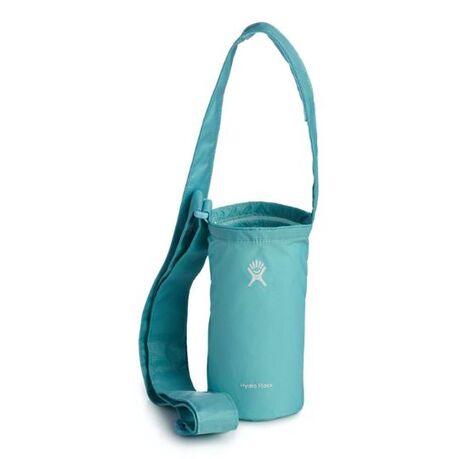
Hydro Flask's Packable Sling
See Amazon Listing
First, we’ll start with Hydro Flask’s Packable sling.  Some benefits are:
  • Lightweight: It’s just under 2 ounces, so you’ll hardly be adding any extra weight on your walks.
  • Packable: As the name says, it’s very packable.  You can even fold it up into a built-in pocket, which certainly helps save on space and makes this a great option to stow in the car, a bag, or wherever else you might end up needing it.

​But there are a few downsides to keep in mind.
  • Shoulder Strap:  The shoulder strap doesn’t have any extra padding, so it’s not as comfortable on longer hikes with a heavy bottle.
  • Lack of Large Pockets: It doesn't have a built-in larger pocket that's meant for your phone, keys, or other accessories.
    • ​Side note: you can technically use the pocket that's meant to let you pack the sling into itself for stowing, but the pocket is a tight fit for larger phones.
  • Durability: We’re not sure how well this pouch would hold up to continuous use due to the thin plastic construction.
  • More Difficult to Insert the Bottle: We found it a little difficult to get the bottle into the pouch because the material is so flexible, but maybe this is something that just takes some getting used to.
    • Side note: this definitely got easier as we tested out the pouch more!  It helps to hold the pouch at the connection points with the strap.
  • Expensive: The 32oz size shown here is currently $24.95, which seems steep for what you get, but it’s a Hydro Flask product so you can expect to pay a premium for the logo.

All-in-all, this bottle sling is successful in what it was primarily designed for, which is to be super portable and stowable.  This makes it a great choice for certain situations like keeping it in your car or pack for whenever you might need it, but this is not the best sling for daily use.

Review of Hydro Flask's Tag Along Sling
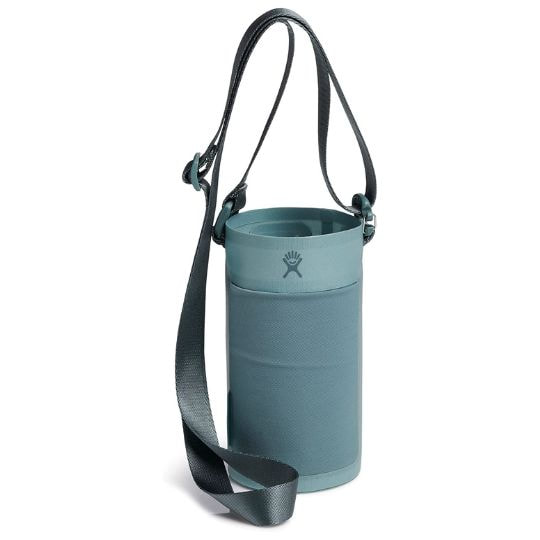
Hydro Flask's Tag Along Sling
See Amazon Listing
​Next we’ll look at the Tag Along.  Some benefits are:
  • Easier to Use: It’s easier to get your bottle in this pouch compared to the packable sling, which makes it quicker and simpler to use each day.
  • Phone Pouch: We also love that they added a pouch with a flexible mesh material to hold your phone.  It comfortably fit this iPhone which is roughly 3” wide and 6” tall, but anything larger than that would start to be a tight fit.
  • More Comfortable Shoulder Strap: The woven strap feels much better and is more comfortable compared to the packable sling.
  • Still Lightweight: At 4 ounces, the Tag Along pouch is heavier than the packable sling, but it’s still super lightweight and great for longer hikes.
  • Easier to Clean: The fabric is coated with what feels like a plastic liner.  The intent of the coating is to make the pouch easier to clean, and in that way Hydro Flask succeeded.

But this also leads to the first downside.
  • Plasic-y Feel: There’s something about the synthetic, plastic-y feel of this pouch that doesn’t feel right to us, though we acknowledge that’s just our preference.
  • Strap Could Be Better: Although the strap is more comfortable than the packable sling, it still doesn’t have any extra padding so it might get a little uncomfortable on really long hikes with heavy bottles.
  • Two Clips that Many People Won't Need: There are also two clips that let you attach the bottle pouch to a Hydro Flask Day Escape Soft Cooler.  This sounds like a cool feature and we wish we had the budget to buy a cooler to test it out, but instead we just ended up taking out the clips so the sling was more comfortable on our backs.
  • Expensive: The 32oz size shown here is currently $39.95, which like with the packable sling seems steep but is to-be-expected for a Hydro Flask brand product.

Overall, the Tag Along bottle sling is a really good option for daily use.  It comes in two sizes, so be sure to check which one is good for you.

Hydro Flask's Slingback Bottle Pack
Hydro Flask's Slingback Bottle Pack
See Amazon Listing
​One Hydro Flask brand option that we didn’t review was their newer Slingback bottle pack.  This thing looks really cool and seems like it would be the best option for longer hikes and walks because of the extra storage and padded strap.  We hope to test it out in the near future.

Summary of Hydro Flask Sling Options

​Overall, we recommend getting the Packable Sling if you’d like to store a carrying pouch in your car or pack for whenever you might need it.

But for everyday use, the Tag Along is the more user-friendly and useful Hydro Flask sling.

And definitely consider trying the Slingback if you’re looking for more of a backpack for longer hikes or walks and let us know what you think below.

3rd Party Slings for Hydro Flasks

​Before you buy a Hydro Flask product, you should also look at the competition.  Here are a few ones to consider.
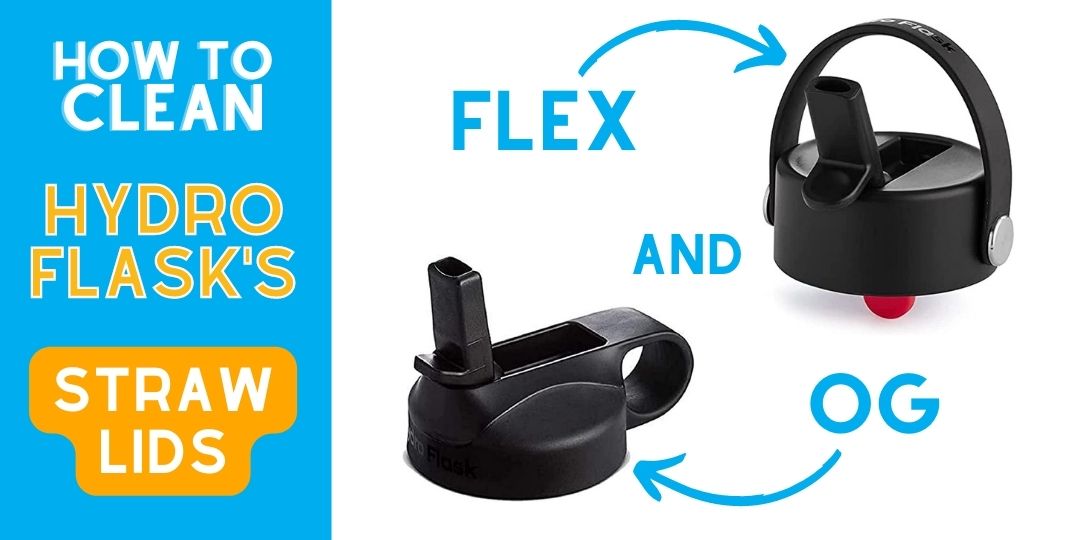
Wild Wolf Outfitters Bottle Sling (32oz)
More Storage
Wild Wolf Outfitters has a great pouch that gives plenty of storage and has a more rugged look with a padded shoulder strap.  This is a great option for longer hikes.
See Amazon Listing

BottlePro's HikerPouch
Leather
Our HikerPouch is the best option if you’re looking for a leather Hydro Flask carrier.  Each HikerPouch comes with a tin of leather conditioner to keep your sling in good shape for years.
See Our Amazon Listing

BottlePro's Neoprene Sling
Budget
For a more budget-friendly option, you can also look at our neoprene slings which are currently $9.95.
See our Amazon Listing

Wontego's Paracord Sling
Paracord Sling
Paracords and Hydro Flask's have a colorful history together!  For man color options for paracord slings, consider Wontego’s shoulder-strap paracord design.
See Amazon Listing

Picture
Just a Handle
If you’re just looking to add a handle and don't need the shoulder strap, try QeeCord’s paracord carrying handle.
See Amazon Listing

Bottle Caddy
Bottle Caddy
Best for the Gym
And if you need storage without the strap like at the gym, try Bottle Caddy’s bottle sleeve.
See Amazon Listing

Buying a Hydro Flask?  Keep us in mind!

Check out our Amazon store for fun and helpful accessories, like fruit infusers, cup holder adapters, and carrying slings.
BottlePro's Amazon Store
See BottlePro's Store
0 Comments

How to Clean your Hydro Flask Straw Lid (Flex and Original)

2/23/2023

2 Comments

 
How to clean a Hydro Flask Straw Lid - Flex and Original

How to Clean a Hydro Flask Straw Lid

Hydro Flask has two straw lid options, their original design and the newer Flex Straw that was released in early 2022.  They can be fairly tricky to clean, but we're going to review the step-by-step process so you can get a better deep clean on your Hydro Flask Flex Straw or original straw lid.  This includes showing the complete disassembly of each one, as well as giving some general recommendations.

Content Overview:
  1. Video link (covers similar information as this post)
  2. Are Hydro Flasks Dishwasher-Safe?
  3. How to Clean a Hydro Flask Bottle
  4. How to Clean a Hydro Flask Straw Lid (Original Version)
  5. How to Clean a Hydro Flask Straw Lid (Flex Straw)

Recommended Products:
  • Hydro Flask Original Straw Lid
  • Hydro Flask Flex Straw Lid
  • Complete Bottle Brush Kit - Best for Straw Lids
  • Cleaning Tablets
  • Replacement Straws
  • Fun Add-On: FlavorFuze Straw Fruit Infuser (snaps onto Hydro Flask straw lids)

Video Review

Our YouTube video covers the same information in this post, so click the link below if you'd rather see the video showing our cleaning process.  Otherwise, keep reading the full post below!

A Real Quick Thank You!

If you found this post helpful, you can use the links to buy any of the items you need off Amazon.  We get a small commission if you purchase that way, and every little bit helps our small business.  It enables us to keep making information videos and posts like this one.  We really appreciate the support!

Are Hydro Flasks Dishwasher-Safe?

​Let’s get this out of the way first.  We know it’s a pain in the butt, but we generally recommend hand washing all Hydro Flask products.  The reason why is that it’s pretty confusing to know which Hydro Flask products are actually dishwasher-safe and which ones aren’t.  Even if it says the product is dishwasher-safe, Hydro Flask mentions that some accessories like caps may last longer if they are hand washed.

​So to be safe, we recommend sticking to hand-washing as much as you can to help your Hydro Flask products work well for many years to come.

How to Clean a Hydro Flask Bottle

​This one's pretty self-explanatory, and here are two of the items we use most for deep cleaning our large bottles.

For cleaning the bottle, just use warm soapy water and your bottle brush.  We do this every day before going to bed.

For a deeper clean, you could use cleaning tablets like the ones made by Bottle Bright.  We recently tested Bottle Bright tablets to clean the tea and coffee stains from a 20oz Hydro Flask Coffee bottle, and the results were very impressive!  We're going to start doing this at least on a monthly basis, but we're not sure exactly what the best frequency is.  Let us know what you think!
Complete Brush Kit for Hydro Flask Straw Lids
Brush Kit for Hydro Flask Straw Lids
​Get a bottle brush kit like this one that includes a longer brush, a straw cleaner, and a detailing brush to make hand-washing your Hydro Flask Straw Lid much easier.
See Amazon Listing
Bottle Bright Cleaning Tablets
Bottle Cleaning Tablets
We're going to start using these every so often for a really deep clean.
See Amazon Listing
(One person also responded to our post to say that denture tablets work too and can save some money.  We haven't tested those, but they have quite a few similar ingredients so they should work as well.)
Now on to the lids.  Get your brush kit, a sponge or rag, a butterknife or some other kind of picking tool with an end that won’t cut silicone, and a bowl with warm, soapy water.  It’s also a good idea to get set up at least a few feet away from your sink since you’ll be handling some pretty small parts, and you don’t want to accidentally drop them down the sink.

How to Clean a Hydro Flask Straw Lid (Original Version)

Hydro Flask's Original Straw Lid
Original Straw Lid
Hydro Flask's Flex Straw Lid
Flex Straw Lid
First we’ll look at the original straw lid.  If you’re not sure which lid you have, just look at the handle.

​The Flex Straw has the flexible loop handle, and the original straw lid has a small rigid handle that fits one finger.
Step 1: Disassemble the Lid
Start by disassembling the lid.  The straw is attached with a friction fit on the cap, so you can just pull it off.  Next, pop off the spout by pushing it past the open position.
Remove the straw
Remove the straw
Remove the spout
Remove the spout
Remove the spout seal either by tapping the lid upside down, using your fingernails, or use a small tool like tweezers or the butterknife.
Spout Seal Location
Spout Seal Location
Spout Seal Closeup
Spout Seal Closeup
The silicone vent hole insert doesn’t usually get that dirty, but for a really deep clean you can pop that out too.  Just use your thumb or fingernail to pry it out from the bottom.
Vent Hole Insert Location
Vent Hole Insert Closeup
And the last removable piece is the big o-ring under the threads.  This o-ring generally doesn’t get as dirty so you may not need to clean it as often, but it’s still good to clean it every once and awhile.  You need to use a butterknife or other kind of tool to get it out, but it’s not too difficult.
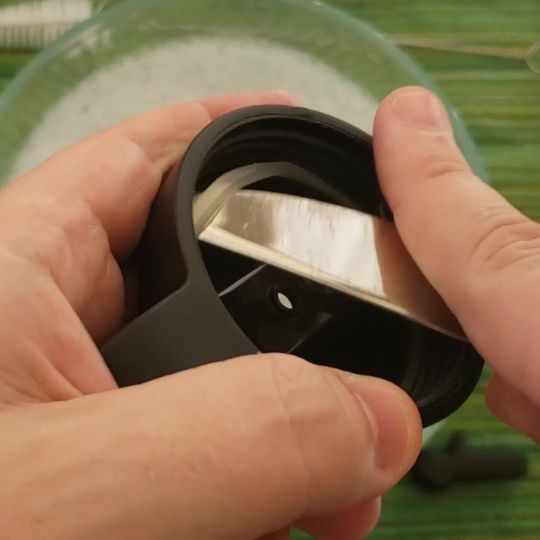
Main O-Ring under the Threads
Step 2: Clean Everything
​Clean each piece thoroughly.
​
  1. Use the straw cleaner to get inside the straw, from both sides if your cleaner isn’t long enough.
  2. Use the detailing brush or toothbrush to clean up under the threads in those hard-to-reach areas.
  3. Clean the air and spout holes in the cap with the straw cleaner.
  4. Don’t forget to clean inside the detached spout itself.
  5. We like to let each piece soak in the warm, soapy water for at least 15 minutes, take it out for a rinse, and then lay everything out on a towel to dry.
Replacement Straw Kit for Hydro Flasks
There are a bunch of straw kits available on Amazon, and you can usually get a good set for under $10.  Here's one to check out!
See Amazon Listing
Step 3: Reassemble the Lid
Once it’s all dry, we put it back together the way it was before.  This should be pretty simple since you saw how it all came apart, but there are a few things to double-check to make sure you don't have too much leaking.
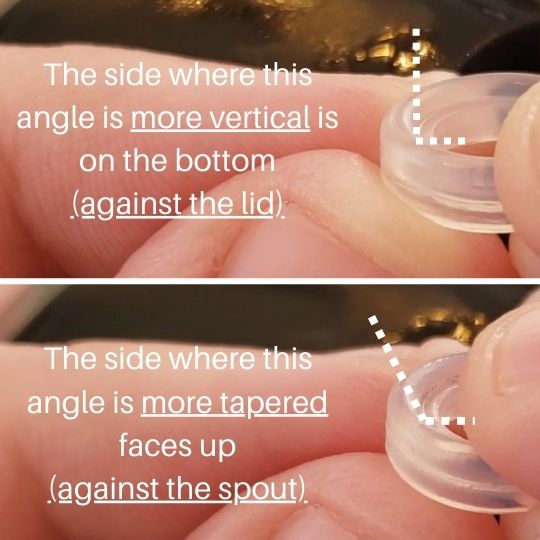
​
  1. Add the large o-ring first and make sure it’s properly seated to prevent leaking.
  2. Insert the small vent piece simply by pushing it into the hole from the top-side of the lid.
  3. Make sure you add the spout gasket in the correct orientation.  If you look closely, you’ll notice that one side has a slight taper that conforms better to the rounded bottom of the spout.  Make sure this side faces up or your cap might leak more (see the image below).
  4. Pop your spout back into place
  5. Reinsert your straw.
Slight Taper (Hard to See)
If you followed all of these steps, then you should be all set with your deep-cleaned Hydro Flask with the original-style straw lid!

How to Clean a Hydro Flask Straw Lid (Flex Straw)

Step 1: Disassemble the Lid
Next we’ll look at the Flex Straw lid, which is honestly the better version.  In some ways it’s easier to clean because the pieces are harder to lose, but it’s also a little trickier to take apart. Like before, the first step is to disassemble the lid.  Pull the straw out of the red silicone insert, then pull the red insert itself out from the bottom.
Pull out the Straw
Pull out the Straw
Pull out the Red Insert
Detaching the spout is a little different and trickier compared to the old lid, but you can still do it.  Lift the spout to about a 45-degree angle, then press it to the side and up.  We like to keep the lid on the bottle for more leverage, and we put the spout between our thumb and index finger then push with our arm muscles and not our wrist.  The spout should then pop out of place.

It takes a lot more force that you have to apply at an awkward angle compared to the original straw lid.  You might even feel like you're about to break it, but follow these steps and it should pop out!
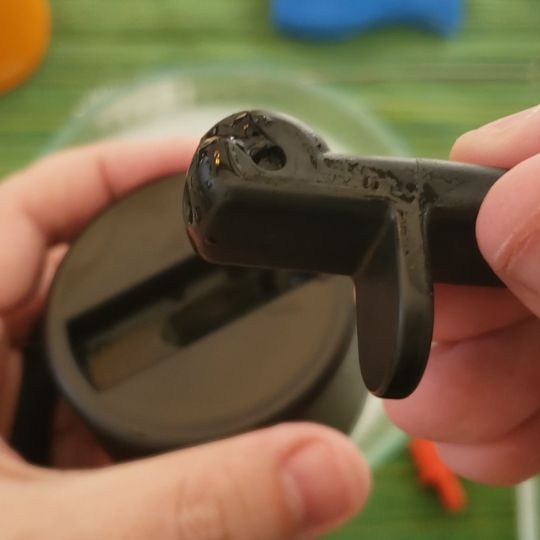
Lift the Spout to ~45 Degrees
Push Spout to the Side, Lift as Much as Possible
What the Detached Spout Looks Like
The last removable piece is the large o-ring up under the threads.  This seal doesn’t get as dirty so you may not need to clean it as often, but it’s still good to include in your deep clean every once and awhile.  It's much more difficult to get out compared to the original straw lid, and you’ll need to find a tool with a fine-tip end to get it out.  I couldn’t get it with a butterknife, but I was able to use the pointy end of this letter opener to get up under the seal and lift it, just making sure to only use the plastic part of the letter opener and not letting it go all the way to the blade.  I’m sure there are better tools out there, and if you find something that works great for you, please comment on it below to let us and other people know.
Removing the Large O-Ring
The Large O-Ring
The Large O-Ring
Step 2: Clean Everything
​Clean each piece thoroughly.
​
  1. Use the straw cleaner to get inside the straw, from both sides if your cleaner isn’t long enough.
  2. Use the detailing brush or toothbrush to clean up under the threads in those hard-to-reach areas.  The small brush in our recommended brush kit also fits perfectly into the opening where the red silicone insert goes.
  3. Clean the two holes in the red silicone insert with a straw cleaner.
  4. Don’t forget to clean inside the detached spout itself.
  5. We like to let each piece soak in the warm, soapy water for at least 15 minutes, take it out for a rinse, and then lay everything out on a towel to dry.
Step 3: Reassemble the Lid
Once it’s all dry, we put it back together the way it was before.  This should be pretty simple since you saw how it all came apart, but there are a few things to double-check to make sure you don't have too much leaking.
​
  1. Add the large o-ring first and make sure it’s properly seated to prevent leaking (see the image below).  This seal is difficult to get back into place, so be sure to double-check that it didn't get twisted around while you were re-inserting it.  We sometimes have to retry inserting it a few times before it's correctly in place without any kinks.​
  2. Insert the red silicone insert from the bottom.
  3. Pop your spout back into place
  4. Reinsert your straw.

After these steps, you should be good to go with your deep-cleaned Hydro Flask Flex Straw!
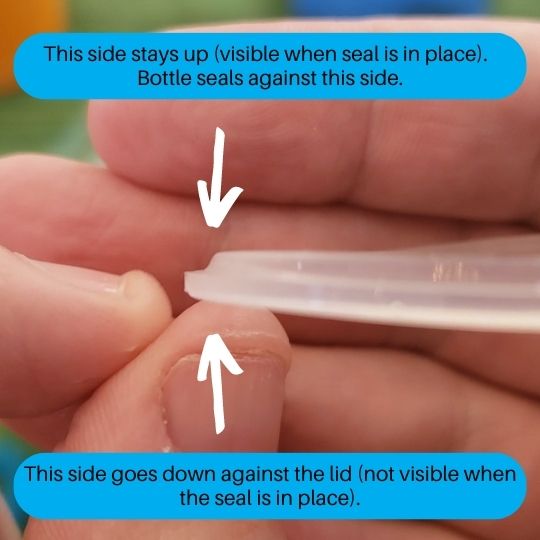
O-Ring Orientation
O-Ring Orientation

If you found this video helpful, let us know!  And thanks again if you make a purchase through one of the links in the description.  It really helps our small business out.  Keep BottlePro in mind for accessories for your large bottles, and happy hydrating!
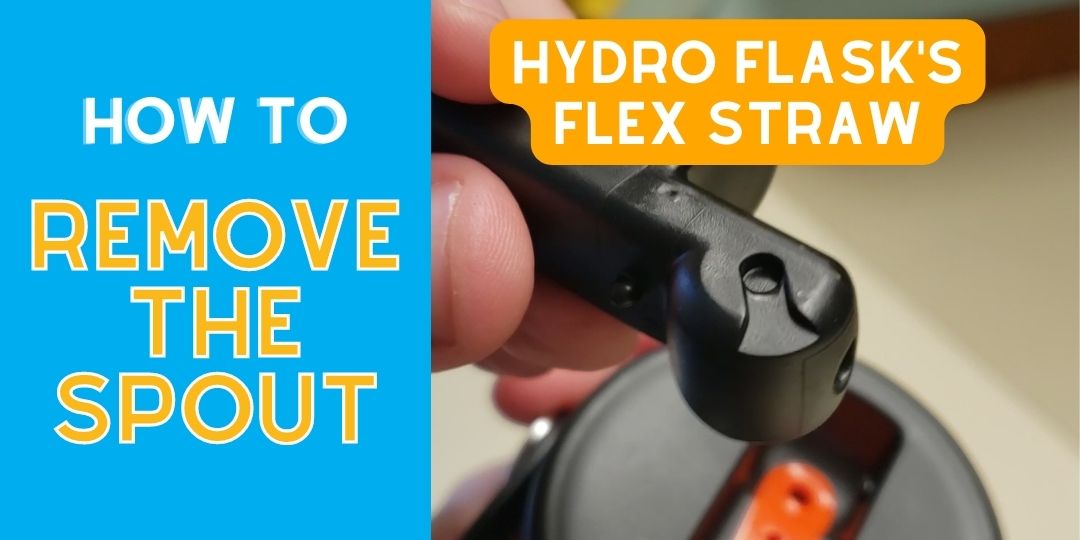
Buying a Hydro Flask?  Keep us in mind

Check out our Amazon store for fun and helpful accessories, like fruit infusers, cup holder adapters, and carrying slings.
BottlePro's Amazon Store
See BottlePro's Store
2 Comments

How to Remove the Spout from Hydro Flask's Flex Straw Lid for Cleaning

2/12/2023

0 Comments

 
How to remove the spout from Hydro Flask's Flex Straw Lid for cleaning

HOW TO REMOVE THE SPOUT FROM HYDRO FLASK'S FLEX STRAW LID

If you’ve had one of the original Hydro Flask straw lids, then you probably know how to take off the spout for cleaning.  A common question people have about the new Flex Straw lid is whether you can do the same thing.
​
The good news is that you can take off the spout, but it’s a little more difficult and you have to do it a little differently. 

​Here's how to remove the spout from your Hydro Flask Flex Straw lid for cleaning.

A Video Review

If you'd rather watch a video on this topic, check out our YouTube video.
​It covers most of the same information, just in a different format if videos are more your style.

Step 1: Open the spout to 45 degrees
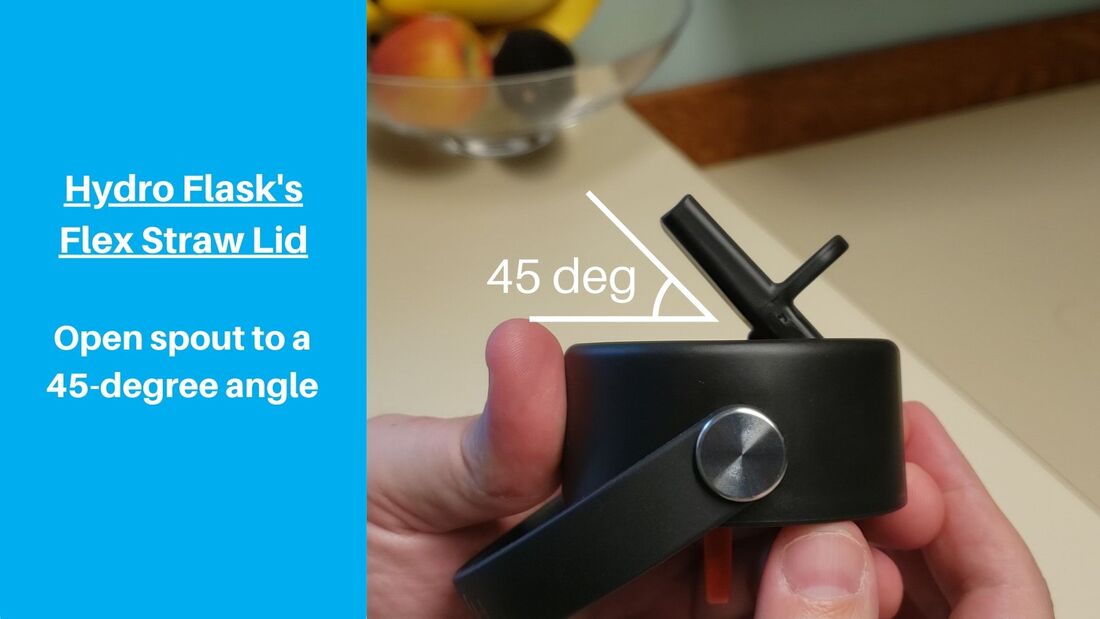
Step 1: Open to 45-degrees
​First, open the spout to about a 45-degree angle.

​This is important to help prevent damaging your lid and to make it easier to pop the spout off.  You'll see why later.

Step 2: Push the spout to the side and up
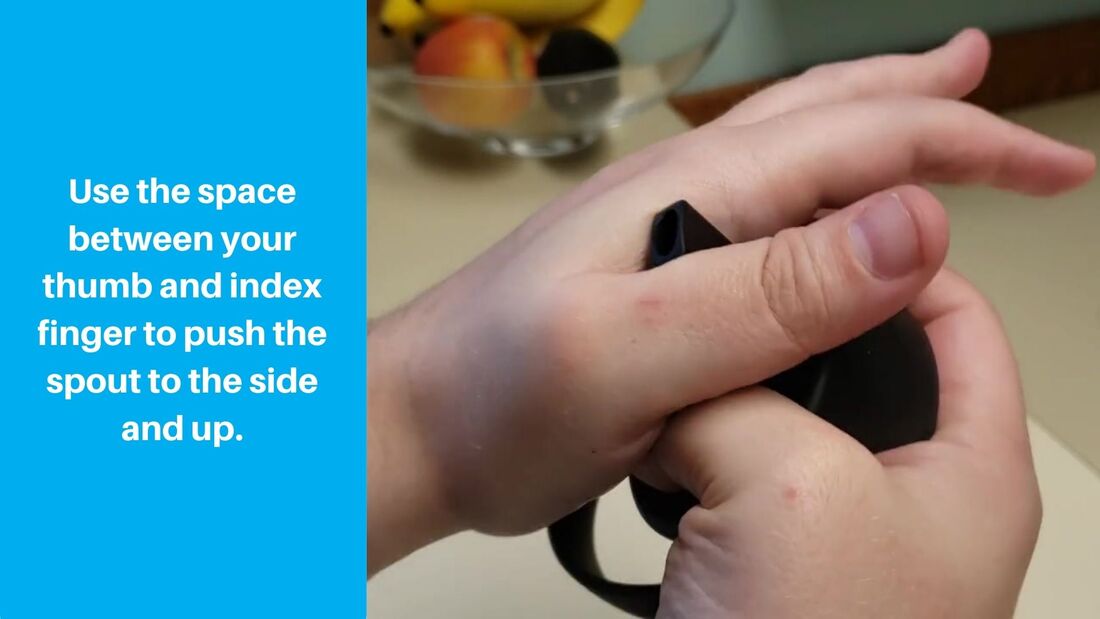
Step 2: Push the spout up and to the side
Then grip the cap like this with the spout between your thumb and index finger.  (This is called the thenar web space for those who wanted to know!)

​Push the spout to the side while also lifting upward some, and it should pop out.

Having trouble?

​If you’re having trouble, try keeping the lid on your bottle for leverage.  We find this makes it a lot easier.

Why is the 45-degree angle important?
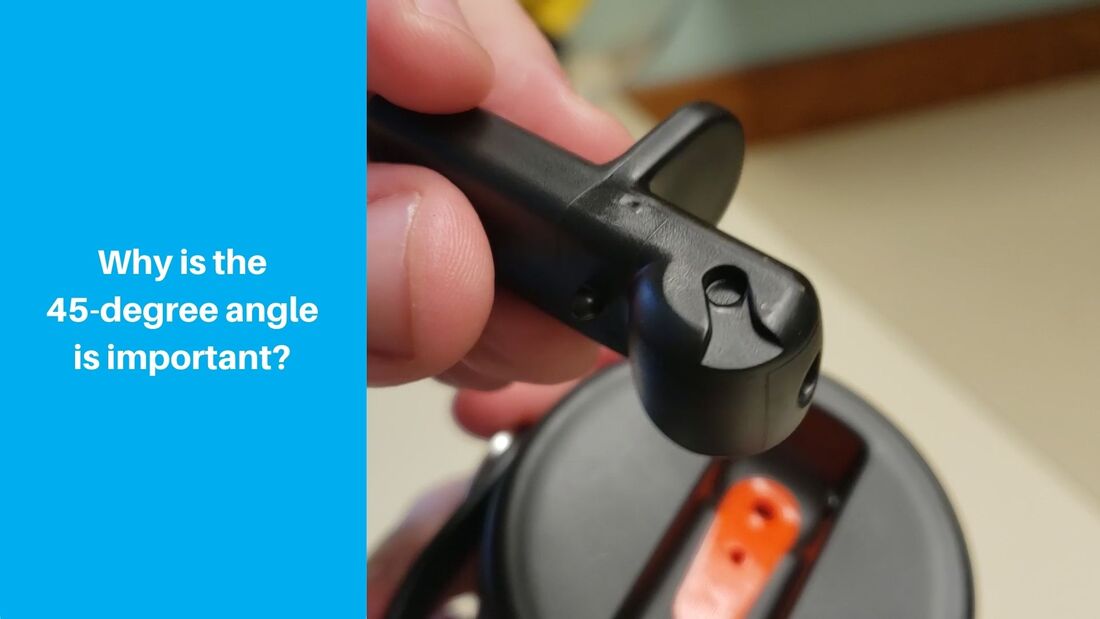
Why is the 45-degree angle important when taking off the Flex Straw spout?
Once the spout is out, you can see how the grooves align with the pegs in the cap base, which is why it helps to pop it off at a 45-degree angle.

If you try to pop the spout off at a different angle or push it beyond open like with the original straw lid, then you run the risk of stripping the pegs or grooves so they don't line up as well.  Your lid may still work OK, but it probably won't open and close as crisply / nicely.

Thanks for your support!

We’ve included a link to the Flex Straw lid below.  If you purchase after clicking the link, we earn a small commission.  Every little bit helps our business, and we really appreciate the support.  Thanks again, and happy hydrating.
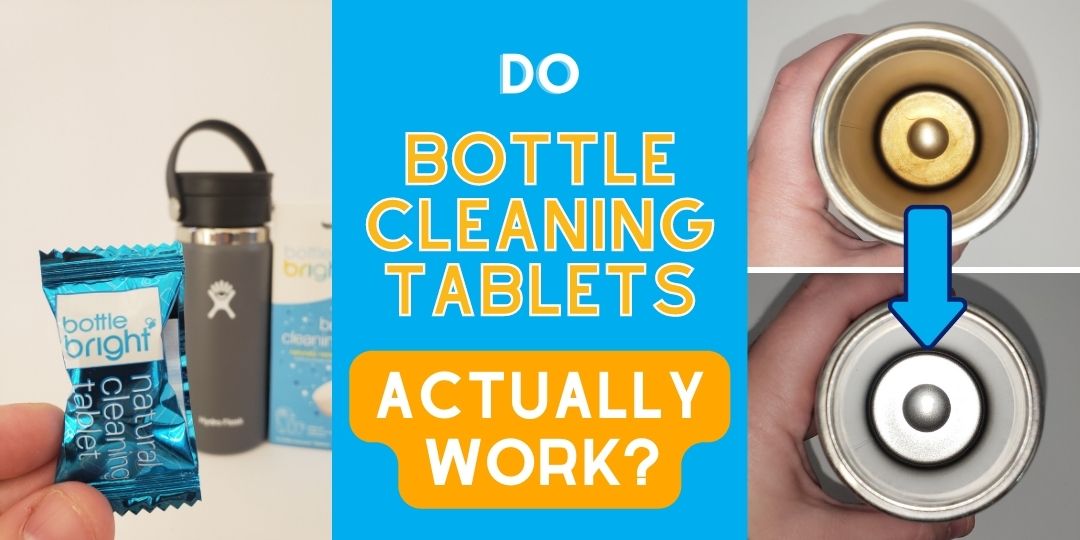
Hydro Flask's Flex Straw Lid
Flex Straw Lid
We love this lid!

​Compared to the original straw lid, this one is easier to deep clean, leaks less, provides more insulation, has a better handle, and looks more like a Hydro Flask (with the loop handle and metallic handle connections).
See Pricing on Amazon

FlavorFuze Straw Snap-On Fruit Infuser for Hydro Flasks
FlavorFuze Straw: Our Snap-On Fruit Infuser
Make your water fun!

Try our snap-on fruit infuser made specifically for Hydro Flask straw lids, including the original and Flex Straw designs.  ​It's a great way add flavor to help stay motivated as you work towards better hydration goals.
See Pricing on Amazon

Buying a Hydro Flask?  Keep us in mind!

Check out our Amazon store for fun and helpful accessories, like fruit infusers, cup holder adapters, and carrying slings.
Picture
See BottlePro's Store
0 Comments

Do Bottle Cleaning Tablets Actually Work? (Testing on a Hydro Flask)

2/10/2023

3 Comments

 
Do bottle cleaning tablets like Bottle Bright actually work?

A Video Review

If you'd rather watch a video on this topic, check out our YouTube video. It covers most of the same information, just in a different format if videos are more your style.  Or keep reading our post below!

Do Bottle Tablets Work?

One major problem with big bottles like Hydro Flasks is that they can be difficult to clean.  We highly recommend bottle brush kits like this one because they make cleaning much easier and effective, but if you use your bottle regularly for coffee or tea, then you’ll probably notice stains developing over time no matter how well you clean it.
Bottle brush kit for large bottles like Hydro Flasks
Bottle Brush Kit
Highly recommended to help keep your bottle cleaner easier.

Flat bottom brushes are best for Hydro Flasks.

Get one with a straw cleaner if you have a straw lid.

​The small detailing brush helps a lot with cleaning lids and threads.
See Pricing on Amazon
​I had this problem with my 20oz Coffee bottle, and I wanted to put the stainless back in stainless-steel.  Hydro Flask has these recommendations and best practices listed on their website.  But instead, I wanted to try something that I remembered seeing on Shark Tank to see if it was the real deal.

​I ordered a pack of Bottle Bright tablets to see how they work to get the stains out.   They aren’t that expensive, and they seemed easier than using a homemade concoction.  They’re made with ingredients like hydrogen peroxide, baking soda, and citric acid and are marketed as being completely safe and without any residual tastes or smells.  
Before Picture: My Stained 20oz Hydro Flask Coffee

Testing Bottle Bright Cleaning Tablets on a Hydro Flask

​Here is the inside of my Hydro Flask before the test, and you can clearly see the coffee and tea stains.  I followed the instructions on the package, which state you should fill your bottle with warm water and then add one tablet for each liter.

One liter is just over 32 ounces, so given that I was testing this on a 20-ounce bottle, adding one full tablet was more than enough.

​I dropped the tablet in, and it immediately started fizzing.  After letting it sit for 30 minutes, I poured out the water and used my brush with some clean water to rinse the bottle to make sure I got all of the tablet residue out.

Did the Bottle Cleaning Tablets Work?

The tablet honestly worked better than I expected.  Most of the stains were cleaned out, and it almost looks like a brand-new bottle as you can see from the images below.  I didn't use any other cleaners for this test, so I know the tablet was responsible for removing the stain.

I took a quick sample taste of some water, and I didn’t notice anything that seemed off.  Glad to know that my bottle won't have a weird aftertaste.
After Picture: My Cleaned 20oz Hydro Flask Coffee

Conclusion - Do Bottle Bright Tablets Really Work?

​It's a pretty resounding YES on this one.  Overall, it was a very good first impression of the Bottle Bright tablets.  They simplified the cleaning process and took the guess-work out of the equation.

You could save a little money trying a different brand, and there are plenty of knockoffs available.  But in our opinion, it might be a good idea to stick to reputable brands instead of buying from an unknown company on Amazon.

​We hope this post and video has helped.  We’ve included links to the products, and if you purchase after clicking the link, we earn a small commission.  Every little bit helps our business, and we really appreciate the support!
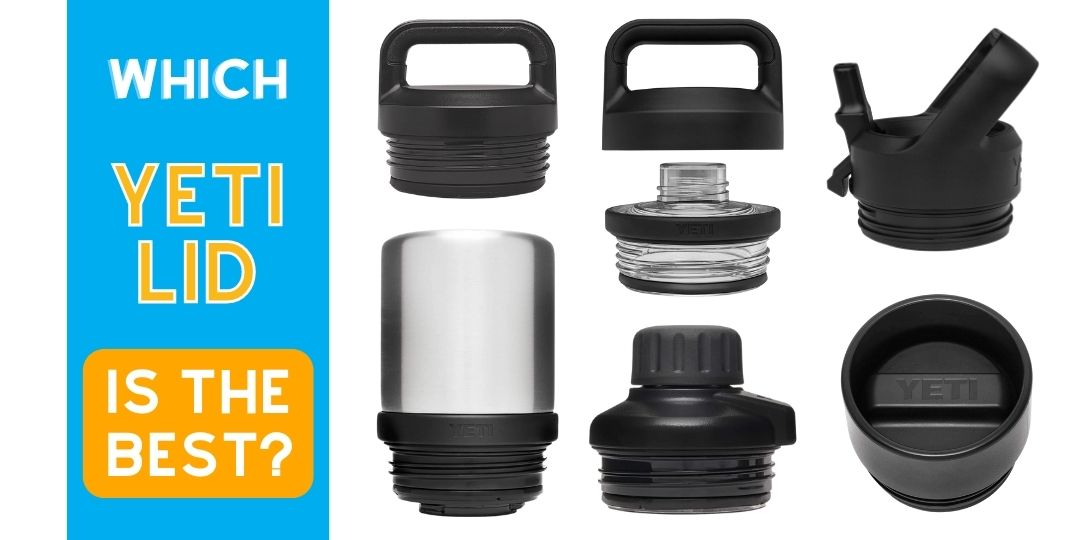
Bottle Bright Tablets
These tablets worked really well for us, so we recommend using them periodically to deep clean your bottle.
See Bottle Bright on Amazon
Hydro Flask 20oz Coffee
This is our favorite bottle and lid (Flex Sip) for coffee or tea on the go.
See Hydro Flask on Amazon

Buying a large bottle?  Keep us in mind!

Check out our Amazon store for fun and helpful accessories, like fruit infusers, cup holder adapters, and carrying slings.
BottlePro's Amazon Store
See BottlePro's Store
3 Comments

Which YETI Lid is the Best? (Updated for 2023)

1/23/2023

6 Comments

 
Which YETI Lid is the Best?

Which YETI Lid is the Best?

Rambler water bottles are one of YETI’s most popular and profitable product lines, due in no small part to how useful and versatile they are.  YETI has designed six lid styles that are compatible with any wide-mouth Rambler bottle.

To be clear, the lids we’re talking about only fit YETI Rambler water bottles.  We’re not talking about YETI’s tumblers, mugs, or new Yonder plastic bottles.

So the next logical question is, which YETI lid is the best?

Our goal with this post is to give you all the information you need to answer the more important question: which YETI lid is the best for you?

Which YETI Lid is the Best? (Video Review)

If you'd rather watch a video about this topic, then check out our YouTube video!
Or keep reading our full post below.

The Contenders

YETI has designed six (6) lids as of today: Standard, Chug, Straw, Hot Shot, Magdock, and Bottle Cup Cap.
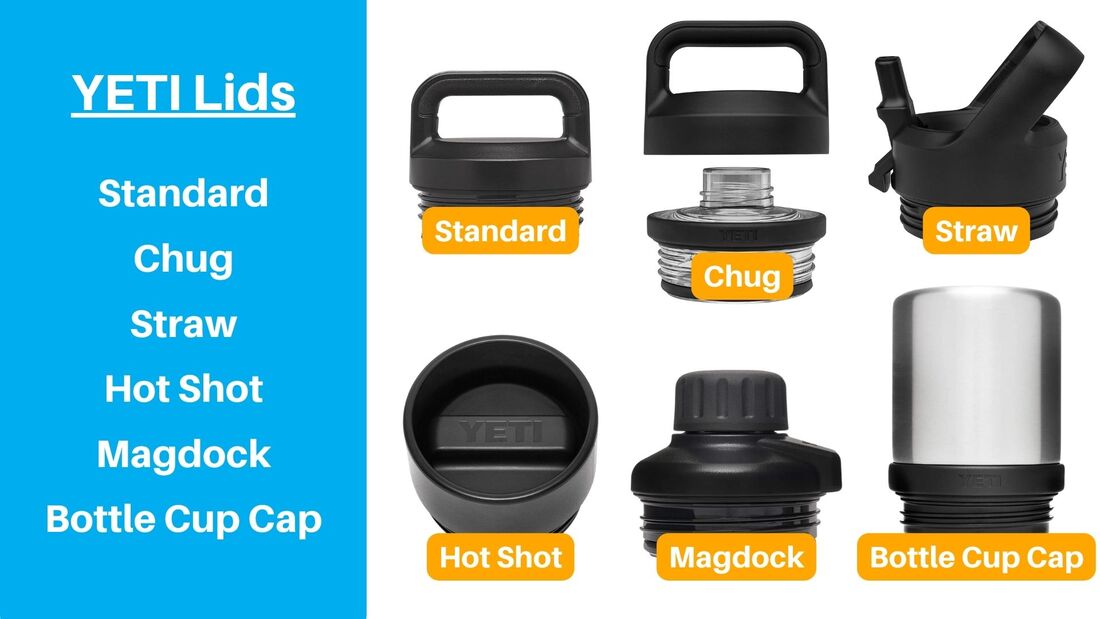
The Six YETI Lid Options
YETI's Ramber Water Bottles
Click this link to see YETI's Water Bottle category on Amazon.
See Bottle Options
YETI's Lid Options
Click this link to see YETI's lid options on Amazon (under Drinkware Accessories).
See Lid Options

YETI's Standard Lid

YETI's Standard Lid - Benefits and Drawbacks
See Listing for the Standard Lid
​First is the one that started it all, YETI’s Standard Lid.  This was the lid that came out when this water bottle series was initially released, and it’s still the one that comes with most YETI Ramblers bottles today.

​We love the carrying handle.  The rigid design is wide enough to fit three fingers, making it very comfortable and easy to hold.

The simple, no-frills design is very easy to use, and it’s also easy to clean.
This is the best option for anyone who has limited finger strength because the handle is easy to hold, and it lets you get a good amount of leverage to open the cap.

It’s also the most lightweight YETI cap at only 2.9 ounces.

There are a few main drawbacks.  First, the lid is completely separate from the bottle, so it’s pretty easy to misplace or drop the lid, causing it to get dirty.  It’s not like a Takeya, which has a connected spout cap.

Second relates to YETI’s Over-The-Nose technology, which in non-marketing terms just means they made the mouth opening about 1/2” wider than competitors like Hydro Flask.  Because the opening is so wide, it’s notoriously easy to splash water in your face, especially if you’re in the middle of an activity like driving.  And if you have ice in your bottle, all we can say is good luck.

So while we love the simplicity of the standard cap and how easy it is to use, it’s definitely the base design for a reason since it does not offer many benefits or uses compared to other lids.

YETI's Chug Cap
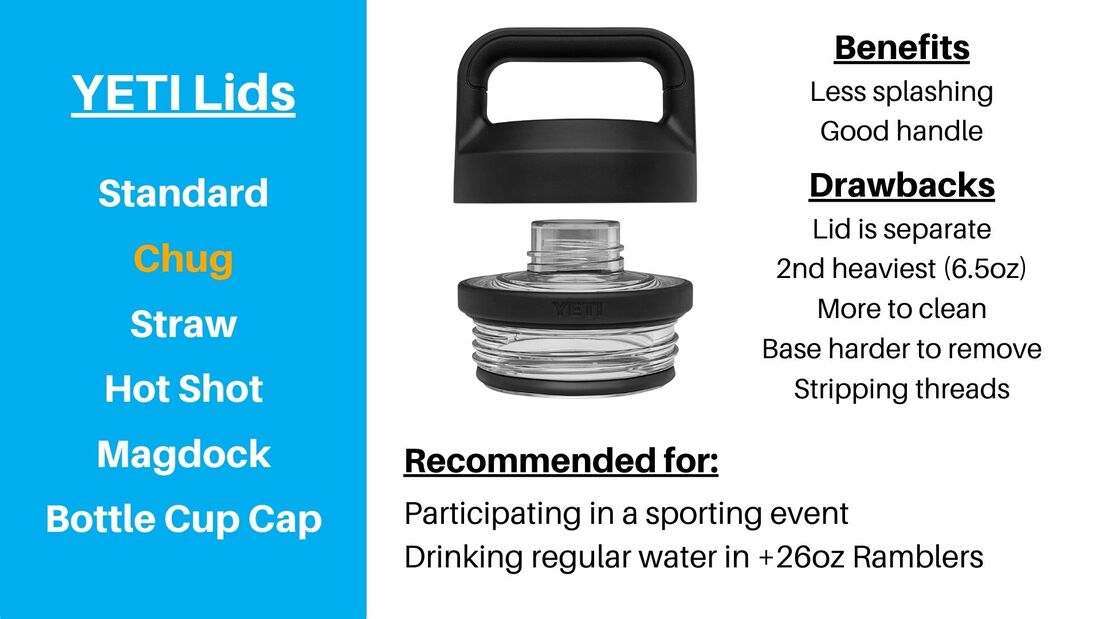
YETI's Chug Lid - Benefits and Drawbacks
See Listing for the Chug Lid
YETI’s Chug Cap is probably the most common replacement lid that people choose to use, and for good reason.  It consists of two parts that we’ll call the base and the spout cap.

The most important and obvious benefit is how lid solves the glaring problem with the Standard Lid by making it much easier to take drinks of water without splashing water all over your face.

The handle is the same great design as the Standard Lid and is very comfortable and easy to hold.

Some drawbacks are that the spout cap comes completely off and is easy to misplace or drop.

At 6.5 ounces, this is the 2nd heaviest YETI lid.

There are more parts compared to the Standard Lid, so there is also  more to clean, including an extra set of threads.
This is not as good of an option as the Standard Lid for people with limited gripping strength, mainly because the base is more difficult to get on-and-off.

Our previous video discussed a common problem we see in reviews about the chug cap, specifically that the threads can strip fairly easily.  If you want to use a chug cap, we recommend watching that video to help minimize this potential problem.
​
While it may seem like we brought up a lot of drawbacks, the YETI Chug Cap is by no means a bad lid.  It’s a solid improvement over the Standard Lid in many ways, and it’s our favorite lid for drinking regular water from YETI Ramblers that are 26 ounces or larger.

YETI's Straw Cap
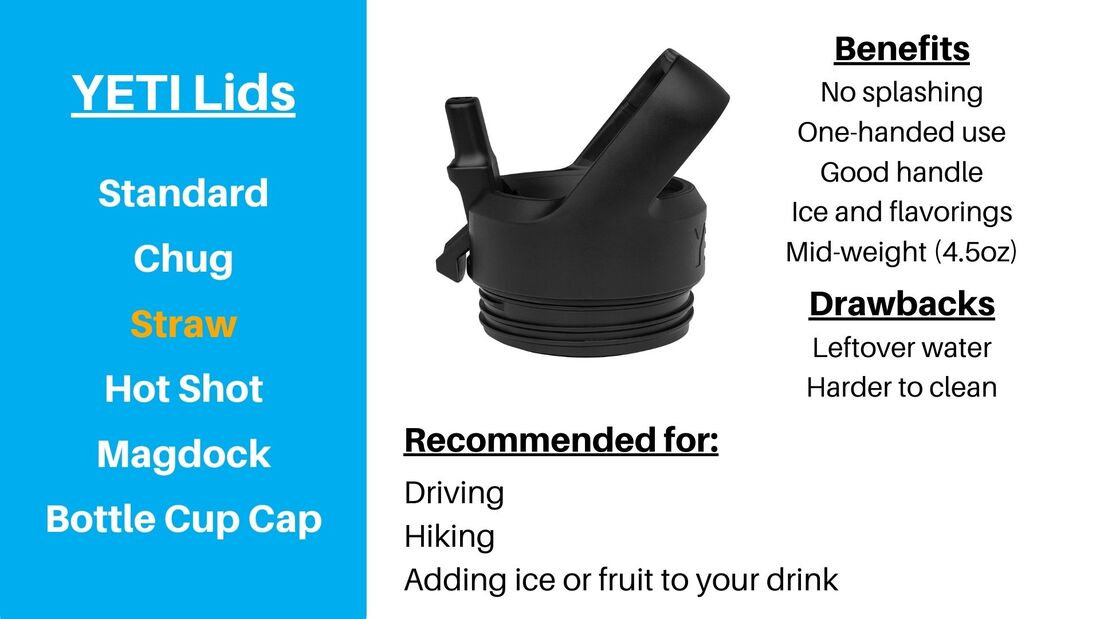
YETI's Straw Lid - Benefits and Drawbacks
See Listing for the Straw Lid
The next cap we’re reviewing is YETI’s Straw Lid.
​
Like with most straw lids, it’s very easy to take sips of water, and there’s no chance of splashing water in your face provided that you keep the bottle upright.

The previous two caps require two hands to unscrew the lid while holding the bottle, but you can take one-handed sips with the Straw Lid.  This makes it a great option for when you’re on the road.

The handle is the same comfortable, three-finger style as the Standard and Chug Lids.  The only difference is that the handle is angled to the side some so you don’t hit your forehead when taking a drink, but we wouldn’t count this as a problem.

In our opinion, this is the best option if you’re planning to use ice or add flavorings like fruit to your bottle.  You’ll keep everything out of your face, and the small straw opening is unlikely to plug up unless you have really small bits of ice or fruit.

If you’d like to flavor your water, consider using our FlavorFuze Straw infuser.  We designed it for Hydro Flasks initially, but it also fits great on YETI’s Straw Lids.

Most of the drawbacks are similar to what you’d find with any straw lid.  The straw grazes the bottom of the bottle, and you’ll need to remove the entire lid if you want to drink 100% of the water.

Also, they’re harder to clean than the previous lids.  Make sure you have a straw cleaner, and even if you’re cleaning the straw regularly, it’s a good idea to replace the whole straw every once and awhile.

In conclusion, this is a good straw lid that can help make your life a little easier.  We like this lid the most for hiking because it’s fairly lightweight compared to the other lids and prevents spills.  We also like using this lid when we want to add ice or flavorings.  In some ways YETI’s Straw Lid feels a little basic when compared to competitors like Hydro Flask and Klean Kanteen who have made innovations that make them easier to clean or use less plastic.  But basic isn’t necessarily bad, and this is certainly still a good lid.

Hot Shot Lid
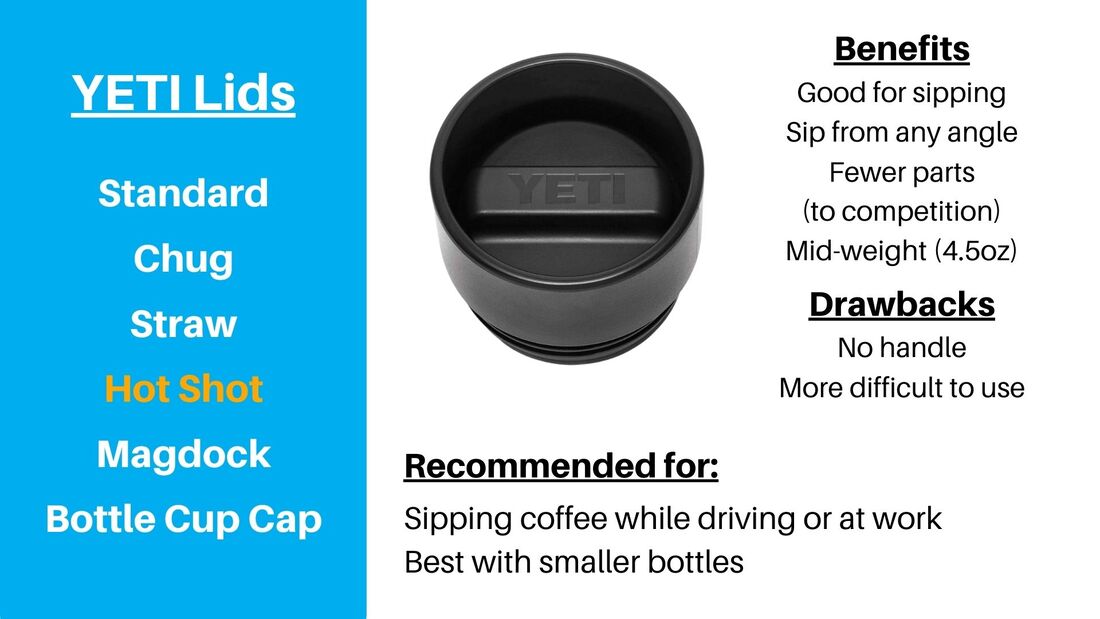
YETI's Hot Shot Lid - Benefits and Drawbacks
See Listing for the Hot Shot Lid
Next is YETI’s Hot Shot Lid, which is their sip-style.  It’s intended to be used with smaller bottles for coffee and tea.
It does a good job of limiting how much of your drink comes out at once, which is good when drinking something hot like coffee.
​
One cool feature is that you can take a sip from any side of the bottle, which is different than what you find with many competing sip lids that force you to line up your mouth with the opening.  In this way, the Hot Shot is a very good option for drinking coffee while driving because you don’t have to worry about lining up your mouth with the bottle opening.

And YETI’s Hot Shot has fewer parts compared to some competitors like Hydro Flask’s Flex Sip.  This makes it easier to clean and less likely to misplace or drop a piece.

It’s a fairly lightweight option at only 4.7 ounces, though this is technically the 4th heaviest YETI lid.

One obvious drawback is that the lid does not have the carrying handle that’s incorporated into the previous lids.  We know the Hot Shot is intended to be used with smaller bottles that are easier to carrying in general, but having a handle always helps.

But the biggest drawback that some people will find with the Hot Shot lid is that it’s more difficult to use, even compared to some other sip-style lids we’ve tested.  The rim around the top is great to drink from, but it doesn’t give you much room to get your fingers against the opening mechanism.  People with limited finger strength or arthritis will most likely have issues using the Hot Shot lid.

This especially applies to cleaning the lid.  To separate the two pieces, you have to twist even harder counterclockwise until you hear two clicks, and then the middle piece comes out.

To sum it up, this lid is a good option to use with YETI’s 12 or 18 ounce Ramblers when you want to sip on your coffee on the way to or at work, and we really like how you can sip from any angle.  But other than that, this lid is just not as easy to use as some other sip-style lids that we’ve tested.  And definitely don’t get this cap if you have limited hand strength.

YETI's Magdock Lid
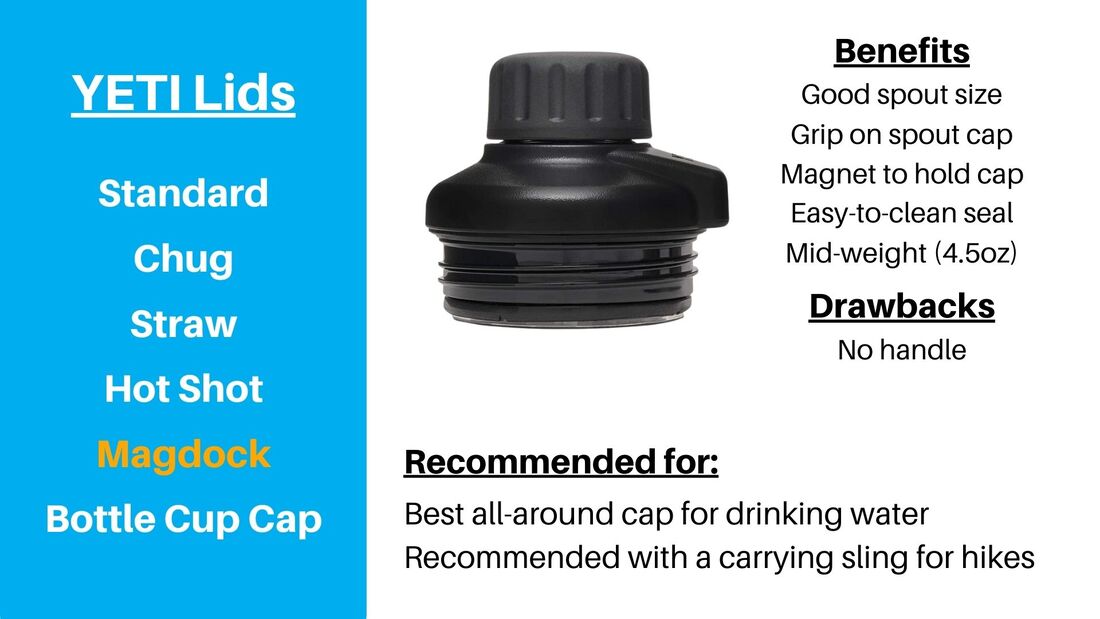
YETI's Magdock Lid - Benefits and Drawbacks
See Listing for the Magdock Lid
Next is the Magdock lid.  This is the lid we have been most excited to get our hands on because it seemed like an improved version of the Chug Cap, and we were not disappointed.

The spout is the same size as the Chug Cap, meaning you can get a good amount of water when you need it while also preventing spills.

The spout cap is textured for better grip, and it adds to the feel of a premium product.

But the most obvious improvement is incorporated into the name.  The spout cap has a built-in magnet that allows it to securely connect to another magnet in the base, and let’s be honest, who doesn’t love magnets?  This makes it much easier to prevent accidentally dropping your spout cap, which was one of the main drawbacks with the Chug Cap.

One other cool feature that we hadn’t seen before is that the o-ring that seals the connection between the spout cap and the base is much easier to remove than with most seals we find in other bottles and caps.  It even has a little built-in little handle that lets you pull it out very easily, and this makes cleaning your bottle much simpler.

At 4.6 ounces, this is the 3rd lightest YETI option.

The most glaring drawback is a biggie.  The Magdock Lid doesn’t have a built-in handle.  If you have smaller hands, then gripping YETI Ramblers that are 26 ounces and larger can be a challenge and not having a handle on the lid is a clear drawback.

But other than that, there’s not much we don’t like about the Magdock cap.
​
In conclusion, we really did like this lid.  This is our favorite lid hydrating while at work or hanging around the house because it’s easier to keep the spout cap nearby and clean.  It improves on most of the drawbacks with the Chug Lid, it’s easier to clean than the Straw Lid, and it’s easier to open and close than the Hot Shot Lid.  But the fact that it doesn’t have a handle is a major drawback for larger bottles, especially for people with smaller hands.  Consider getting a carrying pouch for your bottle, which then solves the problem of not having a handle.

YETI's Bottle Cup Cap
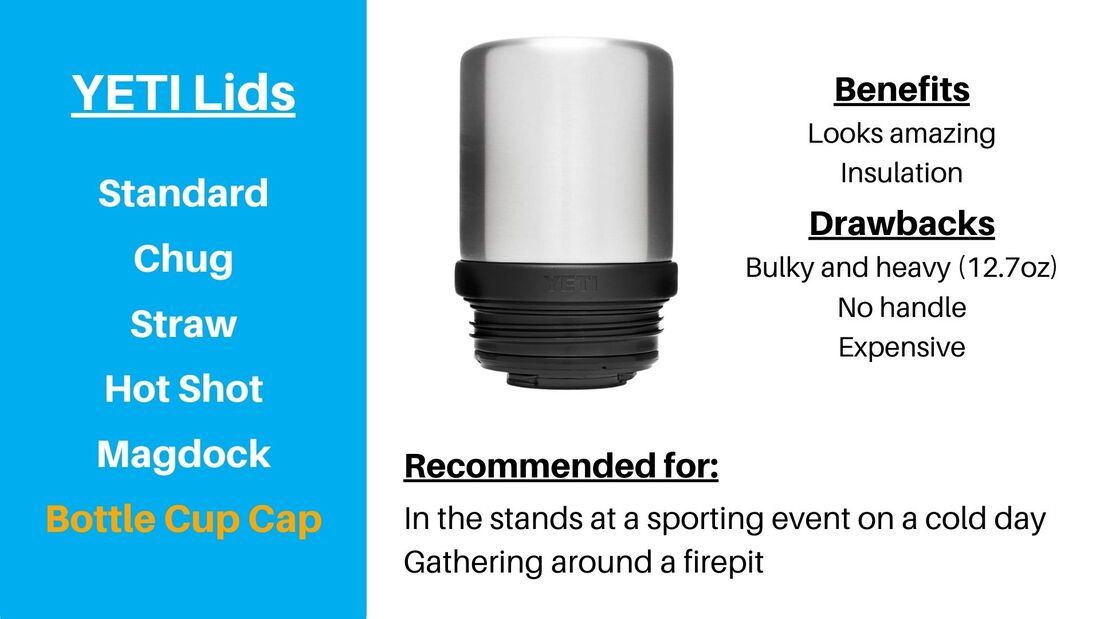
YETI's Bottle Cup Cap - Benefits and Drawbacks
See Listing for the Bottle Cup Cap
The last lid option that we’re reviewing has the most focused purpose.  The Bottle Cup Cap essentially turns your YETI Rambler into a Stanley Classic Thermos.  There are three pieces, the base, the spout cap, and the cup.  Just unscrew the spout cap a little, and then you can pour your drink into the detachable cup.

The cap looks amazing.  The stainless-steel cup has a heft and feel to it that definitely feels premium. 

We haven’t officially tested this yet, but we wouldn’t be surprised if this cap has the best insulation properties compared to other YETI lids.

Because the insulation is probably so good, this is a great option if you’re sitting in the stands watching a sporting event on a chilly day, sitting around the firepit, or relaxing at a campsite.

But there are some key drawbacks to consider.  First off, the lid is huge and bulky.  At 12.7 ounces, it’s almost twice as heavy as the next heaviest cap.

In addition, this cap doesn’t have a handle to help manage all that extra weight and bulk.

And with a price tag of $30 today, it’s also the most expensive lid option by far.  As of today, you can actually spend $5 less and get a 34-ounce Stanley Classic Thermos that serves the same purpose and has a handle built into the bottle.
​
Overall, while this is a really cool add-on for very specific scenarios, we think the Bottle Cup Cap is too situational and expensive for most people except the most die-hard YETI fans and collectors.

Summary

To bring it all together, here is our summary for each lid, including recommended best-uses.

The Standard Lid is a decent lid in general, particularly for hiking, but we think there are better options for most situations.

The Chug Lid has some good improvements over the Standard Lid and is our recommended option to use when you’re actively participating in a sporting event.  It’s a little heavier, so it’s not as good for longer walks or hikes.

The Straw Lid is our recommended option for hiking or when you want to add ice or flavorings to your bottle.

The Hot Shot Lid is ideally used to drink coffee with smaller Ramblers, but it’s not a good option if you have limited hand strength or if you want to drink from a larger bottle.

The Magdock lid is our favorite all-around lid for every-day hydration, especially when pairing it with a carrying pouch so not having a handle isn’t as big of an issue.

And the Bottle Cup Cap is a good option when you’re lounging game-side or around the fire and want to sip at a warm drink, but other than that it’s not very practical.

Regardless of which cap you get, consider getting a cup holder adapter for your YETI Rambler to keep it securely by your side when you’re on the road.  We just came out with our new-and-improved BottlePro Max adapter that fits all YETI Ramblers.

And that’s it!  We hope this post has helped you decide which lid or lids you should get.  Keep BottlePro in mind for accessories for your large bottles.
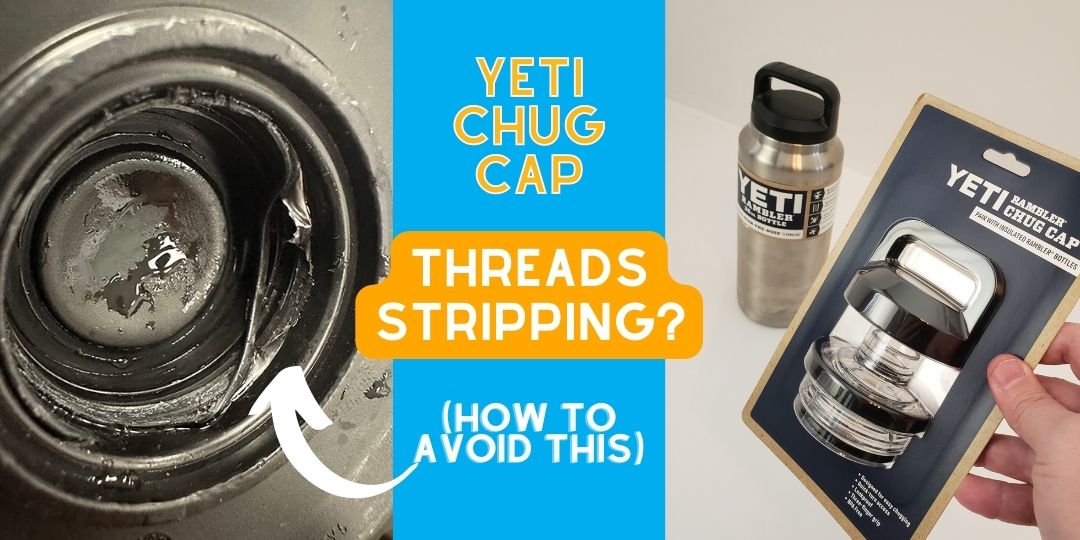
Buying a YETI Rambler?  Keep us in mind!

Check out our Amazon store for fun and helpful accessories, like fruit infusers, cup holder adapters, and carrying slings.
Picture
See BottlePro's Store
6 Comments

Threads Stripping with YETI's Chug Cap (and How to Avoid It)

1/16/2023

6 Comments

 
How to Avoid Stripping Threads with YETI's Chug Cap

YETI Chug Cap Stripped Threads - A Video Review

If you'd rather watch a video about this topic, then check out our YouTube video!
Or keep reading our full post below.
​

How to Avoid Stripping Threads with YETI's Chug Cap

At BottlePro, we’ve mostly focused on Hydro Flasks over the years.  But one of our New Year’s resolutions is to give some other brands more love, and at the top of that list is YETI.
​
YETI is possibly the most popular premium bottle brand on the market today, and for good reason.  Their products cost a relative fortune, but that’s because they are over-engineered and designed to last for many years.
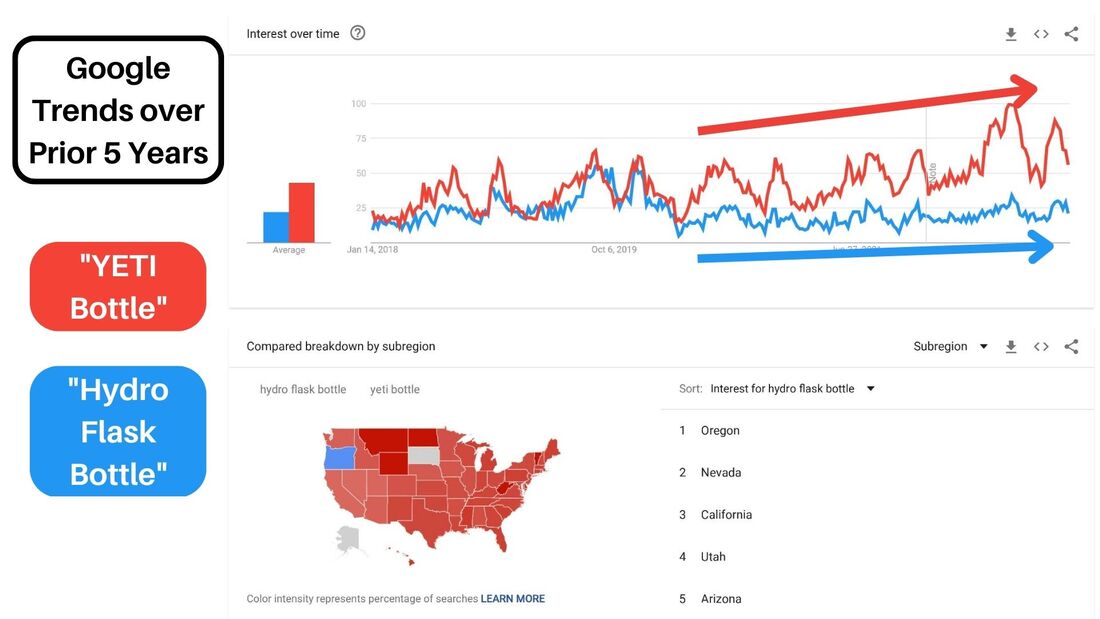
YETI's Popularity Increasing Compared to Hydro Flask
​That’s why some recent reviews of the YETI Chug Cap caught our attention.  We’ve seen a lot of posts on platforms like Amazon, Reddit, and YETI’s own website that mention how the threads stripped.  The one from Amazon has a good picture showing the problem, and the description says the lid only lasted 4 months until the threads stripped.
​Given that YETI is a premium brand, all these negative reviews seemed odd so we decided to order a chug cap to test it out and see if we could recreate this issue.

We ordered a YETI Chug Cap in December, 2022 from YETI’s storefront on Amazon.  Interestingly, the storefront showed this product as unavailable when we went back in early January when we were making this video, but we assume the listing will be back up and running soon.  It might be wishful thinking on our part, but maybe they’re updating the design to fix the issue we’re about to talk about.
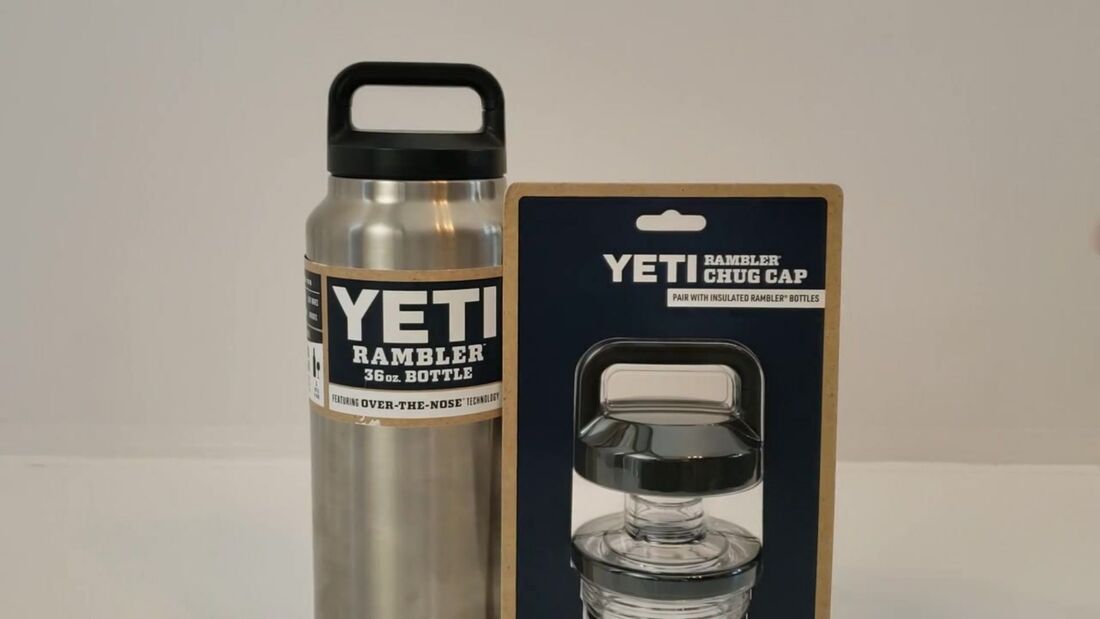
Picture
YETI's Chug Cap Listing
Our first impression is that the cap is well-built and feels very durable.  It definitely feels more heavy-duty than competitors like Takeya, ThermoFlask, or even Hydro Flask’s new Flex Chug.
​
Before we really tested out our lid, we took a closer look at the pictures from the negative reviews.  Our lid seems to be identical based on the locations of a few key features, which gives us confidence that both we and the reviewers used authentic YETI lids.
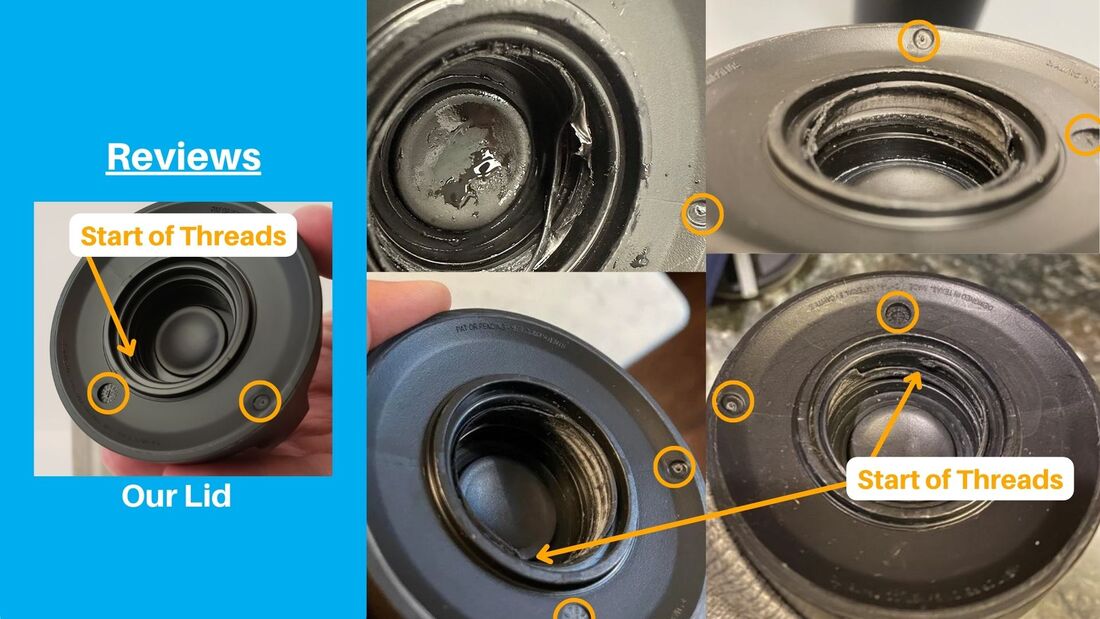
Authentic YETI lids - our lid has the same features as the reviewers' lids

Recreating the Issue

The next step was to try to recreate the issue.  We tightened the lid as much as we could by hand, but this did not seem to do anything to the threads.

Next came the real cross-threading test.  We tried screwing the lid on-and-off at different angles.  This includes pulling up and pushing down on the lid so we got the full range of taking the lid on and off.  This is when we started to see some wear-and-tear that looks consistent with the other reviewers.
​
In particular, we started seeing some evidence of cross-threading where the black plastic threads started to get flattened out on one side.
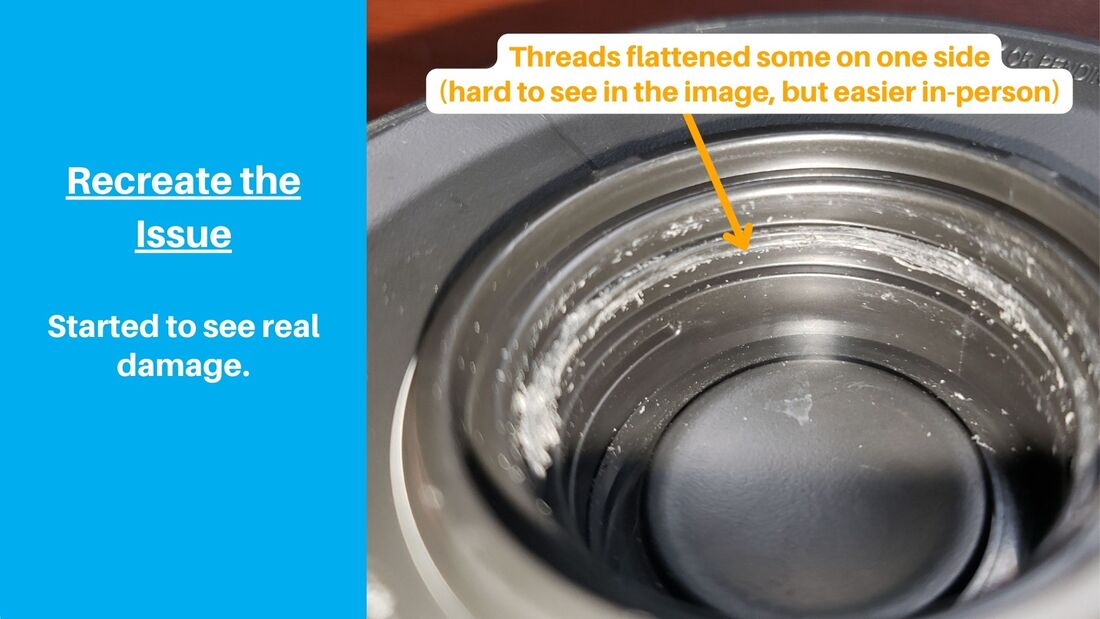
Starting to see cross-threading damage within a short time
​The problem with cross-threading and thread wear in general is that the issue accelerates once it starts.  So even though we were clearly stress-testing the lid by exerting quite a bit of force at different angles, the fact that we were able to create this amount of wear-and-tear over a few minutes is concerning.  We can absolutely see how the lid could wear down quickly like so many reviews have mentioned.

Why are the Threads Getting Damaged so Easily?

There are likely two main culprits to this problem.

Reason #1
The first is that the clear plastic on the base threads seems to be significantly harder than the black plastic on the spout cap threads.  And because the clear threads have fairly sharp angles on the cross-section profile, these threads can cut into the softer black plastic relatively easily.
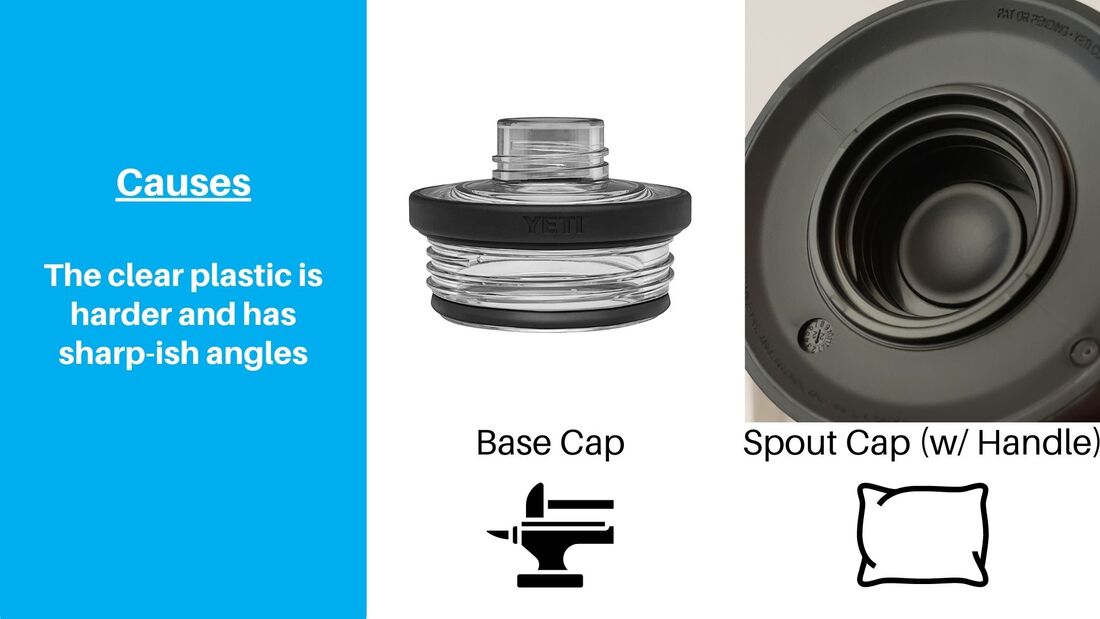
Harder clear plastic than black plastic
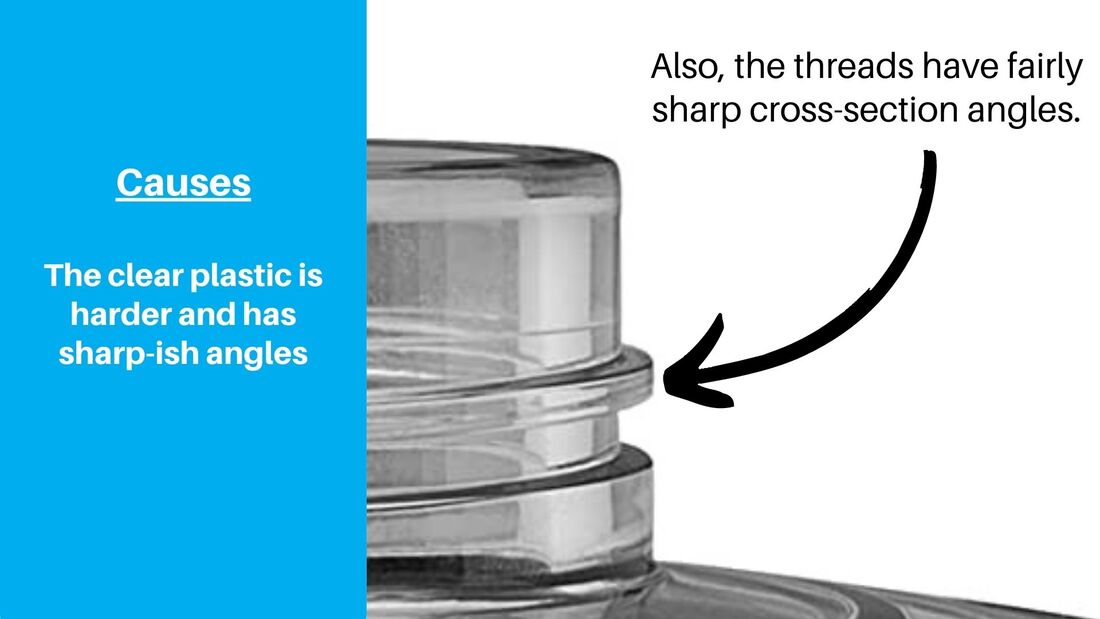
Sharp thread cross-section profile
Reason #2
Because of the thread design, the lid can start threading on at a pretty good range of angles.  This makes it easier to start closing the lid, which can make it a little easier to use the bottle.  But a side-effect is that this can cause the threads to not line up as intended, leading to more thread wear.
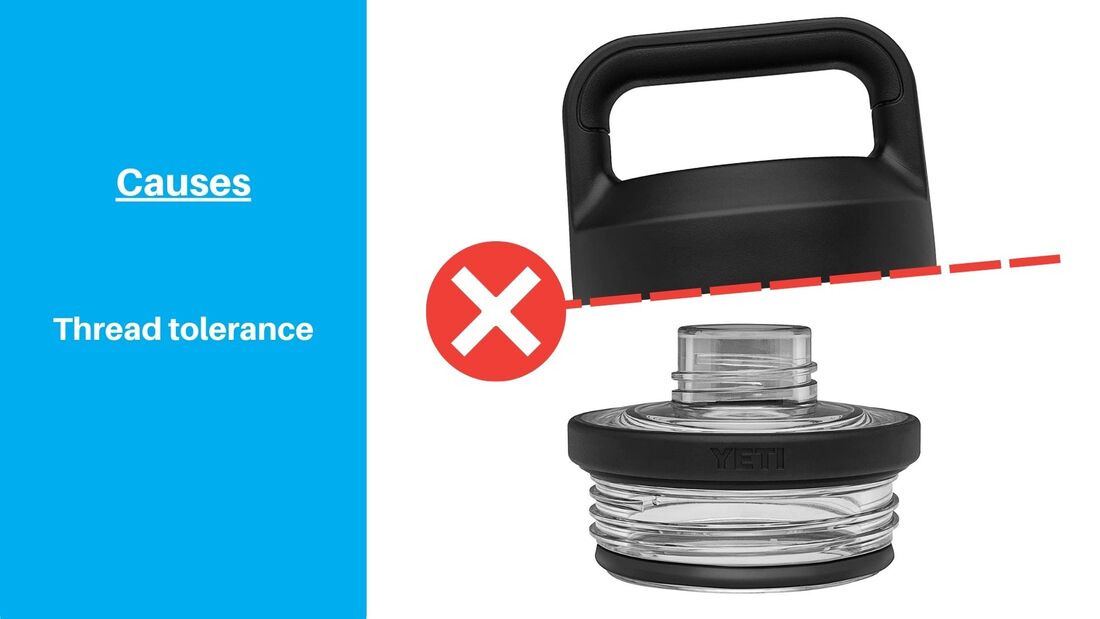
Thread tolerance
Thread tolerance
​Either one of these problems by themselves probably wouldn’t be much of an issue, but the fact that they both are happening together is leading to increased thread wear.
Reason #3
*Update 1/23/2023* Someone gave us feedback after we posted this video saying that their threads stripped because they used a hot drink, and the heat made the threads more malleable, causing them to fail. If you want to use a hot drink like coffee or tea, a better lid option would be the Hot Shot lid.

YETI's Response

As far as YETI’s stance goes, their response to one reviewer was “what you are experiencing isn’t something that happens often but can be caused by cross-threading and/or over-tightening your Chug Cap. Over time this will strip the threads.”

YETI's response to chug cap threads stripping
We find this response a little disingenuous given that many people are having this same issue, especially when you consider that a large number of people experiencing this threading problem probably won’t take the time to write a negative review.  That being said, YETI’s diagnosis of the root cause of the problem seems to be accurate.

What Can You Do about YETI's Chug Cap Threads Stripping?

#1 - Get a Replacement
​First-things-first, if you’ve already purchased a YETI Chug Cap and have experienced this thread issue, reach out to YETI for a replacement.  You shouldn’t have to cover the cost of this problem.  You can email YETI, or you can submit a warranty claim on their website.
Email:
[email protected]
OR
Submit Warranty Claim
If the button link doesn't work, go to https://www.yeti.com/warranty-information.html.  Then under “READY TO GET STARTED?”, click the link for “WARRANTY CLAIM FORM”.

#2 - Get a Different Brand
​If you’re deciding which bottle to buy and don’t want to run across this issue, one obvious solution is to choose a different bottle brand.  There are plenty of water bottles on the market today, and some bottles like Takeyas usually come with a chug cap included.  One thing we love about Takeyas is that the spout cap is attached to the cap base, so there’s no chance of losing or dropping the spout cap.  ThermoFlask also has a similar cap style.

Links to each bottle's listing on Amazon are included.
Takeya Actives with Spout Cap
Picture
See Takeya's Listing
ThermoFlask (Spout and Straw Lids)
Picture
See ThermoFlask's Listing

#3 - Get a Different YETI Lid
If you’re a YETI fanatic, you know that going with a different brand isn’t an option.  In that case, consider using a different lid since none of the other lids seem to have the same type of threading issue.

Currently YETI has six (6!) lid designs that fit their Rambler series bottles.  We'll be testing all of them in an upcoming video, so stay tuned!

Standard Cap
YETI's Standard Cap
Comes with most YETI Ramblers.
See Listing
Chug Cap
YETI's Chug Cap
Still good, just be careful threading!
See Listing
Straw Cap
Picture
A very common choice
See Listing

Hotshot Cap
Picture
Great for coffee or tea.
See Listing
Magdock Cap
Picture
Magnet on side for spout cap
See Listing
Bottle Cup Cap
Picture
Becomes a Stanley-style thermos.
See Listing

#4 - Keep Using the Chug Cap, but Be Careful!
Even though it may seem like we've been trashing on YETI's Chug Cap design, we actually really like it.  If you want to stick with the YETI Chug Cap, just be mindful of how you use it.  Make sure you have the spout cap aligned properly and perpendicularly to the base as much as possible before you start threading it on.

​To be extra safe, just give the spout cap an easy spin without adding extra force.  The cap threads on really nicely and easily when it’s aligned properly, and then you can just snug it up a little more to make sure the seal is leak-proof.

Whatever you do, don’t pull out the gun show.  You shouldn’t have to use much force or effort to get a good seal, so if it feels like you’re straining to get the cap on, then odds are it’s not aligned properly.
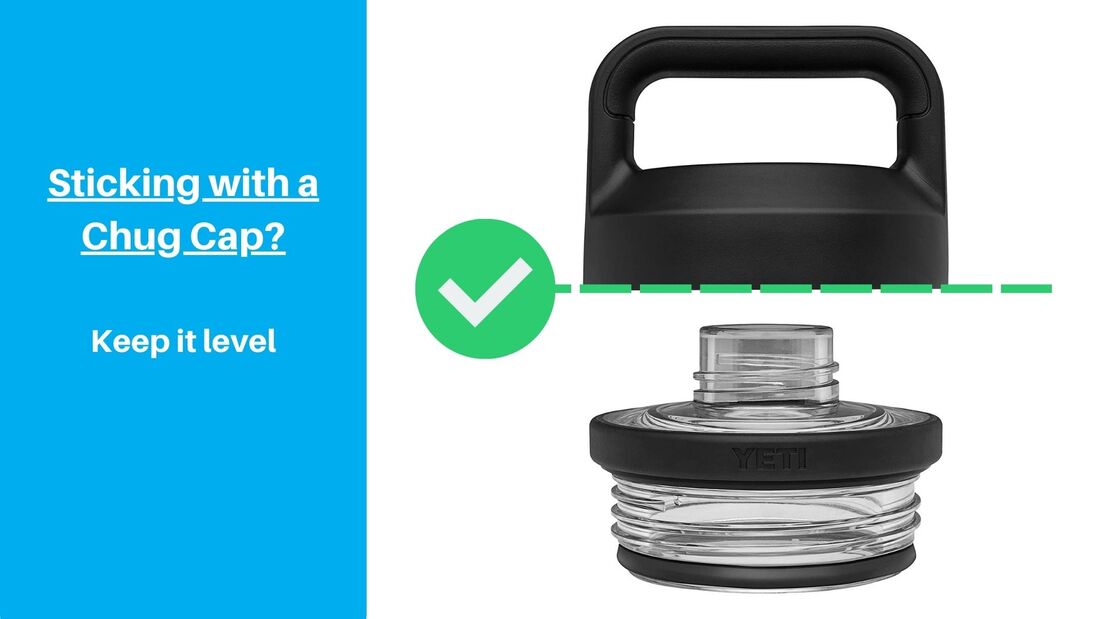
Picture
We hope that YETI will take a closer look at their Chug Cap soon and redesign to help prevent this issue from happening, either by fine-tuning how the threads interact, changing the plastic composition, or maybe even overhauling the design.
Buying a YETI Rambler?  Keep us in mind!

Check out our Amazon store for fun and helpful accessories, like fruit infusers, cup holder adapters, and carrying slings.
Picture
See BottlePro's Store
6 Comments

Which Water Bottle Has the Best Insulation? (Updated for 2023!)

1/2/2023

3 Comments

 
Which Water Bottle has the Best Insulation? (Updated for 2023)

Which Insulated Bottle is the Best?

Insulated water bottles have been around for a long time, but in the last decade or so their popularity skyrocketed with brands like Hydro Flask and YETI.  There’s no doubt that the dual-wall insulation technology in these bottles is a wonderful quality of life improvement compared to non-insulated bottles, especially if you live in a hot region.
​
But if you look on Amazon today, you can find dozens if not hundreds of brands selling similar insulated bottles.  So many people ask, which water bottle has the best insulation?

We tested 10 popular water bottles to see how well they hold ice.

The Best Insulated Bottle - A Video Review

If you'd rather watch the results, then check out our YouTube video below!​

The Contenders

We primarily focused on 32-ounce bottles because that size tends tend to be very popular, but we did use some other bottle sizes for certain brands based on what was available.  We also included a couple non-insulated bottles as a baseline, a Stanley classic thermos to see how the older style compares, and a triple-wall bottle because we hadn’t tested one before and we were curious if it’s the next best thing.
  • ​Nalgene with the Classic Lid (32oz)
  • Klean Kanteen Classic, Non-Insulated, Loop Lid (32oz)
  • Hydro Flask with a Flex Straw Lid (32oz)
  • ThermoFlask with a Chug Lid (32oz)
  • Takeya with a Chug Lid (32oz)
  • Iron Flask with a Straw Lid (40oz)
  • Klean Kanteen’s TKWide with a Chug Lid (32oz)
  • YETI Rambler with Classic Lid (36oz)
  • Luxe with Chug Lid (22oz)
  • Stanley Original (1L / 34oz)
(click an image below to see the bottle on Amazon)
Nalgene with the Classic Lid (32oz)
Klean Kanteen Classic, Non-Insulated, Classic Lid (32oz)
Hydro Flask with a Flex Straw Lid (32oz)
ThermoFlask with a Chug Lid (32oz)
Takeya with a Chug Lid (32oz)
Iron Flask with a Straw Lid (40oz)
Klean Kanteen TKWide with a Chug Lid (32oz)
YETI Rambler with Classic Lid (36oz)
Luxe with Chug Lid (22oz)
Stanley Original (1L / 34oz)

The Test

Our Setup for the Test (Minus the Strainer and Ice Mold)

Because the main purpose of an insulated water bottle is to maintain a temperature for longer periods throughout the day, we measured the weight of ice before and after the test as our main metric.  We purchased an ice mold that creates larger sticks to limit the effect that surface area variations in different pieces of ice might have on the melting rate.  Then we added one ice stick to each bottle and no water.  After four hours, we poured the contents of each bottle into a strainer, then the remaining ice was dumped onto a scale.  By comparing the weights of each ice stick before and after, we were able to get an idea of which bottle keeps ice the best.  We then repeated this test three times and calculated the cumulative results.
Picture
The Ice Mold
This is the ice mold we used to create the larger sticks of ice.  In general, less surface area leads to slower melting, so the larger the ice cubes you use, the longer your ice should last!
See Pricing on Amazon
Keep in mind that this experiment was intended just to give an idea if there are any major variations in insulation effectiveness.  In an ideal experiment, we would have used a more accurate scale, used similar lids on all of the bottles, measured out the water into each ice mold to ensure the same volumes of ice were made, and used the same volume bottles across the board.

With the disclaimers out of the way, here are the results!

The Results

The cumulative results are summarized in the table below.  You can see the percentage of ice that melted in the fourth column.  A few things jumped out at us.
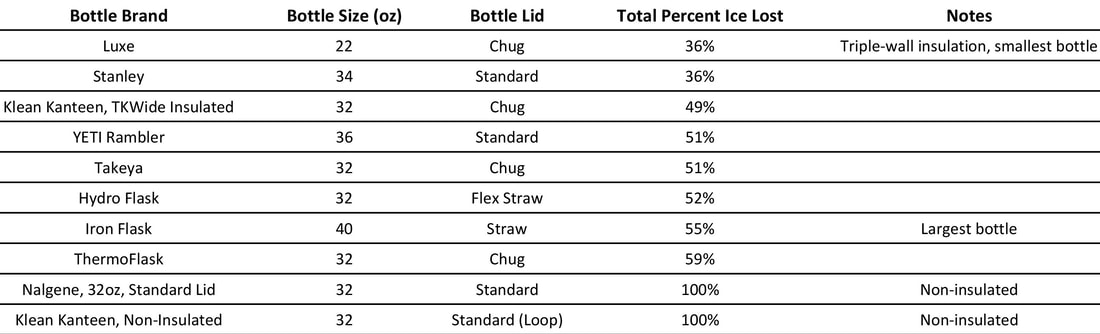
Picture
The Luxe and Stanley Original bottles are in a league of their own with 36% ice loss.  One factor to keep in mind with the Luxe bottle is that it’s only 22 ounces, and the smaller volume of air likely made the result look better than it really was.  We also haven’t tested or used this bottle at all other than with this insulation test, so we’re not quite ready to recommend it yet.  Regardless, this initial test of the triple-wall insulation showed promise, and this type of bottle is worth looking into more.  The Stanley result was interesting too, given that this type of bottle has been around for a long time and is basically the OG of insulated bottles.

After that, we have the Klean Kanteen TKWide, the YETI, Takeya, and Hydro Flask with between 49 and 52% ice loss.  These results are very close and are certainly within the range of potential error, so there’s not much difference here.

​Next is the Iron Flask at 55% ice loss.  But keep in mind that we only had a 40oz Iron Flask to test, and the larger volume of air likely made the ice melt faster.  Based on this consideration, we feel comfortable assuming that the Iron Flask’s insulation is essentially the same as the previous group.

ThermoFlask was the one outlier of the dual-wall insulation bottles.  At 59% ice loss, ThermoFlask seemed to consistently test worse than the other similar bottles.

And the Nalgene and Klean Kanteen classic had the worst results, but given that these are single-wall bottles and not insulated, this result was to be expected.  We mostly just included them in the test as a baseline because we could see when the ice had finished melting in the Nalgene, and we were curious if the single-wall stainless-steel design would do any better.

Conclusions

​When we take a step back to think about these results overall, we can reach a few conclusions.

  1. Triple-Wall - This was our first test of a triple-wall insulated bottle, but these might be the real deal and are worth testing more.
  2. The "OG" Thermos - While this type of Stanley bottle is not as convenient to drink from for every-day hydration, the Stanley Original is great at what it was primarily designed for.  This is the best option to keep your drink hot while you’re camping or watching a sporting event.  Just pour the drink from the Stanley into the cap or another container to drink from.
  3. Dual-Walls - For most people, any of the dual-wall insulated bottles from this test will be good enough to get them through the day, particularly when considering that you’ll probably use more ice than we did.  Our results showed some brands are slightly better than others, and in particular the ThermoFlask seemed to be the worst of the group.  But in our opinion there’s not enough of a difference to base a buying decision entirely on the insulation.  Instead, take other factors like the price, color options, and lid types into account to get a bottle that’s best for you.

Buying a large bottle?  Keep us in mind!

Check out our Amazon store for fun and helpful accessories, like fruit infusers, cup holder adapters, and carrying slings.
BottlePro's Amazon Store
See BottlePro's Store
3 Comments

Our Review of Klean Kanteen's TKWide Chug - Is It Good?

12/16/2022

0 Comments

 
Picture

Klean Kanteen's Best Bottle?

​Klean Kanteen quickly became one of the leading bottle brands when it burst onto the scene with its stainless-steel bottles in 2004.  But more recently, other brands have caught up with, and in some cases overtaken, Klean Kanteen’s market share by introducing stylish bottles with dual wall insulation.  In late 2020, Klean Kanteen finally released an insulated bottle called the TKWide series.

So was the TKWide bottle worth the wait?  We purchased a 32-ounce TKWide with a chug cap to find out.  We’ll let you know our thoughts and what you can expect if you buy one for yourself.

Hydro Flask's Flex Chug - A Video Review

If you'd rather watch a video, then check out our Youtube video below!​

Price

​Starting with the price, the TKWide bottles are on the expensive end of the spectrum.  You can expect to pay around the same amount as you would for a Hydro Flask for the same size bottle.
See Klean Kanteen's Listing
See Hydro Flask's Listing
Picture
If you’re looking for a less expensive option, consider a brand like Iron Flask (currently around $25 for a 32oz).
See Iron Flask's Listing
Picture

Insulation

​We’re fans of insulated bottles in general, so that’s a big plus.  We’ll be testing the TKWide’s insulation in a future video to compare it against bottles like Hydro Flasks and YETIs, but we expect the insulation is good for most daily activities.

Style

​Once we had the bottle in front of us, the first thing we noticed was the style.  This might be the coolest-looking bottle we’ve ever tested.  The main feature and focal point that really helps this bottle stand out from other similar ones is the stainless-steel carrying handle.  It gives a much different look than other bottles like Hydro Flasks, and we really like it, though we acknowledge to some degree this is just a personal preference.  Other handles like Takeya’s chug cap have a hinged plastic handle, and while this offers some benefits because the handle can flip up or down, the plastic just feels cheaper.  The TK Wide’s stainless-steel handle is very durable, and it helps achieve the feel of a premium bottle.
Picture
Every other part of the bottle also looks great, including the spout cap and the stainless-steel base.
Picture

Size and Weight

​The other thing we noticed right away is the size.  This bottle is huge for a 32-ounce.  It’s because of the Impact Base Cap adding another inch or so to the height.  The bottle is also heavier than other 32-ounce bottles.  A 32-ounce TKWide is a full 5 ounces heavier than a 32-ounce Hydro Flask, or about 32%.  This isn’t a big deal most of the time, but it’s something to keep in mind if you’re going hiking or on a long walk with your bottle.
Picture
Picture

Spout Cap

​The spout cap is connected to the cap base with a flexible tether.  Even better, the material feels like a silicone or flexible elastomer that should hold up really well over time compared to hard plastic tethers found on some other bottles.
Picture
Another cool feature is that you can snap the spout cap onto the stainless-steel handle to keep it out of the way.
Picture

Spout

​The spout itself is a good size.  It lets you chug a good amount of water, but it’s not so large that it’s difficult to drink from.  The spout is made of a flexible material, probably silicone.  This is a small detail you probably wouldn’t even notice until you have the bottle in person.  It’s honestly not that big of a difference-maker to us, but we think it helps the bottle stand out from competitors and feel a little more premium.
Picture

Inside

​When you take off the cap and look inside, you’ll find the comically large instruction booklet translated into 8 languages.  There’s also a thank you note that reviews all the social programs and environmental commitments that Klean Kanteen is involved with, so if you’re into supporting environmentally-focused causes and companies then you’ll probably feel pretty good about your purchase.

Threads

​The threads on the bottle are internal and formed from bumps in the stainless steel rim, and while it looks interesting, we find that this makes the cap a little more difficult to align compared to traditional threads.
Picture

Plastic

The inside of the bottle is made is food-grade stainless steel.  But if you’re looking for a bottle where water never touches the plastic, then please be aware that the TKWide Chug Cap has exposed plastic on the underside of the cap.
Picture
For a completely plastic-free option, consider getting a 40-ounce non-insulated Klean Kanteen with the classic wide loop cap.  Please note that this cap only fits Klean Kanteen’s wide mouth bottles with external threads, which does not include TKWides.
Picture
See Klean Kanteen's Classic 40oz Listing
Picture
See Klean Kanteen's Wide Loop (Cap Only) Listing

Our Conclusion

In conclusion, we really like Klean Kanteen’s TKWide bottle.  It looks fantastic, is very durable, and has a premium feel that’s hard to describe.  The minor issues like the weight and how the internal threads are more difficult to align than standard threads can be overlooked for the most part, though if you’re going on a long walk or hike, we recommend bringing a lighter bottle.

So overall, this is a great go-to bottle that will help you stay hydrated throughout the day.

Do you agree with our conclusion?  Let us know!
See Klean Kanteen's TKWide Chug Listing

Buying a wide mouth bottle?  Keep us in mind

Check out our Amazon store for fun and helpful accessories, like fruit infusers, cup holder adapters, and carrying slings.
Picture
See BottlePro's Store
0 Comments

Our Review of Hydro Flask's Newest Cap - The Flex Chug (New in 2022!)

12/8/2022

1 Comment

 
Picture

Is Hydro Flask's New Flex Chug Lid Good?

​Hydro Flask just released a brand new cap in late 2022.  It’s called the Flex Chug, and it’s Hydro Flask’s first true spout-style chug lid.  We ordered one, and we have been testing it for a few days, and we’ll let you know our initial impressions as well as what to expect if you’re thinking about buying one for yourself.

Hydro Flask certainly needed a chug-style lid to compete with ones that many of their competitors already have, including ThermoFlask and Takeya.  But while we’re fans of most Hydro Flask products and have built our company around making complementary products for Hydro Flasks, we have to admit that we think they missed the mark on the Flex Chug cap.

Hydro Flask's Flex Chug - A Video Review

If you'd rather watch a video than read our post, then check out our Youtube video below!

What We Like

Hydro Flask's Classic Design
Style and Durability
​We like how Hydro Flask stayed true to their traditional look, including the stainless-steel pegs that the handle connects to.

The lid also feels solid and durable, just like all Hydro Flask products that we’ve tested.

​And the lid does its job by giving you the easy-drinking benefits of a narrow mouth bottle with the benefits of a wide mouth, like being easier to clean and add flavors.

What We Don't Like

Spout Cap is not Connected
#1: Spout Cap is not Connected
The spout cap is essentially a baby version of their standard lid.  It’s not connected to the base of the chug cap and comes completely off.  There’s a chance you could drop the spout cap when trying to take a sip, and then it could get dirty if it drops on the floor of your car or on the ground.
Takeya's Hinged Spout Cap Connection
Other spout-style lids from competitors like Takeya have hinged connections that keep the spout cap secured even when you unscrew it, and we prefer this design a lot more so it’s easier to take one-handed sips without potentially dropping the cap.
Interested in a Takeya 32oz bottle like this one?  Click the link below to see it on Amazon.
See Takeya's 32oz Bottle Listing

Size: Takeya's Chug Cap (Left) vs Flex Chug (Right)
#2: Spout is too Big
​We think the spout is a little too big.  Here is Hydro Flask’s Flex Chug side-by-side against Takeya’s chug-style lid.  You can see that Hydro Flask’s spout opening is much bigger.

​Takeya has a good size spout that gives you plenty of water when you need it without having to open your mouth too wide, but Hydro Flask’s spout size is bigger and is a little more difficult to get your mouth around.  Then you can end up accidentally chugging more water than you wanted.

Picture
#3: Aesthetics - Looks Big and Bulky
We recognize that this is more of a personal preference, but in our opinion, the lid looks bulky and awkward.  From a design perspective, there’s just something about how tall the lid is and has two layers that that seems off to us.

And once someone commented on how it looks like a wedding cake, we can't un-see the resemblance!

Our Conclusion

So overall the Flex Chug cap is an OK option and does a decent job at what it’s designed for, but we wish that Hydro Flask had taken some of the aspects of other proven spout lids and incorporated them into their design.

Do you agree with our conclusion?  Let us know!

Buying a wide mouth bottle?  Keep us in mind!

Check out our Amazon store for fun and helpful accessories, like fruit infusers, cup holder adapters, and carrying slings.
Click to see BottlePro's Amazon Store
See BottlePro's Store
1 Comment

Narrow Mouth vs Wide Mouth Bottles - Which is Better?

12/1/2022

1 Comment

 
Picture

Are Narrow or Wide Bottle Openings Better?

When you’re buying a reusable bottle, one of the first decisions you’ll have to make is whether to get a narrow mouth or wide mouth bottle.  Virtually all bottle brands have narrow mouth and wide mouth options, so this is something you’ll need to think about whether you’re looking to buy a Hydro Flask, Nalgene, or any of the countless other bottle brands on the market today.  We’re going to review the main factors you should be thinking about when making your decision.  And spoiler alert, we have a pretty strong opinion on this one.

Please note that some bottle brands have different terminologies.  For example, Hydro Flask has a “standard mouth,” and that’s what we would classify as a narrow mouth design. 
​​
Links are given to the Amazon listings for each product.  Thanks for your support!

Narrow Mouth vs Wide Mouth - A Video Review

If you'd rather watch a video than read our post, then check out our Youtube video below!  We review the same information and give our recommendation on whether narrow mouth or wide mouth bottles are better.

​Factor #1 – How Easy is it to Drink from a Narrow vs Wide Mouth Bottle?

One of the most common reasons that someone might prefer a narrow mouth is that it’s easier to take sips of your drink, and this is certainly true with the base bottle.  With wide mouth bottles it’s not uncommon to take a sip of water and accidentally splash yourself in the face.  Then don’t be surprised when your friends and family make an Airplane reference about having a drinking problem.  Narrow mouth bottles help prevent this issue.

But if you have a wide mouth bottle, you can easily avoid this problem by purchasing a different style lid, like a straw, sip, or chug style.  For Hydro Flasks, see our videos reviewing their Flex Straw and Flex Sip lids to take a closer look.  Or get a splash guard, like a SplashPro for Hydro Flasks, or Guyot or Watergate for Nalgenes.
​
So all-in-all, there’s not much of a difference here between narrow and wide mouth bottles, other than the small cost you might run into if you’re buying a different lid or splash guard.

Lids to Prevent Spills

Hydro Flask's Flex Straw Lid
Straw Lids
Generally speaking, straw lids are a great option to prevent spills.  But be aware that some lids tend to leak, especially through the air hole on top.

Pictured is Hydro Flask's newer Flex Straw lid offering that has several improvements compared to their original straw lid design.
See Flex Straw Amazon Listing

Hydro Flask's Flex Sip Lid
Sip Lids
Sip lids, as the name suggests, are great for sipping smaller amounts of your beverage.  This usually makes them a great option for hot drinks like coffee or tea.

Pictured is Hydro Flask's Flex Sip.
See Flex Sip Amazon Listing

Picture
Tzuoieo's Chug Lid
Chug/Spout Lids
Some companies call these chug lids, while others call them spouts.  But the design is usually pretty similar.  You screw your lid onto your bottle like normal, but there's a smaller threaded cap that you can remove.  This lets you drink from a smaller opening.

Pictured is Tzuoieo's chug lid that fits Hydro Flasks.
See Tzuoieo's Chug Lid Amazon Listing

Alternative: Splash Guards

SplashPro Splash Guard
For Hydro Flasks: SplashPro
We designed our SplashPro splash guard to fit around Hydro Flask Flex Lids (the standard ones that you screw on and off each time you take a drink).
See our SplashPro Listing

​Factor #2 – How Easy is it to Clean a Narrow vs Wide Mouth Bottle?

First off, regardless of which bottle you use, we highly recommend getting a bottle brush to help make cleaning your big bottle more easy.  But in general, you’ll find narrow mouth bottles more difficult to clean than wide mouth bottles.

Narrow mouth bottles limit the size of a bottle brush you can fit, and with smaller brushes, the bristles usually aren’t long enough to easily reach the spot where the bottle widens just under the neck.  Wide mouth bottles can fit bigger brushes with longer bristles, so it’s easier to clean this area.
​
So when it comes to ease of cleaning, wide mouth bottles are the clear winners.

MOSOLAN's Bottle Brush with Straw Cleaner
Bottle Brush with Built-In Straw Cleaner
We like this bottle brush because the straw cleaner is easy to use and wash, and screws into the handle of the brush.  It also comes with a smaller "detailing" brush that's great for cleaning the threads on the caps.
See MOSOLAN's Bottle Brush Amazon Listing

​Factor #3 – Adding Ice and Flavorings

Many people like to add ice or flavorings to their water to change things up, but if you get a narrow mouth bottle, you’re really limiting what you can do.  Adding ice is more tedious, and that’s if your ice cubes even fit.  Some bottles, like narrow mouth Nalgenes, have really small openings that don’t even fit most standard ice cubes.  And odds are you won’t have an easy time adding fruit or tea leaves since most infusers won’t fit.  You can add liquid flavorings and flexible tea bags to narrow mouth bottles, but that’s about it.

Wide mouth bottles are much more versatile than narrow mouth bottles.  Its easier to add ice, fruit and tea infusers, and other natural flavorings.  Our FlavorFuze Pod fruit infuser fits great in most wide mouth bottles, and you can fit many common tea infusers as well.  So when it comes to adding ice or other flavorings, wide mouth bottles are better than narrow mouth bottles.

Accessories to Add Flavoring (Narrow Mouth)

Mio Liquid Flavoring
Liquid Flavorings like Mio
You won't be able to fit larger fruits or infusers in narrow mouth bottles, so you'll probably have to stick with Mio or a similar liquid flavoring.
See Mio's Amazon Listing

Accessories to Add Flavoring (Wide or Narrow Mouth)

Be sure to check your bottle's mouth diameter before buying an infuser.  But in general, most popular wide mouth bottles tend to have mouth openings that are at least 2.0 inches diameter.  So get infusers that are less than 2" around and you should be good.
LULLATTI Tea Infusers
Tea Infusers
Brew loose-leaf tea in your bottle! LULLATTI makes a tea infuser that fits in wide mouth Hydro Flasks and other similar bottles.
See LULLATI'S Tea Infuser Amazon Listing

FlavorFuze Pod Fruit Infuser
FlavorFuze Pod and Straw
Get a fruit infuser for your wide mouth bottle to have truly natural flavorings each day.

FlavorFuze Pod has two lid: a drop-in lid for wide mouth bottles (opening at least 2.0" diameter), and a splash guard lid that fits Hydro Flasks.

Or try our FlavorFuze Straw infuser (different listing) that clips onto straw lids.
See FlavorFUze Pod Amazon Listing

​What about the Cost?

​You might be asking if narrow mouth or wide mouth bottles are more expensive, but the opening style really is not much of a factor.  The variables that make the most impact on the bottle cost are the brand and bottle size, not the opening style.

Our Recommendation

So when it comes to deciding whether narrow or wide mouth bottles are better, our opinion is that wide mouths are the clear winners.  They’re easier to clean, they’re more versatile when it comes to adding ice and flavorings, and you can make it just as easy to take sips as a narrow mouth bottle by getting the right lid or splash guard.

Do you agree with our recommendation?  Let us know!

Buying a Wide Mouth Bottle?  Keep us in mind!

Check out our Amazon store for fun and helpful accessories, like fruit infusers, cup holder adapters, and carrying slings.
See BottlePro's Store
1 Comment

Why are Hydro Flasks so Popular And Expensive (And Are They Still Worth It in 2023?)

11/24/2022

1 Comment

 
PictureWHY ARE HYDRO FLASKS SO POPULAR AND EXPENSIVE (AND ARE THEY STILL WORTH IT IN 2023?)

What's the Big Deal with Hydro Flasks?

Today we’re answering the question, why are Hydro Flasks so popular and expensive, and are they still worth it in 2022 and 2023?  Are Hydro Flasks good, and are they worth the price?

At BottlePro, we’ve been involved in the niche world of large water bottles since we released our first cup holder adapter in 2015, so we’ve seen and tested our fair share of bottles.  Here we’ll give you a quick history of Hydro Flask, and by the end of it you’ll know more than you thought you ever needed to know about water bottles.  Then we’ll give our thoughts and recommendations about Hydro Flasks in particular, and we’ll also let you know some good alternatives to Hydro Flasks in 2022 and 2023, especially if you’re looking for a gift for the Holidays.

Quick Summary

We know you're busy!
If you're looking for less expensive alternatives to Hydro Flask, here are some of our favorites.
​Keep reading the rest of the post or watch the video for more details.
Recommended less expensive alternatives to Hydro Flasks

Click the links below to see these products on Amazon
Takeya Actives
Iron Flask
ThermoFlask

Why are Hydro Flasks so Popular and Expensive, and What are Good Alternatives? (A Video Review)

If you'd rather watch a video than read a post, you're in luck!  In this video, we review the history of Hydro Flasks and give our recommendations on whether it's still worth buying one in 2022 or 2023.  We'll also let you know some good alternatives.  The video mostly reviews the same info as the blog post below.

What's with big water bottles?

For most people, water bottles are not a huge part of their life or their daily routine.  But many people won’t leave their house without their favorite water bottle by their side, and this group of people is growing every day.  Large reusable water bottles are winning over an increasing number of people for many reasons, with the most common being to improve hydration habits, to limit plastic waste, and to keep a cool drink nearby on a hot day (or vice-versa).

Even if you don’t think much about bottles, we bet you’ve noticed more and more people carrying around awkwardly-large water bottles, particularly in the last 5-10 years.  The bottle brand with the most meteoric rise in popularity during that period is without a doubt Hydro Flask.  But when you first look up Hydro Flask, one of the first things you’ll notice is the price tag.  And today, with high inflation and an economic downturn, budgeting is becoming more essential for many people and families.

Which makes many people ask, why are Hydro Flasks so popular and expensive?  And are Hydro Flasks still worth buying in 2023?

When did Hydro Flasks Become Popular?

Before Hydro Flask, the most common reusable water bottles that focused on the outdoor recreation industry were plastic bottles, like Nalgenes, or single-wall stainless steel bottles like Klean Kanteens.  Both bottle types have their own benefits and drawbacks, which we go into more detail in our previous post.  There were also some insulated bottles like Stanleys, but they had a mostly rugged design that focused on utility.  Each bottle brand had a loyal following in the outdoor recreation community, and to many outsiders it seemed like the market was saturated.
​
But then came along Hydro Flask, and everything changed.  The company was founded in 2009 and quickly began building a cult-like following of devoted users in the outdoor recreation community, particularly in Hawaii and on the western US coastal states.  The company moved to Bend, Oregon, which is where Hydro Flask is still headquartered today.
Searches for Hydro Flask (Google Trends)
Hydro Flask, Interest by Location (Google Trends)
By 2012 as Hydro Flask really started gaining popularity, you may have started noticing people, usually Gen Z’s or Young Millennials, carrying these bottles.  Popularity continued to steadily increase until it peaked in 2019, when the Gen Z the subculture known as “VSCO girls” received a lot of press and attention.
VSCO Girls Articles in 2019
​Since peaking in 2019, Hydro Flask’s search popularity based on Google Trends has fallen significantly.  But the trend curve has mostly leveled off and continues to be significant, vastly out-performing previous market leaders like Nalgene and Klean Kanteen.
Google Search Comparison, Hydro Flask vs Klean Kanteen vs Nalgene (Google Trends)

Why did Hydro Flasks Become so Popular?

Even when you know that Hydro Flasks are popular, that still doesn’t answer the question of why they became popular.  So how did Hydro Flask become such a staggering success as a brand and company?  There are a few reasons, including having a high-quality product, marketing very effectively, and honestly, having some lucky timing.
Why Hydro Flask became so successful
Hydro Flask had a great product, but so did many other similar bottle brands at the time.  Nalgenes had color options and are very durable.  Klean Kanteens had the easy-to-clean, plastic and BPA-free stainless steel option covered.  Stanleys and other thermos-style mugs had insulation.  But Hydro Flask was the first company to effectively combine all those benefits into one bottle.  ​
Hydro Flask's benefits
Even still, the rise of Hydro Flask cannot be fully explained without also considering the rise of social media, particularly Instagram.  Instagram was launched in 2010, and it quickly became the must-have app for younger generations.  With Hydro Flask starting around the same timeframe and targeting similar customers, they were a natural fit.  Hydro Flask began gaining traction from influencers, followers, and fans posting pictures of their colorful bottles, and with a healthy dose of FOMO, Hydro Flasks quickly became the go-to water bottles for eco-conscious Gen Z’s and Millennials.

​There is no doubt that Hydro Flask would not have become as widespread and popular without Instagram.

​Of course, all those factors don’t matter without execution, and you really have to hand it to Hydro Flask with what they accomplished.  The company is a great example of what effective planning and execution can accomplish with a little bit of luck and timing. 

Is a Hydro Flask Worth Buying in 2023?

So now you know more than you ever thought you needed to know about the history of Hydro Flask.  The original question remains: is a Hydro Flask still worth buying in 2023?  With a price tag of roughly $50 for their 40oz, it’s a sizeable purchase for most people and families.
​
The answer is a little subjective and depends on your situation.

If you’re doing OK financially and you want to buy a great product that will last for many years, it’s hard to go wrong with a Hydro Flask.  They make great products, and we’ve been using Hydro Flasks for over a decade.  Invest in a 32oz or 40oz bottle and you’ll find it much easier to stay hydrated wherever you go, and you’ll look great doing it.  Or if you really want a well-known bottle brand but aren’t into Hydro Flasks, consider YETI, which also makes a great range of bottles that are at similar price points.

But it’s almost 2023, not 2012.  Back in 2012, there weren’t many other alternatives for insulated, colorful water bottles.  Nowadays, we see new bottle brands pop up every month.  And honestly, many of them are just as good as Hydro Flasks and come with more accessories, all for a lower price.
Amazon Search Results, Insulated Stainless Steel Water Bottle

Cost for the Logo

​Based on what we’ve seen, you can just think of Hydro Flask’s logo as $10-$20 of your purchase. For many people, why spend that extra cost when you can get a great bottle from a company like Iron Flask, ThermoFlask, Takeya, Simple Modern, COLDEST, RTIC, or Hydro Cell (and on and on and on).
Estimated cost of the Hydro Flask logo

What are Good Alternatives to Hydro Flask in 2023?

With the ever-expanding list of companies selling Hydro Flask ripoffs, we recommend sticking to the established competitors to make sure quality is up to par.  Here are a few of our favorite alternatives to Hydro Flask in 2022 and looking ahead to 2023.  We stuck to 40oz bottles for consistent comparisons.

Mid-Range Alternative

Takeya and Takeya Actives Bottles
Takeya
  • Available now for $27.99.
  • This is a great mid-range alternative to Hydro Flask.
  • Spend an extra few dollars and get the Takeya Actives bottle, which comes with a matching silicone bottle boot to help prevent dents and dings.
Takeya 40oz
Takeya Actives 40oz

Budget-with-Accessories Alternative

Iron Flask 40oz
Iron Flask 40oz
Iron Flask
  • Available now for $28.95.
  • Each Iron Flask comes with three lids, which can seem useful or wasteful depending on your point of view.  We recommend getting an Iron Flask if you’re not sure which lid you’d prefer yet.
  • Many unique color options, particularly gradients.
Iron Flask

Gift for Two (or a Spare for You!)

ThermoFlask 40oz 2-Pack
ThermoFlask
  • ​Available now for $44.99 as a 2-pack.
  • Each bottle comes with two lids (just make sure you pick the correct option on Amazon).
  • If you’re looking for to give a gift to a couple, consider getting ThermoFlasks because they seem to sell 2-packs more regularly.
  • If you get one of these we recommend the newer design with the wide loop handle (pictured here), which looks similar to Takeya’s design.
ThermoFlask

In Conclusion

There are a lot of water bottle options in 2022, with more certainly coming onto the market in 2023.  Many of these are great alternatives to expensive Hydro Flasks.  But while each person may have their own reasons to buy from one brand or another, we believe the best water bottle is the one you’re using (as long as it’s reusable).  Get a bottle for yourself, a friend, or a family member, and it’ll help improve hydration habits while also minimizing plastic waste from single-use bottles.  And those are both wonderful reasons to invest $20-$50 in a new bottle that you can reuse for years to come.
See Hydro Flask's Current Lineup

Want to take your favorite bottle to the next level?

Check out our Amazon store for fun and helpful accessories, like fruit infusers, cup holder adapters, and carrying slings.
See BottlePro's Store
1 Comment

The Last Cup Holder You'll Ever Need - BottlePro Max

11/11/2022

0 Comments

 
Picture

Our 3rd Generation Adapter

When we released our first version BottlePro cup holder adapter in 2015, we had no idea if it was going to sell.  But we used our prototypes for a few weeks and loved having our big Nalgenes close at hand while driving, so we figured this product could help others too.  Soon we realized that many other people really wanted a way to keep their large Hydro Flask, Nalgene, YETI, Klean Kanteen, Takeya, or other large bottle nearby while driving, instead of having it roll around on the passenger seat.

Fast-forward 7 years.  We're on our 3rd generation adapter, BottlePro Max, which works for many more situations.  Let's see what it looks like and what you can expect.

See our Release Video below for a video summary, or you can read through the post below!

Visit our Amazon Listings to Purchase

1-Pack BottlePro Max
1-Pack
2-Pack BottlePro Max
2-Pack
(As an Amazon Associate we earn from qualifying purchases)

BottlePro Max Release Video


What to Expect

Your BottlePro Max will come in a box like this.  Open it, and you’ll see an insert with info about our company.  Just contact us if any issues come up.
BottlePro Max Packaging

BottlePro Max is our biggest adapter yet, and it’ll fit with even more of your larger containers, including most bottles between 12 and 48 ounces.
BottlePro Max Dimensions

Our logo is imprinted on the top.  There’s a slot on the side for mug handles, and the base has soft-grip pads for stability and to prevent scratches.  BottlePro Max now includes flexible centralizer (stabilizer) tabs, and this allows many more bottles to fit securely, even smaller diameters bottles and tumblers.  With larger bottles, the tabs might make the fit feel too tight.  In that case, just pull out the centralizing tabs, and you can store them in the bottom recessed area.  They’re easy to press back into place when you need them again.
BottlePro Max Features

Here are a few things to keep in mind when you install your BottlePro Max.  Don’t just insert the BottlePro Max.  You probably won’t be able to tighten it.

Instead, expand the base some first (twist the top COUNTERCLOCWISE) so the feet will press up against the sides of the cup holder when you insert the adapter.  THEN twist the top clockwise to tighten.

Don't forget to pull up on the adapter to make sure it’s a secure fit and doesn’t come out.
BottlePro Max Instructions

Congratulations!  You can now keep your big bottle close at hand while on the road!  If you run into any Issues or questions, just send us a message.  And don’t forget to check out our other accessories for your big bottles.
0 Comments

What is the Best Water Bottle for Hiking?  (Hydro Flask vs Klean Kanteen vs Nalgene)

8/15/2022

0 Comments

 
What is the Best Water Bottle for Hiking? Part 1 of 3 (Short Hikes, 1-3 Hours)

So Many Options

With so many water bottle options available, you might be asking which one is the best for hiking.  Here, we’ll review our favorites and let you know our recommendations.

Quick Summary

We know you're busy, so here's the short-short version.
​Keep reading the rest of the post or watch the video for more details.
When to buy a Nalgene vs Klean Kanteen vs Hydro Flask

Click the links below to see these products on Amazon.
Nalgene Listing
Klean Kanteen Listing
Hydro FLask Listing

The Best Water Bottles for Hiking - A Video Review

In this video, we discuss the benefits and drawbacks of some of the most popular and iconic water bottles, including Nalgenes, Klean Kanteens, and Hydro Flasks.  If you'd rather read through our recommendations, keep scrolling down for the full post (the video and written post cover the same info).

Safety First!

As always, be safe out there.  Generally you should plan to bring approximately 17 oz of water per hour of hiking.  We highly recommend checking out our previous post that discusses hydration safety to make sure you’re bringing enough.
See Our Previous Post
Recommended water volumes for hiking

Our Recommendations for Water Bottles for Short Hikes (1-3 Hours)

​Today we’re focusing on short hikes between 1-3 hours in length.  For these length hikes, a large water bottle is usually enough to keep you hydrated.

If you’re looking for full-day or multi-day hydration solutions, that’s when you start getting into bladder packs and filtration systems.  We’ll cover those in a future post.

Bottle Brands

When it comes to the bottle brand, we love the classics: Nalgenes, Klean Kanteens, and Hydro Flasks.  These happen to be three of the more popular water bottle brands for outdoor enthusiasts, and for good reason.
Shown: 32oz Wide Mouth Nalgene
Nalgene
Shown: 40oz Wide Mouth Klean Kanteen, Not-Insulated
Klean Kanteen
Shown: 40oz Wide Mouth Hydro Flask
Hydro Flask
There are TONS of other great brands and bottles out there, including YETIs, Takeyas (we LOVE Takeyas), and Camelbaks to name a few, but for the sake of time, we’re limiting our review to Nalgenes, Klean Kanteens, and Hydro Flasks because each one marked a new milestone in hydration bottles for hiking.

Nalgene: The Original Hiking-Focused Bottle

Nalgenes are the original reusable water bottles that focused on outdoor recreation, and they're still a great option today.
Classic Nalgene, Pros and Cons
Classic 32oz Wide Mouth Nalgene, Pros and Cons
Pros:
  • They are inexpensive, usually costing between $10 and $20.
  • They are lightweight.
  • And they are extremely durable and dent-resistant, even more-so than the next bottles we’ll talk about.
  • There are also plenty of color options to choose from, so you can surely find something that matches your style.
Cons:
  • The main downside is that they are not insulated.
  • There’s also no carrying handle built into standard Nalgene wide mouth bottles.  You can use the lid tether, but it’s not exactly comfortable and isn’t centered.

What about BPAs?

BPAs, or bisphenal A, are chemicals that have been linked to certain health issues.  We're not medical experts, so we'll refer to the Mayo Clinic on this one.
There was a lot of press about BPAs in Nalgene bottles in the early 2000s, but they changed their manufacturing formulas in 2008 to make sure their bottles are all BPA-free.

Who Should Get a Nalgene?

Overall, we recommend getting a Nalgene if you’re trying to limit your spending or are very focused on carrying as little weight as possible.  Even though they’re not the premium option on this list, they’re still great bottles that will keep you hydrated for many years.  And they're also made in the USA if that influences your buying decision!
See Pricing on Amazon

Klean Kanteens: The Original Stainless Steel Hiking-Focused Bottle

Klean Kanteens started around 2004 and were the first stainless steel bottles focused on hiking and outdoor recreation.  They really started taking off when Nalgenes were in the news for BPAs.  At first they had non-insulated bottles, but more recently they’ve expanded their line to include dual-wall vacuum sealed options.
Classic Klean Kanteen, Pros and Cons
Classic 40oz Wide Mouth (Not-Insulated), Pros and Cons
Pros
  • These tend to be in the middle ground on prices.  The non-insulated bottles are generally between $18 and $35.
  • All of their bottles are plastic free (other than the lid), so if that’s a priority for you, then Klean Kanteens are a great option.
  • The classic stainless steel is very durable.  (But if you drop your bottle, don’t be surprised if you get a ding or dent in the metal that you won’t be able to fix.)
  • It also has a built-in handle.
Cons
  • One downside of any stainless steel bottle vs plastic is that these bottles are heavier.  But for shorter hikes, this isn’t as big of an issue.
  • The classic design is not insulated.
  • Some people, including us, say the classic cap/handle in the image above isn't great because it can be a little more difficult to unscrew and isn’t a great carrying handle.  However, the newer loop cap with a metal handle seems to be the new standard that most of their bottles are shifting towards, and that handle is great (see below)!
  • There are not many color options, so if you’re looking to get a unique color to help your bottle stand out, you might want to consider a different brand.
  • As mentioned above, these bottles dent fairly easily if dropped.  It'll still work, it just won't look as good as it did.

The Newer, Better Klean Kanteen Handle

Klean Kanteen's New Style Metal Handle on their Loop Cap
Klean Kanteen's newer bottles have a much better lid than the original style.  The newer design has a metal loop handle.  If you're buying one of these bottles, we definitely recommend looking for one that has this type of handle.  Most of their newer style lids (loop cap, cafe cap, twist cap) seem to have this metal handle built-in.

​We thought they were only incorporated into the new TKWide insulated bottles, but we just stopped by REI and saw these on the shelf.  We're glad they made this change, and we hope it's becoming the new standard.

What about Klean Kanteen's Insulated TKWide Bottles?

Klean Kanteen's TKWide 32oz Insulated Bottles (Loop Cap)
​We’ve mostly talked about their non-insulated classic design so far, but Klean Kanteen recently came out with their TKWide insulated bottles.  Expect the TKWides to cost and weigh more than other Klean Kanteen options, but they look like they'd be worth the price.  We’re excited to try these out at some point.  ​
See Pricing on Amazon

Who Should Get a Klean Kanteen?

To sum it up, we recommend getting a Klean Kanteen if you want to avoid drinking out of a plastic bottle but still want to be cost-conscious.

Just remember that Klean Kanteen has a mix of insulated and non-insulated bottles, make sure to pay attention when buying to make sure you’re getting what you want.  But either way we think you’ll be happy with one of these bottles.
See Pricing on Amazon

Hydro Flask: The Premium Insulated Hiking-Focused Bottle

​Hydro Flask is arguably the most popular water bottle on the planet in 2022.  These bottles burst onto the scene in 2009 as one of the first major bottles with dual wall vacuum insulation.  With a great product and a healthy dose of FOMO through social media, they became staples of certain subcultures.
Classic 40oz Wide Mouth Hydro Flask, Pros and Cons
Pros
  • But the best thing is that all Hydro Flasks are insulated.  Just add ice before your hike, and that should keep your drink cool throughout your short hike.
  • They’re plastic free, other than the lid.
  • Because they’re stainless steel, they’re very durable bottles.  (But if you drop your bottle, don’t be surprised if you get a ding or dent in the metal that you won’t be able to fix.)
  • We like the handle more than the classic Klean Kanteen style.
  • Like with Nalgenes, there are plenty of color options to choose from, so you should be able to find something that fits your style.  The powder coat paint feels and looks great, and it holds up really well over time as long as you don’t get a severe dent or scrape.
Cons
  • The main downside to Hydro Flasks are that they are the most expensive of the three bottle brands mentioned so far.  The cheapest options generally start around $25, and 40oz bottles are currently around $50. 
  • Hydro Flasks are heavier than either Nalgenes or non-insulated Klean Kanteens, so if carrying as little weight as possible is your priority, then you may want to look elsewhere.  Or consider looking at Hydro Flask’s more recent Trail Series bottles that are lighter than their classic design.
  • As mentioned, your bottle can dent easily if you drop it.

Who Should Get a Hydro Flask?

We recommend getting a Hydro Flask if you want your drink to stay cool through your hike and if you want to get a specific color that fits your style. 

But at the same time, we realize that Hydro Flasks are expensive, and some of the cost you pay is just for the logo on the front.  Many people argue that you can get a better deal and more cap options with similar brands like Iron Flask, Thermoflask, or Takeya and they’re not necessarily wrong.  But if you decide to invest in a Hydro Flask, we doubt you’ll be disappointed, and you’ll have a fantastic bottle that you can reuse for years to come.
See Pricing on Amazon

What about Hydro Flask's Trail Series?

Picture
​If the weight of Hydro Flask’s standard bottles is a big downside for you but you like the bottle design, we recommend taking a peek at Hydro Flask’s newer Trail Series bottles.  They’ve been around for a few years and have a sleeker look.  And best of all, they’ve been engineered to weigh less than Hydro Flask’s standard bottles.
See Pricing on Amazon

Slings: A Useful Add-On for Hands-Free Hiking

With any of these three bottle brands, we recommend also buying a carrying sling for hands-free hiking with your big bottle.  At BottlePro, we have a couple options available, but there are plenty of other options to choose from in today’s market.  Here are a few to consider, and look at the listings to be sure to make sure you're getting the right size for your bottle!

BottlePro's Neoprene Sling
This inexpensive option is great for short hikes and keeps your bottle well-protected.
See Pricing on Amazon

Wild Wolf Outfitters' 40oz Sling
​Wild Wolf Outfitter's 40oz Sling
This is a good all-around and cost-effective pouch to keep your bottle protected, and it comes with quite a bit of storage space for your phone, keys, or other items.
See Pricing on Amazon

BottlePro's HikerPouch
Our leather option.  It's a little on the expensive end, but it's made with quality leather and includes a pocket for your phone and several d-rings along the rim for multiple ways to clip it onto your bag.
See Pricing on Amazon

Hydro Flask's Bottle Slings
Hydro Flask's Slings
Hydro Flask has a couple of sling options.  They're lightweight and packable, which is great to offset the weight of your bottle.  Like all things Hydro Flask, expect to pay a little more for the logo.  But it's still a great product and can help keep your Hydro Flask protected and easier to hike with.
See Pricing on Amazon

Want to take your favorite bottle to the next level?

Check out our Amazon store for fun and helpful accessories, like fruit infusers, cup holder adapters, and carrying slings.
See BottlePro's Store
0 Comments

How Much Water Should You Bring on a Hike?

7/20/2022

2 Comments

 
How Much Water Should You Bring on a Hike?

Hydration is Key

At BottlePro, our motto is Health Through Hydration. One major health risk that can be avoided through proper planning is to have enough water for your hike.

We've lived in the desert in Utah and western Colorado for 10 years, we've done A LOT of hikes in these areas where planning water needs is absolutely critical. We learned early on how essential it is to bring more water than you think you might need.

In this video, we talk through how much water you should bring on a hike, including best practices and recommendations so you can adventure safely.

​And one major recommendation that we didn't specifically say in the video is to time your hike properly. If it's July and you're in the hot desert, you might want to start hiking before sunrise and finish by noon. We indirectly covered this in the video when talking about taking temperatures into account, but we wish we had made this recommendation more explicitly in the video. You wouldn't believe the number of hikers we've seen around here start long trails in the middle of the summer heat with just a small disposable water bottle!


Video Transcript

Hiking is a great activity both for your physical and mental health, but if not planned properly, hiking can be dangerous.  Every year, there are stories about people who have close calls or even die while hiking due to dehydration or hyperthermia, aka an overheated body.

Most incidents involve people who are hiking a new trail and may be unfamiliar with the area and the climate.  This is especially true with tourists in desert areas like in Arizona, California, Utah, New Mexico, and Colorado, but it can happen to anyone, anywhere.

Here we’ll review best practices and guidelines to help you stay properly hydrated on your next hiking adventure.

Have a Hydro Flask or other large bottle?

Check out our Amazon store for fun and helpful accessories, like fruit infusers, cup holder adapters, and carrying slings.
See BottlePro's Store

Step 1: Research Your Route

Picture
The first rule of hiking is to plan ahead and know how long you’ll be gone.  There’s a big difference between a 3 mile flat hike in the forest and a 3 mile hike with 2000’ of elevation gain and no shade in the desert.
Shaded, Flat Hike = Less Water Needed
Desert Hike, Uphill, No Shade = More Water Needed
Always look up the trail details from a site like:
  • AllTrails.com before starting a new hike so you know what you’re getting into.
  • Google Maps also shows the trailhead location for most trails, and you can find information from reviews there too.
  • And if you’re hiking around Colorado or Utah, we highly recommend looking at GJHikes.com.
(Click on an image below to link that site's Mt Garfield hike entry as an example.)
AllTrails.com
AllTrails.com
Google Maps Trailhead Reviews
GJ Hikes Trail Reviews

Step 2: Estimate How Long You'll Be Hiking

Picture
In general, it takes most people between 30 and 60 minutes to hike 1 mile.  That’s a pretty big range, and your rate depends on a variety of factors including your own personal fitness, the elevation gain, the terrain (like if it’s sandy or involves scrambling), and the weather.  And if you have children in your group or if you like to stop to take a lot of pictures, it will almost certainly take longer.
Average Hiking Rate
Average Hiking Rate
Again, Alltrails.com is a great resource you can use to estimate the hiking time, and it’s based on results from other hikers so it takes factors like elevation gain and terrain into account.  But it may still be a good idea to plan on needing more time if you’re not in the best shape or if you’re hiking a new trail.

Step 3: Estimate How Much Water You’ll Need

Picture
According to REI, a good rule-of-thumb is to have roughly 17 ounces (a half-liter) of water for each hour of moderate activity in moderate temperatures.
Appropriate hiking times for common water bottle and bladder sizes.
Adjustments
You’ll have to use your own judgement on how to adjust that number based on factors for each hike, like your familiarity with the hike, your fitness level and health, your age, the temperature and humidity, and the elevation gain and terrain.

If you’re new to hiking or are trying a new route, we recommend doubling the rule-of-thumb and bringing 34 ounces, or roughly 1 liter, per hour that you expect to be hiking, especially if temperatures will be over 80 degrees Fahrenheit.

Once you get through these steps, you should have a good idea on how much water you should bring on your next adventure.  Check out our next video to see our recommendations on the best water bottles and bladders to bring on hikes.

Want to take your favorite bottle to the next level?

Check out our Amazon store for fun and helpful accessories, like fruit infusers, cup holder adapters, and carrying slings.
See BottlePro's Store
2 Comments

Which Hydro Flask Lid is the Best? (We Have a Favorite)

7/8/2022

1 Comment


Which Hydro Flask Lid Should You Get?

Congrats, you have a Hydro Flask (or are thinking about getting one soon)!  It's hard enough deciding which Hydro Flask bottle to get, but have you also thought about which lid you'll use?

Hydro Flask has four (4) lids available right now on Amazon: Flex Cap, Flex Sip, Flex Straw, and Straw Lid.

In this video, we go over how each one works, what we like and don't like about each design, and how we use them.

If you'd rather read through the review than watch the video, see the written summary below.

Summary

​Hydro Flask has four lid options, and you might be asking which lid is best for you. We've reviewed and tested each lid extensively, and here's what we think.  Links are in the description.

Which one is best for you?  Well, it depends on how you want to use it, but we can tell you how we like to use them.
  • We like using a Flex Cap with a SplashPro in our largest bottles when we're doing something active. We find it easier to get smooth pours and bigger gulps of water while also keeping water out of your face.
  • For sipping at work or in the car, we like using Flex Straw with a FlavorFuze Straw infuser to add some flavor.
  • And for coffee and tea in the morning, we prefer to use the Flex Sip lid with a smaller Hydro Flask like a 16oz.
  • The only lid we recommend against using is the original straw lid. If you want a straw lid, just get the Flex Straw.

Flex Cap

Hydro Flask Flex Cap Lid
First is the Flex Cap, which is their "standard" lid.

Pros:
  1. Simple to clean.
  2. Nice handle for easy carrying.
  3. Insulated (better than the other lids).​
Cons:
  1. Unscrew the cap each time to take a sip.
  2. Without a splash guard, it's easy for water to splash in your face.  If you're using this lid, check out our SplashPro splash guard to help keep water and ice under control.
Our Rating: 3/5 Stars
See Pricing on Amazon
Make It Even Better with a SplashPro Splash Guard

Flex Sip

Flex Sip Lid
Flex Sip Lid
Next is the Flex Sip lid that was released in 2020.

Pros:
  1. No need to unscrew the cap to take a sip.  Just twist the cap to the right.
  2. Keeps water and ice from splashing in your face.
  3. It has the same great handle as the Flex Cap. 
  4. Insulated.

Cons:
  1. There are a lot more steps to clean the lid properly. It's not hard, it just takes a little more time than you would have with the other caps.
  2. ​Bulkier than the Flex Cap
Our Rating: 4/5 Stars
See Pricing on Amazon
Make It Even Better with a ​FlavorFuze Steel

Flex Straw

Flex Straw Lid
Flex Straw Lid
Third we have the Flex Straw lid, and this is their newest lid that was released in 2022.

Pros:
  1. The spout snaps closed securely and doesn't leak.
  2. Easy to clean.
  3. Good handle.
  4. Insulated.

Cons:
  1. Not as easy to take big swigs of water as with Flex Cap.
  2. Not much else.  We love this lid, and it's our favorite one right now.
Our Rating: 5/5 Stars
See Pricing on Amazon
Make It Even Better with a FlavorFuze Straw Infuser

​Straw Lid (Original Design)

Straw Lid (Original)
And last is the original straw lid.

Pros:
  1. It's a little simpler to clean than the Flex Straw, but that's about where the benefits end.

Cons:​
  1. Bad handle.
  2. Not insulated.
  3. Leaks more.
  4. More expensive for some reason (as of July 7, 2022)
  5. Design feels like an afterthought
Our Rating: 2/5 Stars (Just get the Flex Straw)
See Pricing on Amazon
​Also works with a ​FlavorFuze Straw Infuser

Want to take your Hydro Flask to the next level?

Check out our Amazon store for fun and helpful accessories, like fruit infusers, cup holder adapters, and carrying slings.
See BottlePro's Store
1 Comment

How to Use (and Clean) a Hydro Flask Flex Sip Lid

6/30/2022

0 Comments


What's a Hydro Flask Flex Sip Lid?

Hydro Flask released the Flex Sip lid in early 2020, and it's a fantastic addition to their product lineup.  Now you can take a sip with a quarter-turn of the lid, instead of having to take it all the way off

But the lid has quite a few moving parts, and knowing how to take it apart for cleaning and then put it back together may not be intuitive at first. Our quick 60 second review will show you how to use, disassemble, clean, and reassemble your Hydro Flask Flex Sip lid.

Where Can You Buy a Flex Sip Lid?

Hydro Flask Flex Sip Lid
You can purchase a Hydro Flask Flex Sip lid on the Hydro Flask website, or on Amazon using this link.
See Flex Sip Listing

Want to take your Hydro Flask to the next level?

Check out our Amazon store for fun and helpful accessories, like fruit infusers, cup holder adapters, and carrying slings.
See Bottlepro's Store
0 Comments

Hydro Flasks and Ice - A Summer Essential

6/18/2022

0 Comments

 
Hydro Flasks and Ice (and SplashPro) - A Summer Essential
With summer in full gear and news of heat waves across the country, make sure you stay safe out there.  Keep cool by adding ice to your bottle, and if you're using a Hydro Flask with the Flex Cap, use SplashPro to keep your ice at bay. Designed specifically to fit wide mouth Hydro Flasks. It also fits Iron Flasks and Takeyas, but not Nalgenes.

SplashPro is compatible with Hydro Flask's Flex Cap lid
Hydro Flask's Flex Cap
See Hydro Flasks's Listing
Fits around the Honeycomb insulation in the cap.
Fits around Hydro Flask Flex Cap
See Our Splashpro Listing

Want to see it in action?

Click below to see our quick video!
Click to see our SplashPro video
0 Comments

Let's Go Hiking - Palisade Rim Trail (Upper Loop)

6/1/2022

0 Comments

 
Picture

Follow along as we tackle this tough, but fun hike!

Located in Palisade, Colorado off of G Road.
  • .5 miles R/T
  • ~1350' elevation gain
  • We went in May.  It was overcast and EXTREMELY windy, so we didn't feel much heat.  But the trail is very exposed with limited shade, so don't forget sunscreen and plenty of water, especially in the summer when it could reach 100 degrees.

Hydration products we used (follow the links to Amazon)
1) Hydro Flask 40oz Wide Mouth

2) BottlePro Cup Holder Adapter
3) SplashPro Splash Guard
4) HikerPouch Leather Bottle Sling

Click the link below to see the video on Instagram

See Video
0 Comments
<<Previous
Forward>>
    Follow us for more hydration-focused updates!

    Try searching for things like "infusers" or "Hydro Flask".


    Categories

    All
    Bottle Cleaning
    Bottle Protection
    Bottles
    Bottle Slings
    Coffee
    Cup Holders
    Environment
    Filters
    Fruit Infusers
    Healthy Lifestyle
    Hiking
    Hydration Products
    Hydro Flasks
    Ice
    Insulation
    Iron Flasks
    Klean Kanteens
    Lead
    Mason Jars
    Microplastics
    Mugs
    Owala
    PFAS
    Plastic Free
    Smart Mug
    Soda Habit
    Splash Guards
    Stanley
    Tea
    Weight Loss
    YETI

    Archives

    November 2025
    October 2025
    September 2025
    July 2025
    May 2025
    April 2025
    March 2025
    February 2025
    January 2025
    December 2024
    September 2024
    July 2024
    June 2024
    May 2024
    April 2024
    March 2024
    February 2024
    December 2023
    October 2023
    August 2023
    July 2023
    June 2023
    May 2023
    March 2023
    February 2023
    January 2023
    December 2022
    November 2022
    August 2022
    July 2022
    June 2022
    May 2022
    April 2022
    March 2022


    Amazon Associates Program

    BottlePro is part of the Amazon Services LLC Associates Program.  We strive to provide helpful information and product recommendations, and we receive a commission on purchases made after you click through our links.
Contact Us/Returns
Refund Policy
Shipping Policy
Wholesale Inquiries
Privacy Policy
Terms of Service
PS Kreative, LLC, Licensed in North Carolina, USA (ID # 2514262), DBA "BottlePro", ​Copyright PS Kreative LLC © 2025
  • Home
  • Learn
    • Best Bottle Calculator
    • Comparisons and Insulation Tests
    • Health and Hydration
    • Sip or Skip (Individual Bottles) >
      • Bottles >
        • Camelbak
        • EcoVessel
        • Fjbottle
        • Healthy Human
        • Hydro Flask >
          • Hydro Flask Standard
          • Hydro Flask Trail
          • Hydro Flask Wide
        • Iron Flask
        • Klean Kanteen TKWide
        • Nalgene
        • Owala FreeSip
        • Ozark Trail
        • RevoMax
        • S'well Original
        • Takeya
        • ThermoFlask
        • YETI Rambler
      • Tumblers >
        • Brumate Era
        • Hydro Flask
        • Owala FreeSip Sway
        • Simple Modern
        • Stanley >
          • Stanley Quencher
          • Stanley IceFlow
          • Stanley ProTour
      • Specialty Bottles (Filters, Infusing) >
        • Brita (Filter)
        • Cirkul (Infusing)
        • GRAYL (Filter)
        • LARQ (UV)
        • Stanley Thermos (Insulation)
        • Steepware (Infusing)
        • Vesmoon (Infusing)
        • Vitaloop (Filter)
        • Zulu Ace (Removable Base)
  • Shop
    • Cup Holder Adapter
    • Infusers >
      • FlavorFuze Pod
      • FlavorFuze Straw
      • FlavorFuze Steel
    • Splash Guard
  • Demos
  • Hydration Blog
  • About Us
  • Contact Us
  • Find a Store